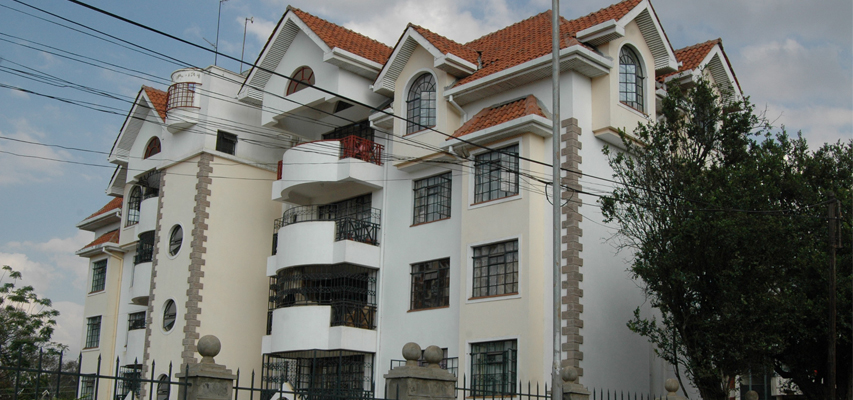
Ministry of Housing Civil Servants Housing Scheme (CSHS) Kilimani Apartments based in Kilimani, Nairobi County. The Government through the Big 4 Agenda has been pushing for home ownership in order to ensure that Kenyans achieve the realization of dream of homeownership, enhanced lifestyle associated with homeownership such as greater community and school involvement and quality of life, increased job satisfaction and loyalty to employer, the possibility of reducing commuting time and investment in a home with possible equity appreciation over time.
Since 2017 the Government has pursued a policy to create 500,000 new homeowners through the facilitation of affordable housing under the Big 4 Agenda. The programme ensures that working families can afford decent low-cost homes by reducing the cost of construction and offering them affordable mortgages.
Through the website, Boma Yangu all Kenyans can see the AHP projects being undertaken by the State Department for Housing and Urban Development, some of them in partnership with the private sector.
They can also register for free through the website link http://bomayangu.go.ke/ to own an affordable home. The only requirement is that one must be a Kenyan national aged 18 years and above.
Registration can be done at Huduma centres across the country. The cost of the units under the Affordable Housing Programme (AHP) range from KShs800,000 for a bedsitter to KShs 3 million for a three-bedroomed house.
The National Government has signed Memoranda of Understanding (MoUs) with 24 Counties for development of at least 2,000 housing units in each county. Five Counties have already identified land for comprehensive planning and project implementation.
AHP is being delivered in phases starting with some flagship projects before being scaled up towards delivery of the 500,000 units across all the counties. It targets civil servants and Kenyans in the low income bracket who were previously excluded from owning decent homes due to prohibitive costs of construction and mortgages.
According to the State Department for Housing and Urban Development, over 74 percent of Kenyans in employment earn less than KShs 50,000 per month and thus can only pay a maximum of KShs 20,000 as mortgage monthly with the average price of mortgage houses in the private housing market averaging KShs 9 million.
AHP includes Social Housing for those earning up to KShs19, 999 per month Low Cost Housing for those taking home between KShs 20,000 to KShs 49,999 per month. Mortgage Gap Housing will cater for those earning between KShs 50, 000 and KShs149, 999 per month while Middle to high income housing will cater for those whose monthly income is KShs150, 000 and above.
Kirinyaga County will benefit from 200 affordable housing units to alleviate the shortage of decent houses in the area under a KShs 500 million program by NHC.
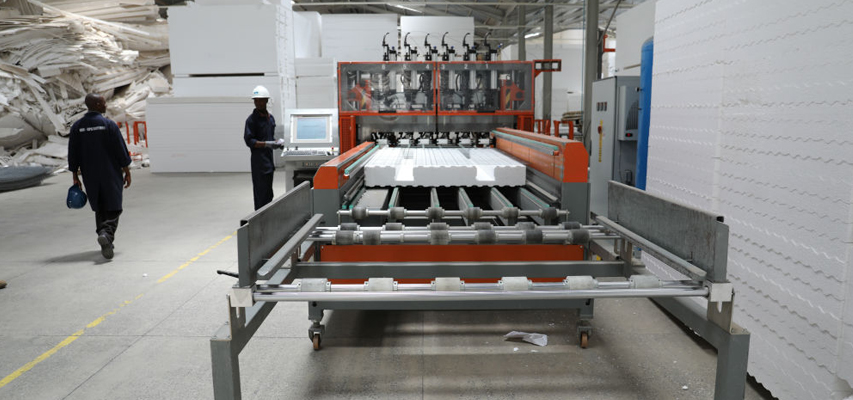
Ongoing production of Expanded Polystyrene (EPS) at the EPS National housing corporation/eps factory. The EPS Panels are single piece factory engineered units comprising of two metal wires bonded to a fully insulating EPS Core. The Panels acts compositely when under load, in most cases providing free standing (partitioning walls) and load bearing capabilities. The panels have been used in Kenya for about the last 20 years. The first project was done at the KHIBIT offices industrial area Nairobi in the year 1996, the Baronzi Estate, a gated community at Muthaiga North – Nairobi was constructed in the year 2000, the new expansion wing of silver spring hotel Nairobi was put up in the year 2000. NHC has managed to have multi-storey commercial building in various parts of the country (opp TRM Mall at Thika road, Nakuru, Luxury apartments for sale at Kanduyi area – Bungoma county, Luxury apartments for sale opposite Nazarene University, Rongai – Nairobi, a gated community in Kisumu) schools projects, offices, Go-downs in various parts of the country, residential homes in Karen, Muthaiga North etc.
Cost-effective options in materials and construction will be deployed to keep the units affordable but decent. They include expanded polystyrene technology which is easy to apply. The technology is being used to construct KShs 20 billion housing units at Mavoko where the supplier is located.
Kisumu County launched a n AHP project for 3000 units with 1,700 units already under construction in Makasembo and 1,300 units in Anderson estates in the urban areas of the lakeside city.
The county has also partnered with the Local Authorities Provident Fund (LAPFUND), a retirement benefits scheme catering for employees of County Governments, water companies, and other associated organisations, to construct modern and affordable houses in Lumumba and Makasembo estates.
In Nakuru County, the construction of 600 AHP houses is ongoing under a joint partnership with the National Government and the World Bank. The project is in addition to 2,400 houses being built in n
Construction of the houses follows rising demand as local steel and cement manufacturers, animal feed makers and dairy firms set up shop in the Salgaa industrial zone.
The restoration of the old Meter Gauge Railways and its linkup with the Standard Gauge Railway at Mai Mahiu, the inland dry port, a business park established by the Kenya Electricity Generating Company (KenGen) and an industrial park set up by Oserian Company are expected to spark even more demand for housing.
The AHP houses in Nakuru will be built on a 10 acre-land in Bondeni Estate within Nakuru Town East Sub-County while those in Naivasha are being constructed on a 55-acre plot of land along the Nairobi-Nakuru highway near GK Prisons.
As Nakuru and Naivasha are homes to a multibillion-shilling flourishing horticultural sector, a thriving hospitality industry, and fast rising to a commercial hub in East Africa, obviously, the demand for
Over 26 per cent of Kenyans live in cities and towns and the urban population is growing at a rate of 4.2 per cent every year,” said Kinyanjui.
Annual demand in Kenya for affordable housing for the middle and low income earners is 170,000 units, yet a mere 1,000 units are built every year. Kenya has only 25,000 housing mortgages catering for a population of over 40 million people.
Of the mortgages, 17,000 are not market-based as they have been advanced to individuals by their employers. The World Bank selected Nakuru to pilot the AHP because the city has the critical infrastructure needed for construction.
A report by the Kenya National Bureau of Statistics (KNBS) 2020 detailed that many landlords were shifting focus to building smaller and affordable houses as demand increases, land space diminishes and the cost of living rises.
The National Government established the Kenya Mortgage Refinance Company (KMRC), which works with the banking sector and the cooperative movement through SACCOs, to make available affordable mortgages finance for those wishing to own a home. KMRC will help to extend the tenure of housing loans from the current average of seven years to at least 20 years.
In Kiambu, the KShs 11 billion Samara housing project in Migaa has kicked off as a public private partnership with Safaricom and Shelter Afrique and is expected to have 1,920 housing units.
The units will be priced as low as KShs 1 million for Kenyans earning below KShs 20,000.
Kenya National Bureau of Statistics (KNEBS) data shows that 92 per cent of people in Nairobi rent houses because they cannot just afford to buy their own.
In Nairobi the AHP pilot project of 1,370 housing units at Park Road in Ngara has been completed. The National Housing Development Fund is mobilising resources to fund housing projects in Mavoko and NHC Stoni Athi, which are at various stages of completion.
The construction of 25,965 affordable housing units in Starehe (3,360), Shauri Moyo (4,470), Kibera Zone B (4,435) and Mukuru (13,700) will begin soon as investors have been identified.
NHC is building 10,500 homes dubbed, Stoni Athi Waterfront City in Athi River, Mavoko Sub-County on a 150-acre land at a cost of Sh20 billion. The houses, which target low, middle, and high-income earners, will be multipurpose units varying from residential, commercial, recreational facilities, schools and hospitals.
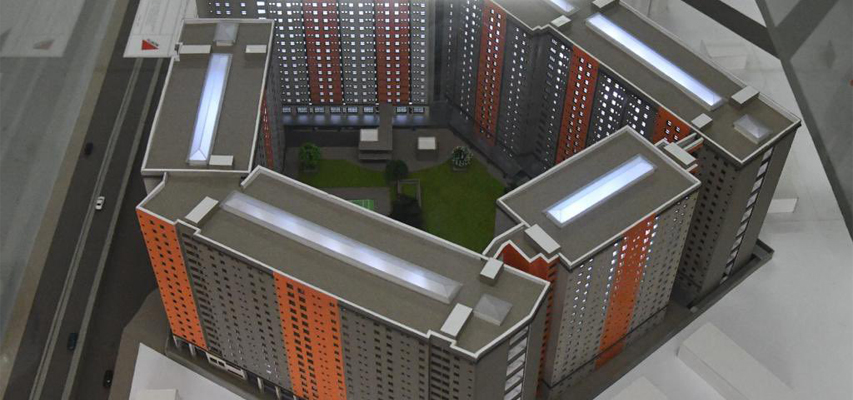
Model of the Pangani Housing Development project. The Housing Project sits on 5 acres of land, comprising of residential housing units, market place, 3 level parking, a recreational area, and a jogging track. /NMS
The Mavoko project comprises of 5,000 affordable housing units costing between KShs1 million and KShs 3 million per unit, and 5,500 units targeting middle and upper-income households for between KShs 2 million and KShs 8 million a unit. The Government has built over 186,000 housing units across the country in the past eight years as part of the efforts to provide decent housing for Kenyans.
NHC will also be developing 5,000 housing units in Konza Techno City. NHC will embrace innovative options such as joint ventures and others to unlock the housing challenge.
In September 2021, Government commissioned the construction of 2,235 AHP units in Pangani, Nairobi County. In December 2019, President Uhuru Kenyatta launched the Habitat Heights at Lukenya as part of AHP which have been constructed under a Memorandum of Understanding between the State Department for Housing and Urban Development and United Nations Office for Project Services (UNOPS) for 100,000 units.
In Mombasa County, the KShs 6 billion Buxton Point is being constructed AHP. The 1900 housing units in Buxton will be available at a mortgage rate of 9 percent or less. A two-bedroom apartment at Buxton Point KShs 3 million compared to Sh6.5 million in the neighboring Tudor environs. One-bedroom unit is KShs 1.8 million and three-bedroom is KShs 4.2 million. Already, 1,253 houses have been sold.
The project will have commercial stalls, a youth venture to nurture local talents, a nursery school, a madrasa and a clinic.
Other estates targeted for rebuilding and AHP in Mombasa County are Changamwe, Likoni flats, Miritini, Tudor, Mzizima and Khadija.
Other AHP Projects
Moke Gardens in Mavoko, Machakos County (built via PPP)
King’s Sapphire – Bondeni Project (Nakuru City)
Buxton Affordable Housing Project (Mombasa City)
Kitui Affordable Housing Kalawa Rd (Kitui Town)
Pangani Affordable Housing Project (a PPP in Nairobi City)
KMRC will provide long term funds to primary housing mortgage providers in the housing sector. It will improve mortgage affordability, increase the number of qualifying borrowers, and result in the expansion of the primary mortgage market and home ownership in Kenya.
The company has so far raised Kshs 2 billion and the National Treasury has mobilised additional Kshs 35 billion from partners to support the company’s operations.
MV Songa Cougar sails into the Port of Lamu on a maiden call. The vessel with a length overall of 147.8 meters loaded 65 TEUs of full containers carrying assorted goods destined for the Port of Jeddah. The Port of Lamu is part of the Lamu Port-South Sudan-Ethiopia-Transport (LAPSSET) Corridor project which is a transport and infrastructure project in Kenya. At completion of the three phases, the Shs 310 billion port will have 32 berths, 29 of which will be financed by the private sector, making it the largest deep-water port in Sub-Saharan Africa./KPA
Good infrastructure such as roads, water and electricity projects will help spur Kenya’s economic growth, enabling Kenyans to run their businesses, generate wealth and create employment. Infrastructure development boosts the economy through linkages with other sectors. Among the key investments is the Standard Gauge Railway (SGR) and rehabilitation of the old Metre Gauge Railway, roads and ports and enhancing electricity generation. Better transport, and ICT infrastructure stimulates exports and local distribution of goods.
Lamu Port
Recently, President Uhuru Kenyatta officially launched the first berth of the Port of Lamu, which is set to transform the town and archipelago into a major trade and logistics hub, accelerating economic transformation.
The Port of Lamu is a flagship project of the LAPSSET (Lamu Port-South Sudan-Ethiopia Transport) Corridor. The launch of Lamu Port on 20th May 2021 has set the LAPSSET ship off, and confirmed that the transport vision has started turning into reality. Witnessing the berthing of Lamu Port’s maiden ship, MV CAP Carmel, and offloading of its cargo to trucks, was a remarkable sight of a dream come true for Kenya, at a place that was once a vast sea and an adjacent hinterland characterised by bushes.
The President also commissioned the Garsen-Witu-Lamu (110km) road, part of the LAPSSET Corridor alternative routes that connect the 10km Lamu Port Access Road to Garissa County. In addition, construction of the Lamu-Garissa-Isiolo (Phase 1) road, a major LAPSSET Corridor Highway, is underway. With the construction of roads, travel time has reduced, security enhanced and various investments are being witnessed. The port will stimulate more business sectors, including real estate, hospitality, livestock, manufacturing and the service industry.
The LAPSSET Corridor Project is the largest game changer infrastructure project the government has initiated under the Vision 2030 Strategy Framework. It seeks to foster transport linkage between Kenya, South Sudan and Ethiopia and promote regional socio-economic development along the transport corridor, especially in the Northern, Eastern, North-Eastern and Coastal parts of Kenya. The LAPSSET Corridor Project covers over half of the country with a planned investment resource equivalent to 50 per cent of Kenya’s GDP for the core investment alone.
Launch of the first berth will transform the town and archipelago into a major trade and logistics centre in the region. The Port of Lamu successfully recorded its maiden trans-shipment cycle, raising its profile on the global map, following the loading of 62 trans-shipment full containers on MV Spirit of Dubai. The smooth cargo handling was enabled by use of integrated customs management systems.
A key component of Kenya’s Vision 2030 strategy, LAPSSET echoes the modern developmental approach most African governments are taking, but differs in both its magnitude and rationale.
The plan involves an ambitious array ofcomponents across a vast tract of the Hornof Africa.LAPSSET has been marketed as the firstsection of a colossal, continent-wide GreatEquatorial Land Bridge via Juba and Banguito Douala on Cameroon’s Atlantic coast. Conservative feasibility studies show that the project will inject between 2 -to-3 per cent of GDP into the economy. Statistics estimate that the contribution of the LAPSSET Corridor Project to the country’s economic growth might even range between 8 percent to 10 per cent of GDP when the generated, and attracted investments, finally come onboard.
Regional infrastructure projects such as this are strong enablers of Africa’s continental integration. Coupled with the establishment of the African Continental Free Trade Area, harmonisation of monetary policies and other standards such as customs, stabilisation of tariff and non-tariff barriers, statistics and labour market information and improved business climate, the LAPSSET project will attract global trade and investments in Africa.
Nairobi-Kisumu Metre Gauge Railway Reopens
Following the refurbishment of the dilapidated railway line from Nairobi to Kisumu, the Kisumu commuter train is back after more than 10 years after services were suspended. The train received overwhelming reception being fully booked for the 2021 December holiday season. The journey by train takes an approximate of 12hrs between Nairobi and Kisumu. In addition to the passenger coaches, the train has an additional coach that serves as a restaurant for the travelers. /Kenya Railways
The reopened Nairobi-Kisumu passenger railway has not only eased movement of people, but also opened the economies in western Kenya, with the planned connections to Uganda and Tanzania well on course.
The revived 266-kilometre line, which collapsed about 15 years ago, will also boost economic activities at the rehabilitated Kisumu port, besides revamping the trade within the East Africa Community, especially with the inclusion of the DR Congo as a member state. Mr Raila Odinga, the Africa Union Envoy for Infrastructure Development, opened the railway at Fort Ternan, near Kisumu. The revamped railway rekindled nostalgic memories of leisurely travel that provided one with breathtaking views of Kenya. The former Prime Minister posted on his Facebook page: “Nothing beats a nostalgic train ride than sharing it with one of my grandkids.”
The eagerly awaited service saw both Christmas Eve and December 26 return trips sold out, forcing the Kenya Railways to introduce an extra trip to meet the demand. The trips to Nairobi after December 31 were also fully booked. Since the bulk Kenya’s exports to Uganda and beyond pass through Port Bell and Jinja via the Kisumu, the former PM said: “We want the rail network to connect even with Musoma and Mwanza in Tanzania as well as Port Bell, Jinja and Kampala in Uganda.”
Some of the goods that Kenya will be exporting via the Kisumu port are food crops, spare parts, edible oils and fertiliser. Kenya Railways sees a huge potential for agricultural products using the meter gauge line with Naivasha as a transhipment centre of goods ferried by the SGR to be transferred to locomotives on the old line.
Nairobi Expressway
Aerial shot of part of the 27.1km elevated dual carriageway, Nairobi Expressway. The expressway is not only going to ease the traffic jam experienced along the busy highway but as well save man hours wasted in the congestion.
Nairobi’s perennial traffic jams will soon be alleviated, thanks to the partially elevated new 27-kilometre Expressway. Road snarl-ups in the metropolis are estimated to cost the country Ksh2 billion annually, or KShs50 million daily, in lost man hours. That high cost will significantly come down. The Expressway, as it is popularly known, will enhance Nairobi’s competitiveness as a regional hub for business and transport by decongesting the city and the Northern Transport Corridor.
For Ksh65 billion, Kenya is expecting to have a highway that will dramatically change the city’s skyline and ease traffic flow in and out of Nairobi, which will be a major milestone. While not part of the Big Four Agenda, it is a significant enabler of economic development in the capital, Nairobi. The four-lane dual carriageway runs along the median strips of Mombasa Road (starting at Mlolongo), Uhuru Highway and Waiyaki Way, terminating at James Gichuru Road. It is to be tolled and will have 10 interchanges at Mlolongo, SGR, JKIA, Eastern and Western bypasses, Haile-Selassie, Museum Hill in Westlands and James Gichuru Road.
It is part of the Government’s plan to ease traffic from Jomo Kenyatta International Airport that accesses Nairobi city centre. Also, traffic from central Nairobi is expected to be facilitated to reduce the number of departing passengers who miss their fights while stuck in road traffic on city streets.
The work involves expansion of the existing road to four lanes one-way, (eight lanes total), with footpaths, drainage channels, overpass bridges and street lighting. Ongoing construction work has worsened the traffic situation on Mombasa Road and adjoining roads, but this is a temporary setback that will eventually be replaced by enjoyable motoring. The project is being undertaken as a Public Private Partnership with the China Road and Bridge Construction Corporation (Kenya) (CRBC) on a build-operate-transfer model. The concessionaire, CRBC, will finance, build and operate the tolled road for 30 years during which it will recover its costs before transferring the operations to KeNHA.
When completed, the Expressway will slash commuting time between Westlands and JKIA from about two hours at peak time to just 15 minutes, a major saving not just for motorists but the economy as well. Meanwhile, the Expressway has created over 2,000 jobs for Kenyans, provided markets for locally manufactured goods and services and encouraged transfer of valuable technical skills.
A section of the road from Mlolongo to NextGen Mall, a distance of 18.2km, will be a flatbed model, while the section from Nextgen Mall through the city centre to St Mark’s Church, covering 8.2km, will be elevated.
The bigger plan is to connect Jomo Kenyatta International Airport to the neighbourhood of Rironi, in Kiambu County, along the Nairobi-Limuru Road.
Sections of the Expressway will have eight, six, and four lanes, respectively, based on traffic projections. There will be a two-month test period before it is opened for public use. The construction has been fast-tracked from the initial three years and the Expressway is seen as a solution to the perennial traffic jams in the Nairobi Metropolis, which cost the country KShs 2 billion annually, or KSh50 million daily, in lost man hours, according to World Bank figures.
Spearheaded by the Kenya Highways Authority (KeNHA), it will especially ease traffic congestion on Mombasa Road and enhance mobility in the city. It is estimated that up to 60,000 vehicles ply the JKIA-Westlands route daily. About 25,000 motorists are expected to use the tolled Expressway when completed.
Thiba Dam
A section of Thiba Dam that is expected to secure a year-round water supply for the regions around the Mwea Irrigation scheme. The 40-meter tall and 1 km long dam creates a reservoir that will allow a twice per year every year Mwea rice irrigation scheme and the surrounding cultivable area. The dam will hold 15 million cubic meters of water, which will be supplied to the farmers within the Mutithi section where the existing scheme is being expanded by 10,000 acres. Currently, the Mwea Irrigation scheme has 25,000 acres under rice cultivation but upon expansion will add up to 35,000 acres, which will translate to double production of paddy rice. The National Irrigation Authority is overseeing the construction of the Dam with the Consultants./KNA
Construction of Thiba Dam, which will secure a year-round water supply for agriculture is nearing completion. The 40-meter tall and 1km long dam is creating a reservoir that will allow farmers in the Mwea rice irrigation scheme to cultivate all year long. The remaining nine per cent of work includes connections to the existing road network as well as facilities for water draw-off and safe floodwater drainage. However, the dam is now ready for flooding come the rainy season beginning March 2022 when the water volume will be high enough to secure water flow to other areas, including the Mwea irrigation scheme, Kenya’s rice basket.
The dam will free the farmers from their dependance on rain-fed agriculture.
At completion Thiba Dam will hold 15 million cubic meters of water to be supplied to the farmers within the Mutithi section where the existing scheme is being expanded by 10,000 acres. Currently, the Mwea Irrigation Scheme has 25,000 acres under rice cultivation, but upon expansion, will add up to 35,000 acres.
Income from the crop, which stands at Sh9 billion currently, will also increase to about KShs 20 billion per year. The National Irrigation Authority is overseeing the construction of the Dam with the Consultant being a joint venture of Nippon Koei and Gibb Africa and contractor Straback International GmbH (Germany). Once complete, an additional 10,000 acres will be put under irrigation in Mwea.
Regeneration of Kisumu Port
Ongoing construction of MV Uhuru II wagon ferry, dry dock and slipway at the Kisumu Shipyard. The construction of the wagon ferry was commissioned by President Kenyatta in May last 2021. The construction and local assembly in the country has earned respect amongst its neghbours and the East African region in the marine industry.
The 120-year-old Kisumu Port is poised to strengthen Kenya’s status as the leading business hub for the East African Community.
By completing the Phase One revamping of the port and repairing the equally old Nairobi-Nanyuki and Nakuru-Kisumu metre-gauge railway lines, the Government has positioned Kisumu to regain its tag as the gateway to East and Central Africa. Kisumu’s location on the shores of Lake Victoria, the second largest freshwater lake in the world, makes it an entry point to vast parts of Kenya, Uganda, Tanzania, Rwanda and Burundi — with a combined population of around 35 million people and a GDP of some US$30 billion, which is, on average, about 40 percent of the total EAC economy.
Economic activities standing to benefit from the investments include fisheries and transport of bulk products like oil and grains.
The Government is in the process of tendering for Phase Two of the Kisumu Port rehabilitation project, but the city is already benefiting from its status as a revitalized EAC trading hub on the shores of Lake Victoria. Key Government institutions, including the Kenya Railways, Kenya Ports Authority (KPA) and the County Government of Kisumu are working together to ensure the success of the projects. The rehabilitation of MV Uhuru and the commissioning of the revamped Naivasha-Kisumu railway line, is already feeding more cargo to Kisumu Port.
The Government has been encouraged by data showing that improvement in governance and efficiency saw the port handle 62 percent more cargo (to 17,735 tonnes) in 2019 and expects this to continue following the completion of the Phase.
Cargo output is project to increase to 130,000 tonnes by 2025, and further to 180,000 tonnes by 2035. By improving the reliability of the medium gauge railway (MGR) between Naivasha and Kisumu, maritime vessels like MV Uhuru will be able to ferry cargo from Kisumu to ports such as Mwanza and Bukoba in Tanzania as well as Jinja and Port Bell in Uganda as more local firms exploit the lower transport costs on Lake Victoria.
Data from the National Economic 2021 released in September shows that exports from Kenya to the East Africa region grew from KSh140.4 billion in 2019 to KSh158.3 billion in 2020, accounting for 64.3 per cent of the total exports to Africa. Exports to Uganda, Rwanda and South Sudan alone jointly amounted to KShs 120.6 billion, compared with KShs 99.9 billion in 2019, reflecting a growth of 20.8 per cent. Uganda remained the largest export destination, accounting for 29.3 per cent of the total exports to Africa.
Export earnings from South Sudan almost doubled from KShs 12.6 billion in 2019 to KShs 23.2 billion 2020, while the value of exports to Rwanda went up by 8.8 per cent over the same period. In addition, the value of exports to Ethiopia and Sudan rose by 32.4 and 42.0 per cent, respectively, in 2020. According to the Kenya Ports Authority, Kisumu Port will accommodate larger vessels and handle higher cargo volumes once the ongoing renovations and dredging works are complete.
The project scope that extends to the Kisumu Port basin, Kenya Pipeline Company turning basin, Deep Sea approach channel and the Mbita causeway is already complete, with the dredging hitting a depth of minus 7 metres from the current minus 4.5 and minus 2.5m for the causeway. It has seen the construction of an 80 metre-wide canal seven metres deep and 63 kilometres long stretching to Mbita town.
Mombasa Port Expansion Project Phase II
Three Ship to Shore gantry cranes being delivered at the Mombasa Port expected to operate at the newly constructed berth 22. The cranes utilized for offloading and loading cargo from a ship to the quayside work at a speed of 40 moves per hour The modern Ship to Shore gantry cranes will improve efficiency and boost productivity of the port whose capacity has been increased by a further 550,000 TEUs annually following the completion of the new berth 22./KPA
The Mombasa Port expansion project is nearing completion, with Phase II construction of a second container terminal in the final stages. The port expansion will help Mombasa remain competitive even as the development of a second, deep port in Lamu gathers pace. It is financed by Japan at a cost of KShs 32 billion. Before Lamu, Mombasa Port was the only international commercial port in Kenya and remains the busiest in the East African Community. As the gateway port of Kenya and the hub port of the East African region, Mombasa handles transit cargo to landlocked countries in central Africa such as Uganda, Burundi and Rwanda.
The story of the project goes back to 2000 when the Government of Kenya asked the Government of Japan to extend an ODA loan for the “Mombasa Port Container Terminal Expansion (Project)” following recommendations by the Japan External Trade Organisation ( JETRO).
Major port facilities and equipment provided under Phase I of the project include:
Access channel and turning basins with marker buoys.
Revetment 1 (881m long).
Revetment 2 (140m long).
Berth No. 20 (11m deep, 201m long, 21m wide).
Berth No. 21 (15m deep, 350m long, 30m wide).
Small boat berth (4.5m deep, 283m long, 15m wide).
Light beacon for berth Nos. 20 and 21.
Container yard.
Trunk road (8 lanes, 14,000m long, 37.5m wide).
Port access road (6 lanes, 2,242m long, 33m wide).
Connection road (5 lanes, 940m long, 23.5m wide).
Railway terminals and connections.
Port security system.
Port administration office and other port buildings.
50-tonne quayside container cranes (2 units).
40.6-tonne transfer cranes (4 units).
Phase I saw 20.23 hectares (50 acres) of land reclaimed from the sea, creating 550,000 Twenty-Foot Equivalent Units (TEUs) capacity with two new berths. Phase II has also seen the reclamation of another 20.23 hectares from the sea and will add 450,000 TEUs capacity to the port, bringing the total capacity of the new terminal to one million TEUs. As demand for containerised cargo grows, the port is expected to handle up to 1.732 million TEUs by 2023, up from the current 1.42 million TEUs. This is an average of 47 million tonnes by 2030, compared with the current 30 million tonnes. This will rise to 111 million tonnes by 2047.
The port can now accommodate larger vessels, which gives it a competitive edge over the neighbouring ports, mainly in Dar-es-Salaam and Djibouti. The Standard Gauge Railway (SGR) and the construction of the Inland Container Deport in Nairobi and the Naivasha dry port have positioned Mombasa Port to handle increased demand for containerised cargo to neighbouring states. With the refurbishment of the Metre Gauge Railway (MGR) to Kisumu, the final link is now in place for seamless delivery of cargo at competitive rates to the East African Community trading partners.
The SGR will also serve the 32-berth seaport in Lamu, which is a key pillar of the KShs 2.5 trillion Lamu Port South Sudan-Ethiopia Transport (LAPSSET) Corridor project. Kisumu Port was refurbished at a cost of KShs 700 million, as part of the Kenya Vision 2030 Big 4 Agenda projects to upgrade Kenya’s ports, rail and logistics services, under the Kenya Transport and Logistics Network (KTLN). The KTLN has consolidated the operations of Kenya Ports Authority, Kenya Pipeline Company and Kenya Railways Corporation, with oversight provided by the Industrial and Commercial Development Corporation (ICDC).
Isiolo Airport
Farmers in Isiolo, Meru and Laikipia counties following the recent completion of cargo shades at the Isiolo International Airport, which will allow them to export their produce to their target markets. Agencies led by Fresh Produce Consortium of Kenya (FPC Kenya), Directorate of Miraa and Pyrethrum and Kenya Plant Health Inspectorate Service (KEPHIS) intend to expand the market for the fresh produce industry via the airport.
The region is well known for producing commodities such as Miraa, pyrethrum, vegetables and flowers. The airport was officially opened in 2017. Small scale farmers are the main targets to enable them to reach out to domestic, regional (read East African Community) and global markets by cutting short the travel distance of the produce. The facility can now accommodate cargo flights.
New Kipevu Oil Terminal
Kipevu Oil terminal (KOT) which will be operational by April this year (2022). The stakeholders who are owners of oil tankers that handle petroleum products have been familiarized with the amenities of the terminal to ensure business efficiency. The new KOT is expected to revolutionize the handling of petroleum products at the Port of Mombasa. KPA has been constructing the ultra-modern 4 berths offshore facility that will improve port’s capacity to handle oil products and reduce on waiters further enhancing productivity. the 40 billion KPA funded facility will have 4 berths capable of handling six different hydrocarbon import and export products. It is also fitted with an LPG facility, crude oil and heavy fuel oil.
The KShs 40 billion offshore Kipevu Oil Terminal, the largest of its kind in Africa will have a 770-metre long jetty, currently at 96 per cent complete. It is wholly funded by the Kenya Ports Authority (KPA) and implemented by the China Communications Construction Company.
When complete in April 2022, the offshore facility will be able to load and offload very large sea tankers of up to 200,000 DWT carrying all categories of petroleum products including crude oil, white oils and LPG. The new jetty will enhance supply and ensure price stability of petroleum products in Kenya and the region by replacing the 50-year old onshore Kipevu Oil Terminal (KOT).
When operational, President Kenyatta noted that the new offshore jetty will save the country more than KShs 2 billion annually in demurrage costs incurred by oil shippers, thereby contributing to a significant reduction in fuel pump prices. The new facility will be able to reduce not only the cost of fuel, but also ensure that Kenya is able to consistently have an adequate supply of fuel for our needs and development needs that of our people.
The old Kipevu Oil Terminal was unable to meet the demands of Kenya’s increasing population and economy. The Kenya Ports Authority (KPA) has also completed the construction of 1.2 kilometer six-lane concrete Kipevu road to facilitate easy movement of cargo. The construction of the highway replacing the old four-lane road was co-financed by KPA and Trademark East Africa (TMEA) to the tune of Sh2 billion. The road, which is part of the improvement and expansion programme at the port of Mombasa, is located near Chaani and extends from Changamwe roundabout to KPA Gate 18 with an additional 200m inside the port area.
The road will also accommodate a 40 metres railway bridge with two cells for vehicles and a gate canopy for custom and security purposes. Completion of the Kipevu road and Sh500 million modern tug jetty adds to other multi-billion infrastructural projects aimed at increasing efficiency through the Mombasa Port Development Programme (MPDP) initiative.
Mombasa Cruise Ship Terminal Project
The new Mombasa Cruise Ship Terminal at the port of Mombasa is a boost Kenya’s tourism sector. The three-storey building will accommodate port health services, logistics, immigration, and duty-free shops among others, and offer visitors a one-stop-shop for travel and hospitality services. There is a dedicated section for cruise ships to dock at the port. It was built at a cost KShs 1 billion, with Sh250 million coming from the Kenya Ports Authority (KPA) and the balance from TradeMark East Africa (TMEA). The new terminal is kind to the environment, since it is powered using solar energy and also has a bio-digester that will recycle water for re-use, according to KPA. It will replace the old Shade 1 and 2, for cruise liners.
Nairobi Western Bypass
This is the final link of Kenya’s capital city’s Ring Road Master Plan that includes the eastern, southern, and northern bypasses and is expected to be complete by September 2022. The road is being built by the China Road and Bridge Corporation (CRBC) and funded by the Government of Kenya and the Export-Import Bank of China (China Exim Bank), and consists of 15 kilometres dual carriageway, 18 kilometres of service roads, and footpaths in selected sections. It will provide a seamless link to the Southern bypass at Gitaru town and to the Northern bypass at Ruaka avoiding the centre of Nairobi. and reducing the travel time along the highway. It will also ease traffic congestion by way of being an alternative route between Nairobi and Kiambu county towns and reducing commuting time for motorists travelling between Nakuru and the central region of Kenya.
The bypass starts in Gitaru and weaves through Wangige and Ndenderu to terminate at Ruaka and includes pedestrian barriers in the center to prevent people from passing through unauthorized areas. The seven interchanges on the Nairobi Western bypass are at Gitaru, Lower Kabete, Wangige, Kihara, Ndenderu, Rumenye, and Ruaka, with 10 overpasses and five underpasses.
Mombasa Southern Bypass: Dongo Kundu Phase II (Miritini-Mwache)
Construction work on the multibillion-shilling Phase II of the Dongo Kundu Bypass is taking shape while creating jobs and business opportunities for the residents.
Also known as the Mombasa Southern Bypass, the highway will connect three main transport corridors, including the Mombasa-Nairobi highway, Mombasa-Malindi highway and the Mombasa- Lunga Lunga highway, thus reducing traffic gridlocks in Mombasa and its environs.
Phase I was completed in 2018 and joins the Mombasa-Nairobi highway at Bonje, near Mazeras. Phase II will also help to reduce congestion at the Likoni Ferry, facilitating easy movement of goods, services and people. The 17.7 km long bypass will cost KShs 22 billion, with an interchange at the Likoni-Lunga Lunga highway and erection of two bridges one at Mwache, spanning 660 metres, and another at Mteza straddling 1,440 metres.
It includes the construction of a series of roads, bridges and viaducts (a long bridge-like structure) linking Mombasa West to the South Coast in Kwale an important transport corridor for traffic destined to and from Tanzania and from the interior of the country and beyond. It will connect Mombasa mainland west to Mombasa mainland south, without entering Mombasa Island through the Likoni crossing channel. The third phase includes the construction of a six-kilometre road, from the Mteza Bridge to the Likoni-Lunga Lunga highway at Ngombeni area.
Thwake Multipurpose Dam
Thwake Multipurpose Dam, a Vision 2030 flagship project estimated to cost KShs 63 billion, will spur socio-economic development and ease perennial water shortages in Kitui once complete. It is being built in four main phases that include, construction of a 77 metre-high dam, hydro power generation, 34,600 cubic meters of water supply and a final phase of irrigating 40,000 hectares in Makueni and Kitui counties.
According to the National Environment Management Authority (NEMA) environmental impact assessment report, the dam is designed to supply piped water for domestic use, serve the Konza Techno City and adjacent towns, irrigate farms downstream in the two counties and generate 23 megawatts of hydro power. The multipurpose dam is a project under the Tanathi Water Services Board (TAWSB) and entails harnessing waters of the Athi River and Thwake River.
It will provide water for domestic use, livestock, irrigation, hydropower and even industrial activities in the beneficiary districts. The proposed dam will cover an area of approximately 2,900 hectares spanning Makueni, Machakos and Kitui counties with a catchment area of 10,276 square kilometres. It will address water scarcity and open the counties for economic activities like fishing and tourism.
Twice the size of Masinga dam, Thwake Multipurpose Dam will hold as much as three million cubic metres of water. The project is funded by the Government of Kenya and the African Development Bank (AFDB) on 65 per cent and 35 per cent ratio. The first phase of the project, which will cost Sh.30 billion, will connect households to clean water while the second phase will focus on irrigation to boost agribusiness. The third and last phase of the project will involve generation of hydropower where it is expected that the dam will contribute 20 MW to the national grid.
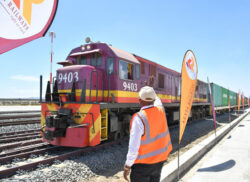
This is the fourth in a four-book mini-series by the Kenya Yearbook Editorial Board (KYEB), capturing key interventions by the National Government in Manufacturing, which is the first Pillar of the Big 4 Agenda and the Third Medium-Term Plan (MTP III). COMING SOON!
This is the third in a four-book mini-series by the Kenya Yearbook Editorial Board (KYEB), capturing key interventions by the National Government in Manufacturing, which is the first Pillar of the Big 4 Agenda and the Third Medium-Term Plan (MTP III). COMING SOON!
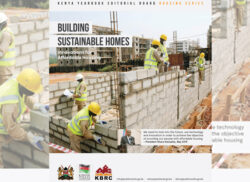
Under the Big Four blueprint, the Government wants to provide at least 500,000 affordable housing units by 2022. The government recognizes that turning the dial on the housing shortage requires a mix of incentives to investors in the housing sector, as well as encouraging Kenyans to explore options that will help them achieve their long-cherished dreams of owning their homes. Click HERE to read more on affordable housing.
This is the second in a four-book mini-series by the Kenya Yearbook Editorial Board (KYEB), capturing key interventions by the National Government in Manufacturing, which is the first Pillar of the Big 4 Agenda and the Third Medium-Term Plan (MTP III). Click HERE to read more on the Manufacturing Pillar of the Big Four Agenda.
This is the first in a four-book mini-series by the Kenya Yearbook Editorial Board (KYEB), capturing key interventions by the National Government in Manufacturing, which is the first Pillar of the Big 4 Agenda and the Third Medium-Term Plan (MTP III). Click HERE to read more on Manufacturing Pillar of the Big Four Agenda.
Teacher Magdalene Onweso, undertakes a Mathematics lesson with grade 2 pupils at Kegati DEB Primary School in Kisii County on December 10, 2021, during class observation by one of Ministry of Education team carrying out the Closing Project Support Mission for the Kenya Primary Education Development (PRIEDE) and COVID-19 Projects. The team observed as pupils participated in the class work and participated in different activities in class. The Sh8.84 billion PRIEDE project is funded by the Global Partnership Education (GPE) and has been lauded for positively impacting learners and teachers in all the 23,000 primary schools countrywide. The project, initiated in 2015 has transformed 10 million learners and over 100,000 teachers, thus posting an improved foundational numeracy for early grades learners.
Background
The Government introduced the Competency Based Curriculum (CBC) to replace the 8-4-4 system of education following the results of a needs assessment carried out countrywide by a team of experts. The assessment indicated that the 8-4-4 system had become unpopular, because it was examination oriented at the expense of other education needs.
The resounding recommendation was that the country needed a curriculum that would embrace the differences in ability and learning styles of the recipients, and ultimately enable each learner to realise success and fulfillment within their individual capacities. This set the stage for conceptualisation of the relevant learning areas that would make these goals a reality.
Learners in grades 3, 4, and 5 go through Competency-Based Assessment (CBA) for the first time in the newly introduced Competency-Based Curriculum in Kericho County. In the County, learners from 125 private and public schools are going through the assessment which aims at testing and building the knowledge, skills and abilities of the learner to prove their competency. the competency-based assessment tools include interviews, case studies, assessment centers, questionnaires, and tests. The assessment is meant to prepare the learners for today’s dynamic world, where the stress is on sharpening current and developing new capabilities. /Mercyline Chepkemoi,KNA
The proposed curriculum basically replaces the current Standard One to Form Four with Grade 1 to Grade 12 and the changes have been captured in the ‘Basic Education Curriculum Framework,’ (BECF) that is available on the KICD website https://kicd.ac.ke/curriculum-reform/basic-education-curriculum-framework/. Besides, early identification and nurturing of talents, it mainly focuses on what the learner can do as opposed to just what one can remember.
Implementation of the 2-6-3-3 system of education is being undertaken in phases starting with Early Years Education (Pre-Primary 1 & 2, and Grade 1, 2 and 3)
CBC basically replaces the current Standard One to Form Four with Grades 1 to 12 and the changes have been captured in the BECF. Besides, early identification and nurturing of talents, it mainly focuses on what the learner can do as opposed to just what one can remember.
Parents are required to play a very active role in the growth and development of their children under the new curriculum. They must ensure the child’s learning is well supported both at home and school to help them grow into responsible citizens with the right values. KICD has developed the Guidelines on Parental Empowerment and Engagement (https://kicd.ac.ke/cbc-materials/guidelines-on-parental-empowerment-and-engagement/) to help parents with the shared responsibilities in with schools to provide an enabling environment that is conducive to learning and which motivates children to achieve their full potential.
The pilot phase began with an initial meeting with all the head teachers at the selected pilot schools on April 21 2016 at KICD, which was presided over by the Cabinet Secretary, Ministry of Education. This was followed by training of Quality Assurance and Standards Officers and Curriculum Support Officers (CSOs) to prepare them for their supervisory role, and teachers have also been trained.
The new curriculum, which is competency based emphasizes on utilization of formative assessment as the basis for improvement of teaching and learning. The continuous assessment tests set to replace one-off examinations will be standardized and administered at various levels.
Education CS Prof. George Magoha breaks the ground for CBC classrooms at Obwollo Secondary School in Kisumu East Sub-County. CS Magoha says the government is on course to deliver on the project which targets to construct 10, 000 classrooms for Junior Secondary across the country by April 2022. In some areas the classrooms would be ready by the end of February 2022.
The goal of the new curriculum is to provide citizens with skills for the 21st century, by placing emphasis on the learner’s competence, character, patriotism and ability to coexist as a responsible citizen.
The Kenya Institute of Curriculum Development (KICD) led the design, development and launching of the new curriculum which is the product of the Task Force on Re-alignment of the Education Sector (Republic of Kenya, 2012; KICD, 2016).
The Task Force was mandated to review and align the education, training and research sector with the Constitution of Kenya. The focus was on the achievement of learning outcomes.
Current Status
The focus of the Ministry of Education in the 2021/22 financial year is to ensure the basic facilities for a smooth transition of CBC learners to Grade 6 are in place.
Construction of 10,000 CBC classrooms in public secondary schools will be completed before the end of 2022, ready to accommodate Junior Secondary School learners transiting from Grade 6 in January 2023. This is part of the CBC School Infrastructure Development Programme.
In the first phase, 5,200 classrooms are expected to be ready by April 2022.
There are schools with excess classrooms that will serve as junior secondary schools. Contractors have been warned against delayed and poor workmanship and the Government has said all contractors will be paid promptly.
Textbooks for CBC Grade 6 learners who will sit for the national assessment in December 2022, before transiting to junior secondary school in January 2023, will be printed and distributed by April 2022.
The Ministry of Education has spent KShs 28.8 billion since 2018 to purchase textbooks for learners in public primary and secondary schools.
“The National Treasury has accordingly availed an initial Sh.4 billion to the Ministry of Education to commence the first phase of the CBC school infrastructure development programme,” said Prof. Magoha.
A multi-agency team comprising the Ministry of Education, the Ministry of Interior and Coordination of National Government and other State Agencies are cooperating in the implementation of the programme.
The CBC Infrastructure Development Programme is being implemented under the Kenya economic stimulus package, using local contractors within the vicinity of the secondary schools to tap local skills and enhance economic opportunities.
By November 12, 2021, the contractors had been registered with the Deputy County Commissioners (DCCs) of the respective sub-counties at no cost and the Sub-County Implementation Committees. For prudent spending of public funds, the Government reduced the price of each classroom from KShs 1.26 million to KShs 788,000 including taxes.
Under CBC, formative assessment accounts for 60 per cent of the total marks, with Grades 4, 5 and 6 accounting for 20 per cent each and the remaining 40 per cent obtained from the final assessment in Grade 6 to establish consistency in performance.
Unlike the Kenya National Examinations Council (KNEC) administered examinations, there will henceforth, be no policemen with guns and invigilators subjected to sleepless nights in the name of ensuring security of the exercise.
CBC has also introduced remote learning with the Government keeping learners positively engaged during the COVID-19 pandemic shutdowns.
KICD launched the Kenya Education Cloud (KEC) to help ensure learners remote learning and safety and provided the website as www.kec.ac.ke for stakeholders seeking important information. Through the cloud, the Ministry of Education has enhanced learning via YouTube, Radio and TV.
A third year student at Kabete National Polytechnic, Naomi Gichuru (2nd right) pursuing a diploma in Laboratory Technology takes the Regional Representative of United Nations Educational Science and Cultural Organization (UNESCO) Sammuel Partey (left), State Department of Early Learning Stephen Jalenga (2nd left), and ,Nairobi Regional Director of Technical and Vocational Education and Training (TVET) Maryan Hassan, through a lesson of blood group testing at Kabete National Polytechnic during the International Day for Women and Girls in Science. Bonface Malinda/KNA
Universities are also expected to realign their academic programmes to the requirements of the CBC being implemented in the country. The re-organisation of academic schools, faculties, departments and their staff will be necessary.
Funding models of universities also need to be changed to support the more research-oriented. CBC is implemented all over the world in developed economies.
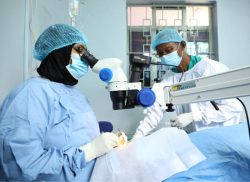
1. KUTRRH in partnership with Operation Ear Drop Kenya carrying out an Ear Screening and Surgical Camp. The camp was meant to help patients who can’t generally access the treatment as well as help the surgeons in building their capacity as well as the training.
The Government is seeking to achieve 100 per cent Universal Health Coverage (UHC) by scaling up National Housing Insurance Fund (NHIF) uptake. It has invested heavily to make access to health care a reality for millions of Kenyans at affordable or no cost. The Government distributed World Class medical equipment to all counties, introduced a free maternity health programme and expanded the NHIF.
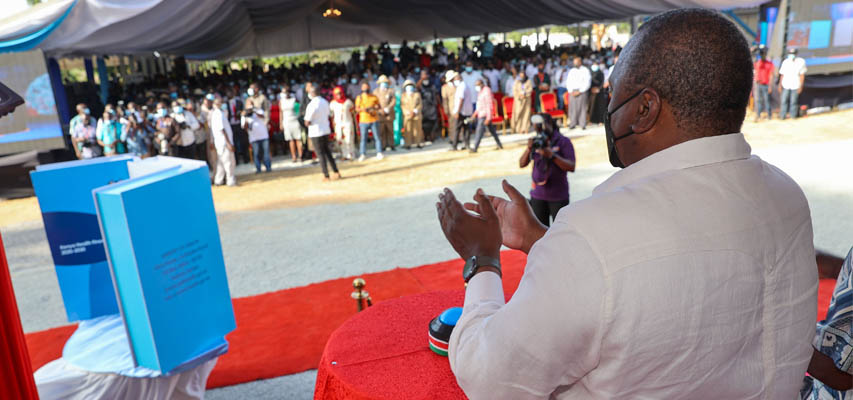
On the 8th of February 2022, President Uhuru Kenyatta launched the national scale-up of the Universal Health Coverage (UHC) with a call to all to register with the National Health Insurance Fund (NHIF).
The President affirmed the Government’s commitment to spreading the benefits of UHC across the country through the development of a focused policy to accelerate its implementation.
“In this regard, my administration has developed the Universal Healthcare Coverage Policy, covering the period 2020 – 2030, to guide the acceleration of the progress in attaining Universal Health Coverage,” the President said at Port Reitz sub county hospital in Mombasa, where he said the Covid-19 pandemic has brought to bear the urgent need for the country to upscale implementation of the UHC.
“Under this pillar, we seek to eradicate the ‘poverty of dignity’ and transition our nation into an era where no Kenyan should be forced to choose between medical bills and other essential needs,” President Kenyatta said.
The Head of State said the programme was started in the country in 2013 with the launch of the highly acclaimed free maternity programme dubbed “Linda Mama”, which currently benefits over one million mothers annually.
He outlined various initiatives the Government has put in place to ensure the successful implementation of UHC including investment in health infrastructure and development of a digital health platform to support the effective monitoring of the health sector.
On health infrastructure, President Kenyatta said the investments the Government has made since 2013 have seen an increase of 43 percent in public health facilities from a stock of 4,429 facilities in 2013 to 6,342 currently.
On Covid-19, President Kenyatta urged all Kenyans to be vaccinated and continue observing the Ministry of Health protocols even as he noted the progress the country has made in the vaccination exercise.
As of today, a total of 12,390,116 doses have been administered and we are well on our way to the target we have set for ourselves of 27 million fully vaccinated Kenyans by the end of 2022,” President Kenyatta said
On coordination of public health functions across all sectors, the President said on January 1st this year he established the Kenya National Public Health Institute to lead the coordination process and promote evidence-based decision-making on health matters.
At the same time, the President directed the Ministries of Health and the National Treasury to ensure consolidation of all Government sponsored programmes is finalized and operationalised by the end of June this Year.
President Uhuru Kenyatta launches the national scale-up of the Universal Health Coverage (UHC) with a call to all to register for the National Health Insurance Fund (NHIF). The President affirmed the Government’s commitment to spreading the benefits of UHC across the country through the development of a focused policy to accelerate its implementation. On health infrastructure, President Kenyatta said the investments the Government has made since 2013 have seen an increase of 43 percent in public health facilities from a stock of 4,429 facilities in 2013 to 6,342 currently. He said the Government has developed the Kenya Essential Medicines List, the Essential Medicals Supplies List and the Kenya Medical Laboratory List to enhance availability of essential medicines and supplies.
Vaccines development
Kenya will begin making vaccines to be available from April 2022 following the establishment of Kenya Biovax Ltd.
The Covid-19 pandemic came with unexpected opportunities, including construction of 15 level two and three hospitals in various informal settlements in Nairobi with 15 others under construction under the Nairobi Metropolitan Services (NMS).
The country’s Intensive Care Unit (ICU) capacity has also increased by 502 percent, from 108 to 651, fully equipped, for managing patients in critical state.
The total hospital bed capacity in Kenya also increased by 47 percent from 56,069 in 2013 to 82,291 across the country besides revamping medical oxygen from threemillion litres per day in March 2020 to 32 million litres per day by this October. The pandemic saw laboratory testing capacity increase from one in March 2020 to the current 95. The diagnostic investments have strengthened the country’s healthcare system especially in response to the Covid-19 pandemic.
Kenya also played a key, behind-the-scenes role in the recent approval of the first-ever malaria vaccine in the world. The country was one of three in Africa, which provided pilot phases for the RTS vaccine since 2019 and which was tested in the counties of Vihiga, Homa Bay, Kisumu, Migori, Siaya, Busia, Bungoma and Kakamega.
The Ministry of Health, through the National Vaccines and Immunisation Programme, led the phased vaccine introduction in areas of high malaria transmission in Western parts of Kenya which bear a heavy malaria burden.
There are an estimated 3.5 million new clinical cases and 10,700 deaths annually in Kenya. The programme targeted about 120,000 children per year, who provided enough data for analysis of RTS,S. Eventually, it was approved by the World Health Organisation (WHO), whose Director General, Dr Tedros Adhonom, said the vaccine would not only save hundreds of thousands of children, but historically was “a breakthrough for science, child health and malaria control.”
The vaccine made by GlaxoSmithKline was found to significantly protect children under five years against death and severe malaria illness.
At least more than 800,000 children have received one dose of RTS,S, in Kenya, Ghana and Malawi, through a pilot programme coordinated by WHO. In addition, a total of 2.3 million doses have been administered, through routine immunisation programmes.
The piloting programme was designed to address public health use of RTS,S, specifically the feasibility of administering the recommended four doses of the vaccine to establish its role in reducing childhood deaths, and its safety in the context of routine use.
The vaccine that has been on trial since 1987 reduces severe malaria by 30 percent, even in areas with diagnostic treatment and wide use of insecticides.
“Data from the pilots has shown that the vaccine has a favourable safety profile, significantly reduces severe, life-threatening malaria, and can be delivered effectively in real-life childhood vaccination settings, even during a pandemic,” noted WHO.
Financing for the pilot programme was mobilised through an unprecedented collaboration among three key global health funding bodies; namely Gavi, the Vaccine Alliance; the Global Fund to Fight AIDS, Tuberculosis and Malaria, and Unitaid.
The vaccine is the first to protect children against plasmodium falciparum, the deadliest malaria parasite globally and the most prevalent in Africa. RTS,S has demonstrated 56 percent efficacy and was most effective in children aged five to 17 months.
Flagship UHC Programmes
a) Managed Equipment Service
Government Spokesperson Col. (Rtd) Cyrus Oguna is taken through the operations of the CT scan center at Longisa County Referral Hospital during a Government development projects media tour and briefing at Bomet County. Oguna has urged Kenyans to enroll under the National Health Insurance Fund to enable them access health services at lower costs within the government-owned health facilities. The spokespersons, affirmed that the government has continued to pursue its goal of improving the well-being of Kenyans by rolling out diverse projects across the country.
The Government undertook to radically improve the health sector by providing Kenyans access to uninterrupted quality healthcare services nationwide, by equipping 2 hospitals in each county, and the 4 referral hospitals with specialized medical equipment under the Managed Equipment Service (MES) Programme.
In 2013, only 4 public hospitals in Kenya were fully equipped with the 5 recommended classes of equipment; ICU/HDU Equipment, Renal (Dialysis) Equipment, Sterilization and Surgical sets, Imaging and Radiology Equipment and Theatre Equipment. These were insufficient and also costly to serve the entire Kenyan population.
Through the Managed Equipment Services (MES) the country equipped 115 hospitals with various theatre equipment, radiological and imaging equipment, 14 facilities with ICU equipment and 54 got renal equipment including dialysis machines, commissioned.
This has helped reduce historical disparities in the quality of care therefore moving the country towards equitability in the provision of health services. This has also improved access to world class health facilities at affordable costs.
The expansion of NHIF now allows for access to these world class services made possible by new equipment in the counties.
b) Free Maternity Programme
A Government directive on the 1st of June, 2013 declared that maternal health services would be offered at no charge in all public health facilities. The provision of high-quality maternal delivery services in public health facilities for free, coupled with access to world class facilities under the MES programme, was aimed at reducing maternal mortality, infant mortality and neonatal mortality and to increase the rate of child vaccination.
This initiative has seen an increase in deliveries taking place in public hospitals with a great reduction in mortality rates and an increase in vaccination.
Through NHIF expansion, the card service has also been extended to free maternal health services to allow mothers to access free pre and post-natal services at different health centres.
c) NHIF Expansion
The Government expanded NHIF cover which has enabled Kenyans from all walks of life to access medical cover at affordable costs. This includes vulnerable persons, orphans and the elderly. In 2013, NHIF only offered inpatient cover and non-comprehensive cover for civil servants & disciplined services. The expansion of NHIF has seen more members recruited and health financing increase. increase.
Social Protection (health insurance subsidy for vulnerable; poor, old, and disabled) was also introduced afresh. The cover is now comprehensive with expanded benefits comprising both inpatient & outpatient cover, surgical cover for both minor and major surgeries), cover for cardiac conditions and a chronic illness care package. This has enhanced access to specialised services, improved quality of life, reduced poverty levels occasioned by high medical bills, and reduced mortality caused by chronic diseases.
Kakamega county government partnered with the African Medical and Research Foundation (AMREF) and -Push (Innovative Partnership for Universal and Sustainable Healthcare) to enlist vulnerable households under the National Health Insurance Fund (NHIF) scheme.
Under the arrangement, the beneficiaries are paid for the full monthly premiums for the year (KShs 6,000) and then the ratio becomes 50:50 in the subsequent years..
i.
d) Beyond Zero
Through the Beyond Zero Initiative, spearheaded by the First Lady, Her Excellency Margaret Kenyatta, Kenyans were reminded of what is possible when people with shared convictions come together to act, steadfastly.
Kenyans were inspired to keep in mind the big picture and the Beyond Zero Initiative’s overall mission: ending the unnecessary deaths of women and children and eliminating new cases of HIV infections.
This initiative depended on the partnership with national, county governments and health stakeholders, whose drive and commitment, enabled the delivery mobile clinic to all the 47 counties—making good on the promise to deliver a mobile clinic to every single county in Kenya.
. KUTRRH in partnership with Operation Ear Drop Kenya carrying out an Ear Screening and Surgical Camp. The camp was meant to help patients who can’t generally access the treatment as well as help the surgeons in building their capacity as well as the training.
The work throughout the country has been based on the understanding that access to decent affordable healthcare is the constitutional right of every citizen in Kenya, and on the conviction that we all were willing to play a part our part in expanding access to that right. The race is not over yet. There are still significant healthcare gaps which affect Kenyans—particularly underprivileged women and children—and which need to be urgently addressed.
For more insight or information on Kenya’s UHC programme, you can go online and read a copy of The Road to Universal Health Coverage published by the Kenya Yearbook Editorial Board, in partnership with the Ministry of Health. Just click on https://kenyayearbook.co.ke/publications.php or https://aphrc.org/wp-content/uploads/2020/10/Towards-Universal-Health-PRESS.pdf
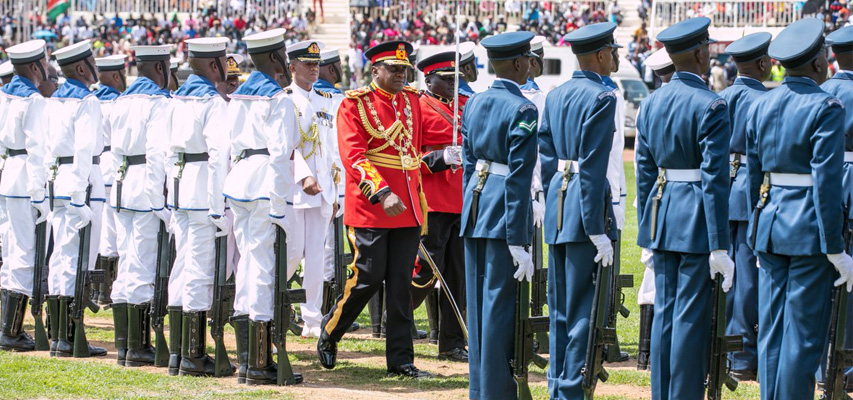
President Uhuru Kenyatta inspecting a guard of honor on Jamhuri day in 2018 dressed in the official military dress known as the red tunic. The sovereignty of the state gives it the ability to have a head of state who is the also the Commander in Chief of the armed forces.
Re-imagining National Sovereignty and Self-determination
As time passes, so does the risk of losing the gist of the major milestones that outline the journey of a nation escalate. On this score, Kenya is not an exemption. At almost 60 years since independence, only a handful of individuals alive today had the chance to witness firsthand the jubilation that lit up Kenya’s onset of self-determination.
Those who witnessed the excesses of colonial rule and then the watershed moment that marked the end of foreign domination in Kenya would, in all likelihood, explain what sovereignty and self-determination mean with a tinge of solemn reflection. The majority of Kenyans today, however, may not be too emotionally invested in what may pass as remote or romantic notions best left for intellectual adjudication by legal minds and scholars of History and Political Science.
But what then is national sovereignty? Simply put, national sovereignty is all about the assertion of full authority and power by a given nation’s leadership in running the affairs of a nation-state away from external influences or interference by alien entities.
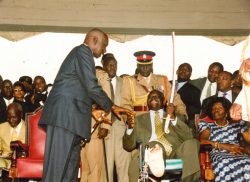
President Daniel Moi hands over the instruments of power to the then president elect Mwai Kibaki. The country has so far had 4 presidents who are considered to be symbols of National unity.
To better appreciate the concept of sovereignty it is important to interrogate its variants and how the notion of sovereignty has evolved over time.
Titular sovereignty is nominal or, if you like, ceremonial. It is symbolic and may, yes, be habituated but in reality it doesn’t exercise effective power. This type of sovereignty thrives in set traditions, etiquette and honour. Such is the case of the Queen of England, the King of Japan or the President of India.
Internal and external sovereignty is a complex blend that recognizes the exercise of power over persons, groups and institutions within a certain jurisdiction whilst upholding the right and freedom to establish diplomatic ties with other sovereign state in within established foreign policy strictures.
On legal and political sovereignty, the state legislates and enforces its authority with minimal—if any—restrictions. In this type of sovereignty, political supremacy bequeaths legitimacy to legal authority.
As for De Jure and De Facto sovereignty, the main concerns are on what the dictates of the law command or where the reality on the ground wins hands-down. In other words, should sovereignty bend to the whims of the laws of the land or should it be about where reality and commonsense rein?
Finally, popular sovereignty… This type of sovereignty is primarily about people’s power and the active participation of the people themselves in their own governance.
Thankfully for us in Kenya and in accordance to Article 1 of our 2010 Constitution;
(1) All sovereign power belongs to the people of Kenya and shall be exercised only in accordance with this Constitution.
(2) The people may exercise their sovereign power either directly or through their democratically elected representatives.
(3) Sovereign power under this Constitution is delegated to the following State organs, which shall perform their functions in accordance with this Constitution —
(a) Parliament and the legislative assemblies in the county governments;
(b) the national executive and the executive structures in the county governments; and
(c) the Judiciary and independent tribunals.
(4) The sovereign power of the people is exercised at —
(a) the national level; and
(b) the county level.
All said, the notion of sovereignty, generally, has mutated significantly over time. The establishment of regional blocs and the effects of globalization, for instance has significantly redefined the classical definition of sovereignty. That notwithstanding, it is critical that independent states stamp their authority as entities that are sufficiently enabled to defend their freedom and right to determine their premeditated and hoped-for future. In all, any pursuit of sovereignty that doesn’t purpose to dignify its subjects is essentially dead on arrival.
Our Founding Fathers, led by the first president of the Republic of Kenya Mzee Jomo Kenyatta sought to rid Kenya of the unholy trinity of poverty, ignorance and disease. This dream, by extension, aimed at draping the citizens of newly independent Kenya with the dignity they had lost under imperial rule.
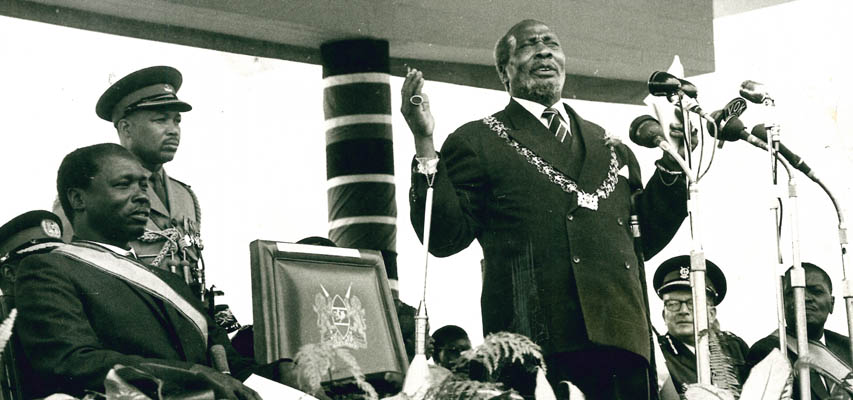
Mzee Jomo Kenyatta addresses Kenyans at Uhuru Park during the 1970 Madaraka Day celebrations as the then vice President Daniel Arap Moi watches. President Jomo Kenyatta is the founding President of the Republic of Kenya.
Kenya’s Founding Fathers seemed to echo Nelson Mandela’s wisdom when he surmised that, “Overcoming poverty is not a gesture of charity. It is the protection of a fundamental human right, the right to dignity and a decent life.” Though the fight against poverty is hardly over, Kenya is certainly not where she was at independence.
The philosophy that informed Kenya’s education system during colonial times maintained that the African is trained primarily for clerical work. Very few Africans had access to tertiary education by design. Therefore, at the turn of independence only a handful of Kenyans had attained levels of education commensurate with positions that would soon fall vacant as self-rule kicked in.
That being the case at the time, it was imperative that access to higher education be accelerated as a precursor to the Africanisation of Kenya’s work force. Fighting ignorance therefore became one of the top priorities for the newly independent Kenya. Kenya’s Founding Fathers guided by Plato’s enduring wisdom—“Better be unborn than untaught, for ignorance is the root of misfortune”—erected to deal a body blow to ignorance.
Pupils at Moi Primary School. In 1963, Kenya had 151 secondary schools, with an enrolment of 30,120 students. Today, according to the Ministry of Education records, Kenya has 10,487 secondary schools—8,933 public and 1,554 private—as at 2019. By the year 2020, Kenya had 3.5 million students in both public and private secondary schools. Granted, at independence, Kenya’s population stood at 10 million, compared to today’s nearly 50 million. Still, the exponential growth of the secondary school sector is evident.
In 1963 Kenya had 151 secondary schools with an enrolment of 30,120 students. Today, according to Ministry of education records, Kenya has 10,487 secondary schools—8,933 public and 1,554 private—as at 2019. By the year 2020, Kenya had 3.5 million students in both public and private secondary schools. Granted, at independence Kenya’s population stood at 10 million compared to today’s nearly 50 million. Still, the exponential growth of the secondary school sector is evident.
Back in 1964, the University College, Nairobi offered degrees awarded by the University of London. Two years later, the college started offering degrees of the University of East Africa headquartered at Makerere in Uganda. Today, Kenya has 30 public universities, 30 chartered private universities and a further 30 universities with Letters of Interim Authority. Clearly, no effort has been spared in providing Kenyans with opportunities to overcome ignorance.
Nothing stymies productivity across various economic sectors, as does poor health. Yet at independence, healthcare for Africans was clearly wanting in Kenya. Those who went to school in the early years of Kenya’s independence may remember learning about afflictions such as kwashiorkor, beriberi, marasmus and trachoma. These are sometimes regarded as diseases of the poor, which many Kenyans indeed were back in the day. Over time, child mortality and life expectancy have improved in tandem with progressive reforms in the health sector.
Today, Kenya has an elaborate healthcare structure with relatively well-equipped medical facilities of different levels right across the country. Much as Tuberculosis, Malaria and a number of lifestyle diseases still stalk us, impressive strides in the healthcare sector have been made since independence.
The majority of the youth today may not conjure up images of the Kenya of 40 or 50 years ago. However, we can only downplay the cumulative impact of Vision 2030 and The Big Four Agenda in delusion. In deed, gauging from what has happened over the last more than five and a half decades of Kenya’s independence, there is a lot to be proud of in terms of improved livelihoods across the country. That, however, does not mean there is no room to make things even better.
It is easy to forget that the progress Kenya has made since 1963 has been aided significantly by the fact that we are a sovereign state duly enabled to exercise our right to self-determination. To make the most of our sovereignty and self-determination Kenyans and particularly the youth, have a duty to make Kenya work in progress we achieve crucial national goals as outlined in key development blueprints. Promulgating the 2010 Constitution was a key milestone towards that end.
Lest we forget, Kenya has been the envy of her neighbours, some steeped in perpetual internal conflicts. It is time to leverage on the relative tranquility Kenya has enjoyed over the years in order to build a stronger economy driven by manufacturing, value addition of farm produce and all natural resources, modern agriculture, an efficient and thrifty bureaucracy and a fully empowered private sector.
If we dwell in unity with justice as our shield and defender, Kenya will reap peace and liberty and plenty will be found within our borders. In common bond united, if we build Kenya together we shall eat the fruit of our labour and fill every heart with thanksgiving.