Masaai dancers join Tourism Cabinet Secretary at the Magical Kenya Tembo Naming Festival at Amboseli National Park. Cultural dances are often included in National and International events to celebrate unity within our diversity.
Our Diversity, Our Strength
History is replete with records of ethnic, cultural, religious and racial intolerance and negative profiling since time immemorial. Professor Mariana Tepfenhard of the Department of History at Monmouth University in the United States in her 2013 paper on “Causes of Ethnic Conflicts” avers that “Many states are made up of numerous ethnic groups, defined as groups that share common heritage, interests, beliefs, historical experience, and cultural traits.”
In its wider sense, human diversity covers all possible differences in human experience and expression based on, race, ethnicity, gender, religion, language, age or disability. Whichever reason is assigned to any form of discord among people groups, the nobler human mission, as aptly said by Mahatma Gandhi, is to summon “Our ability to reach unity in diversity (as this) will be the beauty and the test of our civilization.”
The danger of disunity and suspicion among groups of people has left behind a trail of bloodletting across history. It happened when Hitler’s invaded Poland in 1939, in Nigeria’s Biafra War of the late 1960s till 1970, in Rwanda in 1994 and in Sudan between 1983 to 2005. Kenya had its own misadventure that almost imploded into an ugly faux pas in 2007. Such are reckless experiments to be avoided at all cost.
Yet, as if ingrained in the human DNA, there is always justification—however warped—for a community, race or group of persons to arrogate itself status superior to its cognates or to invoke spurious logic to demean and assail others. In any manifestation of human conflict on the basis of dissimilarity, there is a group or groups of people subjecting others to subordinate status and isolating them.
In reality, every new cultural or religious expression and encounter is a study in the intricate but enthralling nature of human diversity and indeed a cue to prompt the gleaning of authentic perspectives and divergent sensibilities that comprise the totality of humanity. Besides being a rich mosaic of traditions, heritage and viewpoints, human diversity is rich fodder for the enrichment of life and its endless lessons, options and opportunities.
When diverse cultures, and by extension new languages interact, the loaning of terminology that follows takes a natural course. English, for instance, is awash with many loanwords from across the world. Renowned lexicographer and former associate editor for the Merriam-Webster, Kory Stamper estimates that English has words derived from 350 odd cultural expressions whose total linguistic contribution to it stands at about 80 percent.
From Hungarian goulash and Kiswahili’s safari to Japanese Sodoku and Spanish siesta, the English experience is as decked as it is embellishing. Loaning of words across languages confirms just how cross-cultural influences enrich people’s worldviews. The same goes for cultures and distinct ethnic identities within a given jurisdiction, Kenya included.
According to a UNESCO document of 2021—The Infinite Reservoir: Cultural Diversity for Shaping the Future we Want—“Culture, in all its diversity, is an infinite reservoir from which we gain our knowledge of the world and which we tap into to find solutions to contemporary issues. … Our cultural diversity is our greatest strength. It is the ultimate renewable resource for humankind and societies. As such, valuing diversity and protecting and promoting cultures as assets for societies is imperative.”
President Uhuru Kenyatta is assisted to try on the Somalia traditional regalia by the Somalia Prime Minister Mohamed Hussein Roble who paid him a courtesy call at State House, Mombasa. The traditional regalia is a major part of the Kenyan people ranging from the Masaai, the Somali, the Mijikenda among other tribes in the country.
Kenya has upwards of 42 people groups, usually referred to as tribes, itself an unflattering term connoting atavism. Pioneering anthropologists wh0 mapped Kenya’s tribal map for colonial domination purposes profiled each community and pigeonholed them into hypothetical cocoons. That profiling, which aided divide-and-rule governance mechanisms of the natives has persisted since. Prior to the advent of colonialism, Kenya’s and indeed Africa’s various communities had devised formulas of cohabiting. Yes human movement was limited due to lack of motorised transport back then but communities that neighboured each other found ways of interacting with and even benefitting from each other.
However, to avoid an uprising of clusters of communities against colonial masters, it became necessary to drive a wedge between communities through causing inter-ethnic strife. Some communities were adjudged loyal and rewarded for it while others were declared unreliable and were equally demonised for it. Unfortunately the colonial tags left behind by the colonial era were never really erased from Kenya’s national psyche in spite of efforts by successive leaderships to preach unity. The post-election cataclysm of 2007 is the clearest indicator that unifying Kenyans remains an incomplete task of nation building that should be re-embarked on with greater focus, different tack and more zest.
It is important and timely to re-imagine possible solutions to the unity challenge in Kenya. For starters we can borrow a leaf from our next-door neighbour, Tanzania. Tanzania has over 120 ethnic groups and tribes yet the dilemma of disunity on account of ethnic and tribal identity is minimal compared to the situation in Kenya. Perhaps adopting Kiswahili (notwithstanding its downsides in practice) as a dignifying language and deliberately embracing a humane manner of gelling across the breadth and width of the land at the turn of Tanzania’s independence helped in building a deeper sense of homogeneity and tolerance.
Chapter 10 of Kenya’s 2010 Constitution features a raft of national values and principles of governance that offer a starting point of negotiating where good examples should start. If public officers inspired confidence among the rest of Kenyans by observing the following, perhaps the journey of curing disaffection, which may cause suspicion, and by extension, strife will begin;
National values and principles of governance
(1) The national values and principles of governance in this Article bind all State organs, State officers, public officers and all persons whenever any of them; (a) applies or interprets this Constitution; (b) enacts, applies or interprets any law; or (c) makes or implements public policy decisions.
(2) The national values and principles of governance include; (a) patriotism, national unity, sharing and devolution of power, the rule of law, democracy and participation of the people; (b) human dignity, equity, social justice, inclusiveness, equality, human rights, non-discrimination and protection of the marginalised; (c) good governance, integrity, transparency and accountability; and (d) sustainable development.
In the long run, it might be necessary to change tack in our efforts to debunk caustic myths that cast aspects of certain community’s belief systems, penchants and mores in diabolical light. The falsehoods and hyperboles on supposed weird traits of various Kenyan communities spewed willy-nilly feed into inter-ethnic intolerance, needless suspicions and strained relationships. A systematic and wholesome approach to mending this downside should be treated as a matter of priority. Perhaps it is time to consider how school curricula in favour of enhanced integration of Kenya’s communities can bolster much-needed cohesiveness. Perhaps we need to rethink our legislation on matters ethnic profiling and fanning tribal-bound dissension. This is a conversation that needs to be pursued and guided until a consensus is achieved.
On the same score, it is important to address the question of disunity on account of class and status. This is critical because a ‘we-versus-them’ stance pitting those who are perceived to have against those who do not have is a sure recipe for constant social tensions and possible dissent. Constantly working citizens’ emotions to frenzies in order to foment such a view for political expediency is uncivil and narcissistic. The same goes for religious, disability, racial or gender intolerance. For social cohesion to bear fruit, there is need to exercise temperance, restraint and level-headedness among leaders across cadres in order to show the way.
Kenyans are a resilient people. Indeed, our ability to bounce back after crises is laudable. This became evident during the 1998 terrorist bombing of the American Embassy and adjacent buildings in Nairobi in the city centre. The same spirit was visible during the Westgate Mall terrorist attack of 2013 and several times before and after. Clearly there is an underlying camaraderie and esprit de corps worth harnessing as capital for building bridges and solidifying national unity.
We celebrate wildly when our world-class athletes bag medals in far-flung lands and laud our sports teams—especially rugby, volleyball and sometime back cricket—what make a mark at the global arena. During such moments our ethnic identities evaporate and our common bond fuses into spontaneous jubilation until some loose-tongue reminds Kenyans about the foibles of this or the other ethnic group.
Perhaps we need to celebrate the very traits that we often lampoon about communities other than our own. For instance, why should we recognize and appreciate the supposed flamboyance of the lakeside folk as we laud their counterparts from Central Kenya for their propensity for entrepreneurship? We should also consider the athletic prowess of our brothers and sisters from the Rift as we celebrate the Maa community for claiming what we may loosely call the Kenyan identity particularly to the outside world because of their preferred mode of dress. If we look keenly, there are strands of beautiful cultural gems in each of our 40 plus communities that we should repackage and rebrand ourselves afresh with.
If we deal with the various manifestations of ethnic jaundice we suffer as a nation and purpose to sift through our cultural, linguistic, values and beliefs we can build a rich blend and formidable brand of a people defined by colour and substance. The capital for such a brand is our diversity. As aptly noted in the UNESCO’s document quoted elsewhere in this chapter, “…there is the need, especially in the intangible cultural heritage, to focus on the significance of traditional knowledge in the consolidation of communities and the wellness of the general society.” As we acknowledge so, we should not forget forms of diversity mentioned earlier in the chapter, other than cultural, that weaken our common bond as a people.
Unity in diversity and enhanced inclusivity away from ethnic slurs can only make us stronger and more cohesive.
KETRACO technical team work to restore critical parts of one of the Olkaria -Lessos Kisumu power tower that had been vandalized by suspected saboteurs at Kayole area of Naivasha.
Renewable energy
Kenya is on course to fully decarbonise its electricity sector, with 92.3 per cent of electricity distributed by Kenya Power now generated by renewables, also referred to as “green energy” sources.
The demand for electricity in Kenya continues is growing at an average rate of 4.5 per cent annually driven by economic activities as the country recovers from the effects of the global COVID-19 pandemic.
At the same time, Kenya has scaled up use of renewable sources further boosting the country’s standing in the fight against climate change.
According to the 2021 Economic Survey from the Kenya National Bureau of Statistics (KNBS), the total installed electricity generation capacity was 2,836.7 MW in 2020 of which geothermal’s share was 863.1 MW, solar 52.5 MW in 2020. Generation from thermal sources decreased slightly to 749.1 MW in 2020.
Of the 2,836.7 MW installed, 2,705.3 MW is the “effective capacity” – the maximum electric output a power station can achieve under operating constraints.
In 2020, thermal power plants were responsible for just under 7 per cent of the electricity generated even as Kenya imported less power. Unfortunately, electricity transmission and distributive losses at 2,790.7 GWh in 2020, were still too high, amounting to 24.3 per cent of total supply.
Power Generation
The Kenya Electricity Generating Company (KenGen) PLC on its website https://www.kengen.co.ke/ confirms that 86 per cent of the energy it generates today is green energy, and that its installed generation capacity market share is over 60 per cent.
The breakdown of the 1,818MW of installed generation capacity by KenGen is Hydro (826MW), Geothermal (713MW), Thermal (253MW), and Wind (26MW).
The company is also preparing to add another 83MW to the national grid in the first quarter of 2022 once the Olkaria I, Unit 6 geothermal power plant is commissioned this year.
In November 2021, the demand for electricity in Kenya hit a new record peaking at 2,036MW on the back of a resurgence lifting of COVID-19 lockdowns across the country.
At the same time, the country recorded a new energy gross demand peak of 36,381MWh mostly drawn from renewable energy sources as the economy responds positively to the lifting of some of the COVID-19 related restrictions.
Responding to the demand, KenGen scaled up generation from its geothermal, hydro and wind power stations to meet the growing demand.
The Energy and Petroleum Regulatory Authority (EPRA) reported that KenGen’s hydro power stations exceeded the period’s projections by 581MWh or 5.56 per cent, with a total installed hydro capacity of 826 MW.
KenGen’s Gitaru, Kindaruma, Kamburu, and Kiambere Power Stations were among the hydro power stations surpassed the projected power generation output. The stations are part of the Seven Forks cascade and a crucial piece of KenGen’s power generation infrastructure, accounting for around 29 per cent of Kenya’s total installed capacity.
The power generation giant’s expertise is also in high demand across Africa with governments keen to track KenGen’s footprints in Olkaria, Naivasha where the company has successfully drilled about 320 geothermal wells. In November, the firm announced that it had begun drilling one of three geothermal wells in Djibouti under a Kshs 700,000,000 contract signed in February 2021.
The drilling of the first well is expected to take about two months to complete as KenGen seeks to export the expertise and experience earned.
The experts from KenGen comprise of mechanical Engineers, drilling Engineers, project managers, drillers, cementing technicians and specialised welders in the geothermal development value chain.
KenGen is also set to commence drilling of three geothermal wells for the Djibouti Office of Geothermal Energy Development (ODDEG) in 2022.
The Djiboutian venture is part of KenGen’s ambitious diversification strategy, in which the company is seeking to acquire new revenue streams by offering commercial drilling services, geothermal consulting and other related services across Africa.
This is the third mega geothermal drilling contract that KenGen is implementing in Africa. In October 2019, the company secured a Kshs 5.8 billion contract to drill 12 geothermal wells in Ethiopia. The contract with Ethiopia’s independent power producer Tulu Moye Geothermal Operations (TMGO) PLC includes installing a water supply system and equipment.
In February 2019, KenGen won a contract to drill geothermal wells for the Ethiopian Electric Company (EEP) in Aluto-Langano, Ethiopia. The contract is for the implementation of drilling rigs and accessories as well as rig operation and maintenance for drilling geothermal wells. It is financed by the World Bank through a loan to the Ethiopian Government.
In November 2021, KenGen announced that it had completed drilling the deepest geothermal well in the Aluto-Langano project reaching a depth of 3,000 meters, surpassing a target of 2,750 meters.
KenGen posted a 7 per cent increase pre-tax profit in its full year Financial Results ending 30th June 2021, from Kshs 13.79 billion to Kshs 14.76 billion and recommended a dividend payout of Kshs0.30 per share (Ksh.1.98 billion) to be paid to all its shareholders.
Environmental Warrior
On the environmental front, KenGen has completed plans to set up an Energy park at its geothermal power generation hub at Olkaria-Naivasha in order to take advantage of the competitively priced geothermal steam and electricity as key economic drivers of production.
The park will provide industrial, commercial and recreational facilities and will be developed in two phases, with completion of the first phase set for this year.
The park is strategically located along regional transport routes with access by road and rail. The park will provide quality and reliable utilities and energy supply (Electricity, high pressure stream and brine at 130 degree Celsius) which will be managed through an appointed developer who will develop infrastructure for a plug and play environment,
Ongoing Power Generation projects by KenGen are:
i. Seven Forks 40MW Solar Photovoltaic (PV) Project
ii. Raising Of Masinga Hydropower Dam
iii. Ngong Wind Farm
iv. Olkaria 1 Units 1, 2 & 3 Rehabilitation Project
v. Olkaria V, (172MW) Projects
vi. Olkaria I Additional Unit 6 (83.3MW)
In an official Press release in January 2022, (KenGen), announced that it had completed Phase One of the 25 acres Ngong Forest Restoration Project.
Commenced in October 2018, the project involved planting 7,000 indigenous trees around a degraded site in Ngong hills forest power station, where KenGen generates 25.5 MW of electricity from wind energy.
The initiative is in line with the company’s Environmental Conservation Program and Corporate Environmental Sustainability Policy, which seeks to undertake an additional 10 Hectares ecosystem restoration project in Phase II within the KenGen lease area at Ngong during the 2021/2022 financial year.
According to Ngong forest restoration Phase I’s completion report, KenGen attained a 100 per cent trees survival rate, marking the project as completed and successful.
The report read: “The project’s final milestone verification for milestone 3 final quarter was carried out on 21st June 2021 followed by a final Project Implementation Team (PIT) meeting at Ngong project site where 7,134 seedlings were verified as surviving against a target of 7,000 seedlings thus a 100 per cent success achieved rehabilitating an area covering 10.7 acres (est).”
The company has fully aligned itself to climate action agenda and rolled out various environmental conservation projects across the country which will go a long way in in helping to slow down the effects on climate change.
It complements other climate action efforts by KenGen including its deployment of green energy power projects like the construction of the 83MW Olkaria I unit 6 which is almost complete.
KenGen plans to undertake an additional 10 hectares ecosystem restoration project within the lease area this year that will include planting, protecting, replacing and maintaining 10,000 assorted indigenous tree seedlings.
The state-owned power generation firm has signed a Memorandum of Understanding (MoU) with partners including the Kenya Wildlife Services to carry out conservation and management activities in Ngong Forest and other mitigation measures identified in the Environmental and Social Impact Assessment study for the proposed construction of 10MW Ngong Phase IIIA wind project at Ngong Hill.
The project supports the commitment towards NETFUND 2 billion campaign where the company has pledged to plant and grow 400,000 seedlings per year.
Over the years, KenGen has supported initiatives to mitigate the effects of climate change while maintaining ecological balance. The initiatives such as the Green Initiative Challenge (GIC) launched in 2013 have been under the KenGen Foundation’s environmental pillar and community sensitisation.
Solar panels at the Isalaasha Bush Camp Resort in Gilgil Sub-County used to power cottages, water pumps and heating water. The design according to the management is meant to conserve the environment by curbing air and noise pollution that emanate from the alternative energy sources that is the generator.
Rural Electrification Projects
In December 2021, the Government launched the Electrification of Public Facilities Project (EPFP) to connect over 1,200 public institutions in 36 counties across the country to the national power grid at a cost of Kshs 6.4 billion.
The Rural Electrification and Renewable Energy Corporation (REREC) is implementing the project in five sectors: Nyanza and Western; North Rift; South Rift; Central and Upper Eastern; and Lower Eastern and Coast regions. It is to be completed by June 2022.
Connecting the public facilities to the national power grid will improve their ability to provide social services such as education and health.
The public facilities to benefit include markets, health centres, educational institutions, tea buying centres, coffee factories and administration centres.
To expedite the project, the Government of Kenya, secured credit financing from Arab Bank for Economic Development for Africa (BADEA); OPEC Fund for International Development (OFID); Saudi Fund for Development (SFD) and the Abu Dhabi Fund for Development (ADFD) in conjunction with the Government of Kenya.
In schools, electrification will result in the uptake of ICT and use of modern learning methods, thereby improving the competitiveness of rural schools in attracting qualified teachers as well as improving their performance.
Availability of electricity in rural trading centers empowers the rural populace, enabling growth of income generating activities such as the Jua Kali sector and providing employment opportunities. It also enables mechanised farming for improved food security.
Sector Reforms
After President Uhuru Kenyatta received Report of the Presidential Taskforce on Review of Power Purchase Agreements (PPA) from the Chairman Mr John Ngumi, the Ministry of Energy began implementing its recommendations.
Energy is a critical enabler of economic development. The report documented reasons for the high cost of electricity, which has had a negative roll-on effect on the cost of doing business and the prices of consumer goods in the country.
In October 2021, Interior and Coordination of National Government Cabinet Secretary Dr Fred Matiang’i inaugurated the Steering Committee on Implementation of the Recommendations of the Presidential Taskforce on Power Purchase Agreements (PPA).
The Steering Committee was appointed on October 8, 2021 through Kenya Gazette Notice Vol.CXXIII No. 209 by President Uhuru Kenyatta.
Energy Cabinet Secretary Amb Dr Monica Juma revealed that several teams were to be established to spearhead implementation in various power sub-sectors, adding that there was no room for failure.
Among the tasks is renegotiation of power purchase agreements (PPAs), which were found to be badly skewed in favour of the providers at the huge expense of the taxpayer. The other key task is restructuring of state-owned power distribution monopoly, Kenya Power.
The team is also examining policy issues in the energy sector, reviewing laws and analysing previous taskforce reports.
Terms of Reference for the Steering Committee are:
i. Oversee, coordinate and monitor implementation of the Recommendations of the Presidential Taskforce;
ii. Provide advisory and technical support during the implementation of the recommendations of the Presidential Taskforce;
iii. Prepare progress Reports for presentation to his Excellency the President through the Cabinet Sub-Committee on KPLC; and
iv. Perform any other task ancillary to its terms of reference as may be directed by the Cabinet Sub-Committee on KPLC.
The Steering Committee had an almost immediate impact when it managed to lower the cost of electricity sold by Kenya Power to consumers just before the New Year.
Kenya Power has already experienced a turnaround registering a KShs 8.2 billion profit, from a loss of KShs 7.04 billion a 216 per cent growth, driven by the increased revenue of Sh144 billion alongside the restructuring of its operations.
Renegotiation of PPAs seeks to inject efficiency and effectiveness in the sector players to keep power prices on a sustainable curve, given Kenya’s attractive renewable energy mix that should result in cheaper electricity.
Kenya Power lowered its operating costs by 17 per cent by improving efficiency in operations.
The commissioning of nine new sub-stations and refurbishing of another five enhanced network capacity upwards to 500 Megavolt amperes (MVA), and Kenya Power is also automating its network. The automation of the distribution management system has improved the response time to power outages via the control center.
Makueni county conservator of Forest Evans Maneno planting a tree at KMTC Mbuvo being assisted by KFS officers. According to the conservator, planting of trees by communities help in reversing the harsh effects of climate change like long dry spell, high temperatures and drying of water sources in the county. The conservator stated that Makueni has a forest cover of 13.7 per cent, and urged farmers, schools and colleges to plant more tree seedlings to further improve the local forest cover. /Ministry of Environ
Kenya has made significant achievements in promoting environmental sustainability, and greening of the economy, by among others banning single-use polythene bags nationally and single-use plastics in protected conservation areas; developing a sustainable waste management policy and legislation; developing regulations on extended producer responsibility, plastic and chemical Management and e-waste
The push for environmental and forest conservation is driven by the critical role the sector plays in achieving sustainable development as captured in the BIG FOUR AGENDA
The circular economy and the ‘green recovery’
The circular economy is an economic model where there is minimal wastage. It entails reusing, repairing, refurbishing and recycling for as long as possible. It has guiding principles centered around embracing green technologies and gradually phasing out negative externalities.
Within this context, the Sustainable Waste Management Bill 2021 of the Senate sought to promote the Circular Economy by encouraging extended producer responsibility. Through the Ministry of Environment and Natural Resources, the Nairobi City County Environmental Sustainability and Circular Economy awareness campaign is promoting sustainable consumption among members of the public to reduce waste generation
According to GIZ, green recovery means measures that combat the social, economic and environmental impacts of the coronavirus crisis. The African Union launched new a five-year continental Green Recovery Action Plan 2021-2027. Kenya has the Green Economy Strategy and Implementation Plan (GESIP), a macro-economic policy framework in tandem with Kenya’s Vision 2030.
Waste Management Policy and Legislation
The development of a sustainable Waste Management Policy and Legislation has an international, regional and national framework. The United Nations Sustainable Development Goal 12 requires a strong national framework for sustainable consumption and production that is integrated into national and sectoral plans, sustainable business practices and consumer behavior, together with adherence to international norms on the management of hazardous chemicals and wastes.
Africa adopted the Bamako Convention in 1991 to ban the import of fall hazardous and radioactive waste. When it comes to regional matters, the East African Community established the EAC Polythene Materials Control Bill (2016), a regional approach to the control and regulation of use, sale and manufacture and importation of polythene materials and products. The EAC bill provided the regional framework for the Kenyan plastic carrier bag ban in 2017. Kenya followed by establishing the National Sustainable Waste Management Policy and the Sustainable Waste Management Bill 2021 guided by the circular economy on the 3Rs – Reuse, Recycle and Reduce. The rationale is that sustainable development is threatened by the waste challenge that can result in negative socio-economic, health and environmental impacts as per the Sessional Paper No.X of 2018.
A group of rehabilitated drug addicts engage in a cleanup exercise at an estate in Kutus town. The Kirinyaga County government has enganged the youth meaningfully to ensure that they give a new life to the environment in the county.
Ban of single-use plastics
The ban of single-use plastics in Kenya was prefaced by various global efforts by the United Nations because of the harmful effects of plastic. Kenya first banned single-use plastic in 2017 and later in 2020 banned single-use plastics in protected areas. While there has been significant progress with a drastic reduction in plastic pollution there is still a lot to be done.
Four years down the line, there is still no law that requires manufacturers of plastics to take control of their wastage. The industry -ed initiative, Kenya PET Recycling Company (PETCO) whose main goal is to take Extended Producer Responsibility still has a limited membership base that is purely voluntary, despite intents by the National Environment Management Authority (NEMA) to make it compulsory for single-use producers to be members.
Smuggling of single-use plastics into the country especially from Uganda continues to be a challenge but there is a marked reduction of environmental pollution as witnessed before when plastic waste papers littered the environment.
Regulations on Extended Producer Responsibility
Clean-up Kenya has gone deeper in the analysis on the Extended Producer Responsibility by looking at the 2021 Environmental Management and Coordination (Extended Producer Responsibility) Regulations that aims to have producers take greater responsibility for packaging.
The producers are required to join a Producer Responsibility Organisation (PRO) which would undertake recovery, collection, sorting, recycling and treatment of packaging. The hiccups on the proposed law include the Deposit Return Scheme (DRS). Beer and soda companies require a deposit to manage glass companies as a tangible incentive to recycle. However, wine companies still have single-use wastage.
The challenge with the legislation is that it does emphasize the DRS but uses the word “may” to indicate the model is not compulsory but left in the hands of the producer. DRS has been effective for years enabling consumers to be part of the recycling efforts. The second issue with the law is that it gives room for the creation of the EPR monopoly.
A product falling under PET (Polyethylene terephthalate) will have one PRO as a member and shareholder. Kenya Association of Manufacturers already set up KEPRO which is already seen as a monopoly. Monopolies have been seen to inhibit legislation and even manipulate prices by shifting costs back to the consumer. Producers should be members of PRO, and not shareholders as the biggest companies may take the lead and have undue influence on the management. Finally, the law omits the mention of vulnerable groups who bear the biggest burden of recycling. The PRO should set up a percentage to aid the welfare of the vulnerable groups.
Further Kenya only recycles 15% of the plastic it produces, according to Zephaniah Ouma, NEMA Director for Compliance and Enforcement. International Agreements have also caused a threat to the ban on single-use plastics, such as the Kenya-USA Trade Agreement that had a proposal by America Chemistry Council with an intent to expand the plastic industry footprint across Africa. China also shut its borders to most plastic waste imports in 2018 but Kenya started taking in more of it.
Plastic and Chemical Management and E-waste
Official launch of the Environment and Land Court Users’ Committee (E&L CUCs) at a Nairobi Hotel. The meeting was officiated by Chief Justice Martha Koome, CS Keriako Tobiko, CS Farida Karoney, and Danish Ambassador to Kenya Ole Thonke among others. Court Users Committees provide a platform for actors in the justice sector at the local or regional level, to consider improvements in the operations of the courts, coordinate functions of all agencies within the justice system & improve the interaction of these stakeholders.
The National Environmental and Management Authority E-waste guidelines are handled through the Environmental Management and Co-ordination Regulations 2013 and the Waste Management Regulations (2006) as legislation dealing with Plastic and Chemical Management and E-waste.
The producers of Electrical and Electronic Equipment (EEE) shall establish or join a Producer Responsibility Organization as shareholders and operationalize an EPR Scheme collectively. The Cabinet’s approval of the Sustainable Waste Management Policy and Bill (2021) shows a clear transition from a linear to a circular economy. The counties are also required to enact a county sustainable waste management legislation.
National 200 million hectares tree planting initiative
Kenya’s most ambitious tree planting campaign unveiled in 2019 aims at planting two billion trees by 2022 to accelerate the achievement of the 10 per cent tree cover, which currently stands at 7 per cent, placing the country among the least forested in the world.
The strategy also entails protecting natural forests and water towers, rehabilitating degraded forest areas and mangroves, development of commercial forestry, restoration of degraded landscapes in the ASAL regions, greening of infrastructure and urban areas, adoption of forests among others.
This takes a whole government approach with line Ministries, Departments and Agencies involved. The Ministry of Environment and Natural Resources Cabinet Secretary Keriako Tobiko at a high-level online meeting of the Global Alliance on the Circular Economy and Resource Efficiency (GACERE) outlined Kenya’s actions in promoting the circular economy in the context of the ‘green recovery’.
The CS mentioned the ban on single-use plastics, the sustainable Waste Management Policy and Legislation, regulations on Extended Producer Responsibility, Plastic and Chemical Management, and E-waste as some of the initiatives aimed at achieving a circular economy and environmental sustainability. The tree-planting initiative, besides restoring large areas of degraded forests, and the finalizing of Kenya’s Greenhouse Gas Emission Strategy (2050), will enhance the scope of the circular economy interventions.
Restoration of forests
The Government is targeting 5.1 million hectares of degraded and deforested landscapes for restoration by 2030, as a contribution to the African Forest and Landscape Restoration initiative. All these plans are backed by the National Climate Change Action Plan (NCCAP) 2018-2021 as a second five-year nationwide sectoral plan to guide Kenya’s Climate Action and the County Climate Change Fund.
Meru County Governor Kiraitu Murungi flags off the second of medication of the Mount Kenya mountain run championships held at Kenya School of Adventure and Leadership. The run which is meant to raise funds to support the fight against cancer, protect wildlife and conserve the environment was attended by more than 3000 participants.
The increasing rate of deforestation and forest degradation globally formed the basis of discussion during the COP26 World Leaders Summit on ‘Action on Forests and Land Use’. The Glasgow Leaders’ Declaration on Forests and Land Use was endorsed by 133 nations who committed to collectively halt and reverse forest loss and land degradation by 2030 while delivering sustainable development and promoting inclusive rural transformation. Kenya is among the 133 countries that endorsed the declaration.
On March 21, the world celebrates the ‘International Day of Forests’. The theme for 2021 was “Forest Restoration; a path to recovery and well-being”. Even though Kenya did not commemorate the day publicly due to Covid-19 restrictions, the Government urged citizens to raise awareness on the importance of protecting and conserving forests.
Kenya adopted the Farmer-Managed Natural Regeneration (FMNR) as one approach in forestry that has been used as a nature-based solution to restore degraded areas. One of the most impressive projects has been the Chyulu Hills REDD+ Project.
According to Forest Carbon Partnerships REDD+ stands for countries’ efforts to reduce emissions from deforestation and forest degradation, and foster conservation, sustainable management of forests, and enhancement of forest carbon stocks. “Chyulu Hills steady stream of income from the sale of carbon credits — both before and during the pandemic — has been “transformational” for local communities, including Indigenous Maasai pastoralists and Kamba agriculturalists.”
Finalising of Kenya’s Greenhouse Gas Emission Strategy (2050)
Kenya committed itself to the COP Agreement. Through the Kenya Climate Change Action Plan,it pledged to reduce greenhouse gas emissions by 30 per cent by 2030. Kenya like other African countries contributes very little in terms of carbon emissions but bears the brunt of climate change especially because it relies on rain-fed agriculture for the production of food. This is among the rationale for the Green Growth and Employment Strategy and Action Plan, where there is nationwide tree-planting campaigns and forest landscapes restoration under the ‘Greening Kenya’ Initiative.
Kenya is finalising its long-term Greenhouse Gas Emission Strategy (2050), which will, among others, enhance the scope of circular economy interventions in all sectors, and ensure principles that underpin the EU-Green Diplomacy are aligned with Kenya’s Green Growth Agenda. Scientists have noted that the energy and transport sectors contribute more GHG emissions compared to any other industry. This means adopting a more environmentally friendly mode in the future, with the government encouraging more non-motorized transport like cycling or solar-powered/rechargeable cars.
To increase carbon absorption in the atmosphere, Kenya is keen to plant more trees. Counties have their targets in the planting of trees and encouraging clean energy reducing charcoal burning. Legal tree cutting is regulated and one must have a licence.
In Kenya’s updated Nationally Determined Contribution and Joint Credit Mechanism activities dated 16 2021, Kenya mentions specific legislation like the Water Act (2016), Disaster Risk Financial Strategy (2018-2022) and the Kenya Climate Smart Agriculture Strategy (2017-2026). The mitigation measures include increasing renewables in the electricity generation mix of the national grid, Enhancement of energy and resource efficiency across the different sectors, clean, efficient and sustainable energy technologies to reduce overreliance on fossil and non-sustainable biomass fuels and sustainable waste management systems.
The sectors covered by the contribution include The Intergovernmental Panel on Climate Change (IPCC) Guidelines for all sectors: Energy, Transportation, Industrial Processes, Agriculture, Land Use, Land Use Change and Forestry (LULUCF) and waste sector. For adaptation to occur Kenya will mobilize resources to meet 13 per cent of this budget, requiring international support for the 87 per cent.. JCM activities include Electrification of communities using Ultra Low Head Micro Hydro Power Generation system, the introduction of Solar PV System at Salt Factory
b. Restoration of the Cherangany – Elgeyo Hills Ecosystem
The Ministry of Environment and Forestry launched an Integrated Masterplan to Restore Degraded Cherangany-Elgeyo Hills Eco-System in July 2021. The plan provides an overview of the importance of the ecosystem, the challenges it faces, and the need for its restoration and it also provides a legal framework for supporting the Plan, with a focus on the five conservation zones in this ecosystem. The Cherangany-Elgeyo Hills ecosystem traverses Elgeyo-Marakwet, West Pokot, Trans-Nzoia and UasinGishu Counties, and it covers an area of 414,928 hectares, consists of two water towers and 22 gazetted forest blocks. It lies within Lake Victoria and Rift Valley drainage basins, draining its water into Lake Victoria and Lake Turkana. The ecosystem is geared towards the conservation of the Kaptagat forest block which includes 225 hectares of degraded areas within Sabor, Penon, Kaptagat, Kipkabus and Kessup forest blocks. The project will need 7.5 billion over 10 years. During the 5th annual reforestation campaign, 319000 trees were planted. The last four editions have reached a total of 210 hectares and distributed 12,000 avocado seedlings to communities adjacent to the forest in UasinGishu and Elgeyo Marakwet counties.
The Cherangani Hills Forest Strategic Ecosystem Management Plan 2015 –2040 seeks to conserve water catchment and enhance the unique biodiversity of the forest, contribute towards meeting subsistence needs and improving the livelihoods of forest adjacent communities, improve and develop the condition and potential for utilization of the forest resource. The approach to plan implementation includes; zonation of the eco-system, livelihood support zone, ecotourism, cultural sites and rehabilitation zone.
Tree growing session at Corner Baridi, Ngong Hills Forest led by Environment and Forestry Cabinet Secretary Keriako Tobiko to commemorate International Day of Forests whose theme is Forests for Sustainable Production and Consumption. Two thousand trees were grown at the site adopted by the Green Blue Foundation Africa in partnership with Family Bank. The 10 acres is part of 100 acres of the Forest to be adopted by the organization for five years. This is part of the Government initiative in partnership with corporates to restore degraded ecosystems through the Adopt A Forest Initiative.
Cheragani Hills woes began during the colonial days when 12 forest blocks were gazetted as government forests by the colonial government. The Sengwer community thought it would get back its land after independence but that was not the case. This led to the dramatic loss of forest drastically especially in 1992. Justin Kenrick through the Forest Peoples Programme argues that “thousands of hectares of land were excised through illegal alterations of forest boundaries and irregular allocation of the land to non-Sengwer. The largest excision areas extended over the top of the Cherangany Escarpment (Eastern Cherangany Forest Reserve), impacting tremendously on water resources and altering the flow regime of major rivers feeding Lake Victoria and Lake Turkana, a trend threatening the stability of the lakes ecosystems.”
c. Green public procurement implementation
Green Public Procurement (GPP) is a process whereby public authorities seek to procure goods, services and works within a reduced environmental impact throughout their life cycle. GPP policy can be a strategic lever towards achieving its Green Economy Strategy and Implementation Plan (GESIP) 2016 – 2030.
The Kenya government can capitalise on GPP to facilitate sustainable development and transition towards a circular economy; strengthen agriculture and food systems; generate economic gains; encourage the SME sector development; bolster eco-innovation; create opportunities for marginalised/vulnerable groups and enhance trust in public institutions.
Kenya’s Green Public Procurement Framework highlights an eight-point action plan to be implemented within the first five years after its approval. This includes Approve Green Public Procurement Framework (GPPF) by the Joint TaskForce; Implementing GPP pilot programme; Creating a legal environment for Green Public Procurement by amending the Public Procurement and Assets Disposal Act (PPADA) and Public Procurement and Assets Disposal Regulations (PPADR) to include “at least 30% of the government procurement is to be green procurement”; Implementation of Green Public Procurement in Kenya by Integrating Green Public Procurement cycle; Capacity building; Communication strategy by ensuring effective information dissemination and raising awareness on GPP; and Market engagement, Monitoring and Review by developing rapport with suppliers and ensuring that they benefit from GPP.
Integrating Green Public Procurement cycle includes prioritising goods, works and services for procurement planning and budgeting; Developing, Publishing, Implementing and Reporting Annual GPP Plans; Publishing GPP procurement opportunities in the Government Procurement Portal; Procuring Priority GPP Goods, services and works; Adopting green criteria-technical specifications and evaluation for awarding contracts in key sectors; Reports on GPP goods, services and work contracts; KEBS to develop quality certifications for GPP products; Initiating the formation and development of Kenya’s Ecolabel Programme by expanding NEMAs mandate to include Eco-labeling certification and environmental standards management; regular meetings with suppliers/manufacturers;, updating green goods/products and including them in the catalogues (like an e-shop); developing sector-specific GPP Products Specifications; Training
decision-makers.
d) Mitigation of the impact of deforestation and climate change
Deforestation and forest degradation present real challenges to Kenyans and touch on the lives of people, as highlighted at the country consultations held on Kenya’s Climate Change Action Plan in early 2012. Deforestation and forest degradation impact on livelihoods through reduced biomass energy, soil erosion and siltation, reduced water infiltration in the soil (leading to diminishing groundwater quantities), and changes, principally reductions, in precipitation. At independence in 1963, Kenya’s forest cover stood at approximately 11 percent. Deforestation has reduced Kenya’s forest cover to six percent, with the country losing approximately 12,000 hectares of forest a year despite the government’s attempts to alleviate the problem according to the Food and Agricultural Organization.
The drivers of deforestation in Kenya are diverse and encompass both direct and indirect pressures. The REDD+ Readiness Preparation Proposal (R-PP) notes that the main drivers of deforestation include conversion to agricultural land in response to demographic pressures, and unsustainable production methods and consumption patterns for charcoal. Other drivers include degazetting of forest lands (although steps have been taken to address this, including the 2005 Forest Act), ineffective institutions and enforcement, corruption, illegal logging and, in the case of private local authority forests, unclear land tenure for forest-adjacent peoples. Significant degradation has also occurred in gazetted forests because of decades of illegal logging. Similarly, many trust land forests have been degraded due to demand for charcoal, timber and fuelwood.
Kenya’s reforestation efforts are there to mitigate climate change. Other efforts include; mitigating the impact of deforestation and climate change, and enhance the provision of water facilities, by rehabilitating wells, water pans and underground tanks in the Arid and Semi-Arid areas at a budget of Ksh. 850 million. Kenya has a National Policy for Disaster Management.
Severe flooding affected wide areas of Kenya since the start of the “Long Rains” season in early April 2021. By 23 April, over 25,000 people had been displaced according to the Red Cross. Further heavy rainfall from 8th May worsened the situation, with flooding reported in Kakamega, Turkana, Homa Bay, Baringo, Busia, Siaya and Kisumu counties.
e. The Greening Kenya Campaign
A water recycling system at Isalaasha Bush Camp Resort in Gilgil Sub-County ,Nakuru County. The resort recycles water flowing from washrooms, bathrooms and kitchens to water its lawns, flower garden and small orchard twice every week, using solar energy hence conserving energy. In addition, the camp has put a number of measures for environment conservation for instance, in the background, used glass bottles that provide natural lighting to the cottages are visible. According to a water sanitation and wastewater treatment engineer, Ndegwa Mahinda (pictured), who is overseeing construction of 25 cottages at a cost of over Shs 30 million, the 5 cottages that are fully complete feature architectural designs, allow enough natural light and provide for waste water recycling and solar roofing tiles to cut energy costs, and to curb pollution for sustainability./ Dennis Rasto, KNA
The Campaign focuses on growing trees in schools, universities, education centers, farmlands and dryland. The initiative is part of Kenya’s aim to plant two billion trees and achieve more than 10 per cent forest cover in the country by 2022. The President, Uhuru Kenyatta, issued a decree that the attainment of 10 per cent National tree cover be accelerated by 2022 and subsequent directives that all Government Ministries, Departments and Parastatals/Agencies (MDAs) to commit 10 per cent of their Corporate Social Responsibility (CSR) budget to tree growing activities. Greening Kenya Campaign recognizes that planting trees must be all-inclusive that is the whole government/whole society approach.
The government says the campaign is an offshoot project conceptualized from the collaboration between the National Youth Service and the Kenya Prisons Service. The agreement will round off the cause with joint projects in planting and nurturing different types of exotic and indigenous trees and fruits The ultimate objective is to develop 50 million tree seedlings for planting and contribute to the realization of the recommended 10 percent forest cover in the country.
Anthems and flags are symbols that hem in allegiance among communities that subscribe to a common cause or a set of shared goals. While an anthem is a musical composition that extols the values, heritage and the driving spirit of a society, a flag is an insignia meant to express commitment to mutual interests and pursuits. Simply put, anthems and flags are emblems that affirm a kindred affinity among a group of people in pursuit of a common set of aspirations.
Anthems and flags are also instruments of unification. They are couched to breathe life and purpose to the soul of a community bound by a common cause.
Before we venture any further into the nitty-gritty of the origins and social significance of anthems and flags, let us interrogate where the two trace their origins.
The anthem is essentially a 19th century phenomenon with historical roots in Europe. The earliest national anthem—the Wilhelmus—traces its origins to the Netherlands. Though written during the Dutch Revolution of 1568 to 1572, the song became the official national anthem in 1932.
Melodies of most anthems easily agree to marching or hymnal routines. That is how many of anthems are delights of structured ensembles, especially brass bands. Anthems are usually translated into multiple versions depending on the language map of a given nation or jurisdiction they serve.
The Swiss Psalm, Switzerland’s national anthem, for instance, is available in four languages – French, German, Italian and Romansh. The four versions cater for Switzerland’s four official languages. Meanwhile and closer home, the case of South Africa’s national anthem is distinctly peculiar. In a single composition, five of South Africa’s eleven national languages fuse into a national ensign designed to celebrate the country’s homogeneity.
Back home, Kenya’s national anthem is available officially in both Kiswahili and English. The East African Community anthem, routinely intoned soon after national anthems of the respective member states is rendered in Kiswahili, a common denominator across the region.
Meanwhile, the African Union’s anthem has six renditions in Arabic, English, French, Portuguese, Spanish and Swahili. The six versions are in recognition of the continent’s most dominant languages.
Still on anthems, very few national canticles are works of world-renowned composers aside from German’s Das Lied de Deutschen, a composition by Joseph Haydn and Austria’s Land der Berge, Land am Strome, credited to Wolfgang Amadeus Mozart.
In hindsight, most national anthems are inspired by circumstances organic to user jurisdictions. Most hardly exude exoticism, perhaps to imbue in them an enduringly universal appeal. And this for a good reason! How else can anthems become ubiquitous capital on a regional or national scale?
Kenya’s national anthem got its impetus from a Pokomo lullaby reworked by five musically gifted individuals—Graham Hyslop, Ugandan-born George Senoga-Zake, Thomas Kalume, Peter Kibukosya and Washington Omondi—at the turn of independence. The Pokomo, a southeastern Bantu community whose population stood at 112,075 in 2019 is part of Kenya’s nearly 50 communities that collectively command a population of about 50 million to date.
The outset of independence was marked by high expectations and Kenyans were eager to savour the fruit of freedom after decades of colonial domination. This spirit informed the hope and aspirations expressed in our national anthem.
Essentially, Kenya’s national anthem is a prayer framed as a wish list. It is a statement of acknowledgement of what we hold dear as a people, what our worth as a country holds as well as a proclamation of our shared hopes. It is also a communiqué of our common purpose as Kenyans.
Though not as common as it was years back, Kenya’s national anthem was part of a package served alongside a National Pledge, itself a recital particularly popular among Boy Scouts and Girl Guides;
I pledge my loyalty to the President and Nation of Kenya, My readiness and duty to defend the flag of our Republic. My devotion to the words of our national anthem. My life and strength in the task our nation’s building. In the living spirit embodied in our national motto – Harambee!
Anthems appeal to patriotic sensibilities that communicate a people’s identity, desires and pride. This is demonstrable in the words of our national anthem.
Kenya National Anthem
(English)
O God of all creation, Bless this our land and nation. Justice be our shield and defender, May we dwell in unity, Peace and liberty. Plenty be found within our borders.
Let one and all arise With hearts both strong and true. Service be our earnest endeavour, And our Homeland of Kenya, Heritage of splendour, Firm may we stand to defend.
Let all with one accord In common bond united, Build this our nation together, And the glory of Kenya, The fruit of our labour Fill every heart with thanksgiving.
Perhaps an indication of the place God occupies in the list of Kenya’s priorities, the opening line of our national anthem seeks blessings upon the land from above. Justice, unity, peace, liberty and abundance follow as our top quests in that order. The second stanza of Kenya’s national anthem calls on every citizen to pull together in serving the nation in order to safeguard our national honour. The last stanza underlines the place of unity of purpose in working towards a more prosperous nation for which we stand to reap benefits that we will be thankful in the fullness of time.
Turning now to flags. Besides being predominantly oblong cloth pennants, usually held in place by staffs or halyards, flags—historically—are also symbols of shared kinship and devotion to a common cause.
Flags evolved from military standards. Their origin is traced to Egypt of 3,000 years ago. Flags were also used by the Roman Empire as logotypes of local armies. Roman armies had various standards among them the Signum, the Aquila and the Vexillum. It is from the Vexillum that the term vexillology—the study of flags—is derived. Back then, the loss of a standard was a scandalous affair, particularly so the Aquila. That should tell us something about the significance of flags and standards as badges of national identity, sovereignty and pride, then as now.
Some of the earliest vestiges of expressions of patriotism relating to the use of flags manifested in decorations on spears and cultural identity symbols meant to tell apart one group from another. This happened mostly in war related adventures.
With time, the use of flags was preferred for announcing presence or claiming sovereignty. Previously, erecting sculptures and other war-bound symbols was in vogue but not after flags took over. By using flags, explorers and colonialists signaled intended dominance over targeted territories. That is precisely why the lowering of the Union Jack and subsequent hoisting of the Kenyan flag on December 12th 1963 at Uhuru Gardens remains such a symbolic event in the history of Kenya.
Neil Armstrong was the first person to land on the moon in 1969. To mark that breakthrough, Armstrong erected the American flag on the moon’s surface to the pride of his motherland. Similarly, when Kenya attained independence on December 12th 1962, one Kisoi Munyao erected our flag atop Batian peak to celebrate the newfound freedom.
There are standard symbols used on flags to communicate the same meaning across the globe. The sun, for instance, stands for unity and vigour. For using the sun in its flag Japan is sometimes referred to as the “land of the rising sun”. The moon—mostly captured as a crescent—in the company of stars is a symbol of divinity especially to Muslims. Other common symbols that feature on flags include stars, representing energy, the cross for faith and wholesomeness and the square to convey balance.
A cursory survey will reveal that red and white are the commonest colours on world flags. Most flags go for primary colours and particularly blue, red and green. A few, however, feature yellow or a range of secondary colours. Gold, considered the colour of kings or also the colour of the sun features in some flags too.
Flags carry meaning through the choice of symbols or colours that appear on them. Some flags don the sun, the moon or stars while others use symbols such as the cross. Kenya’s flag has a shield and spears in the middle. The shield and spears are trophies of triumph over colonial domination just as they are accessories that signify the need for vigilance in protecting our sovereignty and territorial integrity. The colour red on Kenya’s flag is a reminder of the blood that was shed during Kenya’s liberation struggle, green is the colour of the landscape, white denotes peace and honour while black is archetypical of our skin colour.
At the turn of independence, some of Kenya African National Union officials wanted the party’s flag to become the national flag. However, the late Thomas Mboya championed the quest to have a flag that would represent wider interests beyond KANU. That is how the flag of Kenya got its distinctive colours and symbols.
In retrospect, Kenya’s anthem and flag are the most visible symbols of our nationhood. They exemplify the best of our shared ancestry, beliefs and ways of life. They remind us of where we have come from as they embolden us to approach the future with optimism and courage. It would be tragic to lose the import and meaning of our anthem and flag because that would then mean getting detached from our national soul.
Local tourists at the Jomo Kenyatta Public Beach in Mombasa, during the 2021 December holiday. The 2021 December holiday was the first to be celebrated under the relaxed Covid-19 rules since the start of the pandemic. The tourism industry is optimistic that the sector will perform better within the year.
The strategies for growing Kenya’s tourism industry are summed up in the Kenya Tourism Agenda 2018-2022 document.
The Kenya Tourism Agenda 2018 – 2022 establishes the foundation for the National Tourism Blueprint 2030. Its implementation during the 2018–2022 period ignites all the Blueprint components and actors and sets Kenya’s tourism on the path to sustainable growth for the tourism industry.
However, the COVID-19 pandemic severely disrupted the implementation of the Kenya Tourism Agenda with negative impact on the tourism and hospitality sectors. Recovery efforts in Tourism are now hinged on the Building Back Better: Strategy for Resilient and Sustainable Economic Recovery and Inclusive Growth developed by The National Treasury and Planning Ministry, which allocated KShs 23.1 billion to the Economic Recovery Strategy under the financial year 2021/22 Medium Term Expenditure Framework (MTEF).
In 2021 President Uhuru Kenyatta launched a KShs 25 billion economic stimulus package to jump-start the economy and create jobs following a global lockdown that severely dented the tourism industry.
Although the 2021 stimulus package sought largely to boost sub-sectors that would quickly put money in people’s pockets – like tea, coffee, sugar and livestock – it was a follow-up to a similar stimulus in 2020 that saw tourism and wildlife sector receive a total of KShs 5 billion to provide soft loans for refurbishment of the tourism facilities through the Tourism Finance Corporation (TFC).
In addition, Kshs 1 billion went to 5,500 wildlife scouts under the Kenya Wildlife Service (KWS) and Kshs 1 billion to the 160 wildlife conservancies in Kenya.
“The first and second stimulus packages were designed by my administration to ensure that our economy could endure shocks occasioned by the lockdown measures,” said President Kenyatta.
Kenya is placed at a strategic geographical location which creates immense opportunities for tourism investments. The country has one of the largest skilled human resources with majority of the workers with certification on tourism, this coupled with wide market access, and the quickly improving infrastructure, creates a positive environment for investing in Kenyan tourism.
The low-risk investments environment remains a plus for investors in the tourism industry. To make it more attractive the Government introduced tax incentives and favourable investment policies. To increase foreign and local investments, the Government provides the following fiscal and non-fiscal incentives:
Guarantee against expropriating of private property which may occur for reasons of security or public interest for a fair and prompt compensation guaranteed.
Repatriation of Capital and Profits guarantees: Capital repatriation, remittance of dividends and interest are guaranteed to foreign investors under the Foreign Investment Protection Act (FIPA) – CAP 518 after payments of applicable taxes.
Other guarantees include- (membership) guarantees issues against non-commercial risk by Multilateral Investment Guarantee Agency (MIGA), International Centre for Settlement of Investment Disputes (ICSID), and of the Africa Trade Insurance Agency (ATIA).
Custom Duty Exemption- to investors constructing or upgrading accommodation facilities – this will be done through recommendations by Tourism Regulatory Authority; exemptions will be on (washing machines, fridges and freezers, carpets, furniture etc.- The items must be engraved, printed or marked with the logo of the tourist hospitality establishment importing for its use.)
Kenya constitution guarantees and respects property rights
Kenya is a member to the International Centre for settlement of Investment Disputes (ICSID) which arbitrates cases between foreign investors and host governments.
Corporation tax at 30 per cent or 25 per cent depending on the type of business
Capital deduction: given on straight line- in respect of capital expenditure on hotel buildings at 70 per cent
Kenya constitution guarantees and respects property rights
Membership to multilateral investments Guarantee Agency (MIGA) insures investments against non-commercial risk.
Some of the human skulls preserved at a shallow ledge in a cave in Mwanguwi village. admiring a skull of an unknown person preserved at Kenyatta Caves in Mwanguwi village in Wundanyi sub-county. Access to this naturally hollowed-out cavity in the rock is strictly restricted. Only designated elders are allowed in. /Wagema Mwangi, KNA
Domestic Tourism
Domestic travel supports and develops local and national economies, provides a rationale for infrastructure upgrading, disperses visitors geographically across regions and to under-visited rural areas, bridges the seasonality gap and creates employment opportunities.
A strong domestic travel and tourism sector can help a country withstand shocks and demand fluctuations that may arise when crises affect external source markets. To incentivise domestic travel, certain governments and local authorities have intervened in the provision of local tourism services.
In the face of the COVID-19 pandemic which decimated international tourism, KTB has developed new marketing campaigns to boost domestic tourism industry, launching the #TembeaKenya and #MagicalKenya hashtags to encourage Kenyans to explore their own country, with a special emphasis on national parks in the Maasai Mara, Mount Kenya, Amboseli and Tsavo areas.
Another initiative from the private sector is the Okoa Holiday initiative that allows one to go on vacation and pay later. All these efforts have increased the popularity of national parks and beach resorts, particularly for honeymoons and weddings.
Also contributing to the growth of domestic tourism is a growing middle class with more disposable income who can afford leisure travel. Other factors relate to the increased internet usage, given that most holiday travellers are influenced by digital platforms, mainly social media, search engines, online agents and blogs.
Currently, there are numerous firms in the tourism private space leveraging on the online space, targeting social media users through digital campaigns and building their brand.
Foreign tourists arriving at the Moi International Airport in Mombasa for the December holiday. Hoteliers and those in tourism appreciated the increase in visitors. This was a great sign of recovery as the The hospitality sector suffered during the Covid-19 restrictions as they had to contend with a drastic drop of visitors and booking cancellations bringing the tourism economy to a standstill. /Mohamed Hassan, KNA
Supporting Infrastructure
Quality transport infrastructure enhances the experience of a destination and quality of life within it for both visitors and residents.
Dongo Kundu Bypass has made Diani more attractive for investors and eased traffic jams in Likoni The project that expanded and modernised Malindi Airport has enabled travel operators to book charter flights for tourists to the facility.
Meanwhile, the Standard Gauge Railway (SGR) now links Lamu to Malindi, Mtwapa and Mariakani making it easier to connect to Diani, Ukunda, Kilifi and Malindi.
The Government has also intensified security in Coast. Many hotels were also able to weather the COVID-19 pandemic thanks to conferences and workshops by the national and county government officials.
The new KShs 350 million Mombasa Cruise Ship Terminal is another major boost for tourism, opening up the Coast for cruise ship tours, with tourists exploring Mombasa City and the nearby wildlife and marine parks, including Tsavo National Park.
The Terminal will enhance the passenger handling capacity of Mombasa Port and comprises duty-free shops, restaurants, conference facilities and offices for support private and Government support services.
It has given Kenya the ability to compete with South Africa, the Seychelles, Mauritius, Cape Verde and Zanzibar for cruise tourists. A recent survey carried out by the Tourism and Transport Consult International states that Mombasa could easily attract 140,000 passengers per year, putting it in on par with Cape Town, thanks to its dramatic coastline and strategic location on the Indian Ocean coast.
The national COVID-19 vaccination efforts by the Ministry of Health will also make Mombasa more attractive to cruise tourists as COVID-19 remains a real threat. Most major cruise lines have a vaccination mandate for passengers and crew prefer destinations with high vaccination rates and low infection numbers.
Wildlife Conservation
The Government has gazetted about 8 per cent of Kenya’s land mass as protected areas for wildlife conservation under the Kenya Wildlife Service (KWS) working with local and international investors.
These areas include forests, wetlands, savannah, marine, arid and semi-arid. The protected areas are 23 terrestrial National Parks, 28 terrestrial National Reserves, four marine National Parks, six marine National Reserves and four national sanctuaries.
KWS manages over a hundred field stations/ outposts outside the protected areas. As noted above protected areas in Kenya are categorized either as parks or reserves. The following are the branded national parks:
Lake Nakuru National Park – a “Bird Watchers’ Paradise”
Amboseli National Park – “Kilimanjaro Royal Court”
Tsavo West National Park – “Land of Lava, Springs & Man-Eaters”
Tsavo East National Park – the “Theatre of the Wild”
Aberdares National Park – the “Majestic Peaks, Moorlands, Falls and so much more”
Kisite Mpunguti Marine Park – “Home of the Dolphin and Coconut Crab”
Ruma National Park – “Dramatic Valley of the Roan Antelope, Oribi and so much more”
Malindi Marine Park – “Africa’s Oldest Marine Park, Magic Islands, Zebra Fish and so much more”
Watamu Marine Park – “Haven for Green Turtle, Unique Coral Garden, Mida Creek and so much more”
Nairobi National Park – “The World’s Only Wildlife Capital”
Nairobi Safari Walk & Nairobi Animal Orphanage – “Refuges of the Wild”
Ol Donyo Sabuk National Park – the “Ultimate Panoramic Experience”
Mt. Elgon National Park – “Untamed Wilderness, Secluded Splendor”
Kakamega Forest National Reserve- “Canopy of Natural Beauty”
Meru National Park – “Complete Wilderness”
Hells Gate National Park- “A Walk on the Wild Side”
Mt Longonot National Park – “Sheer Adventure”
Ndere Island National Park- “The Island of Serenity and Beauty”
Kisumu Impala Sanctuary – “A Lakeshore Walk with the Impalas”
Shimba Hills National Reserve – “Paradise of the Sable Antelope”
Mt Kenya National Park – “Come touch the sky”
Mombasa Marine National Park & Reserve – “The allure of Kenya’s coast”
KWS turns 75
In December 2021, President Uhuru Kenyatta led KWS staff and their families in celebrating the 75th Anniversary of the only national park in the world that is located within a city, the Nairobi National Park.
President Kenyatta noted that the celebrations were a reaffirmation of the Government’s commitment to preserving Kenya’s natural beauty and passing the same to future generations in pristine condition.
“Those that came before us made deliberate choices to balance rapid social and economic development with the conservation of our plant and animal life. Because of this foresight, Kenya today prides itself as having a thriving national park system, comprising 23 terrestrial and four marine national parks; 28 terrestrial and six marine national reserves as well as seven national nature sanctuaries,” the President said.
He asked the Ministry of Tourism and Wildlife to implement the Management Plan for Nairobi National Park, “to ensure that the park serves humanity for posterity.”
Threats to Kenya’s wildlife conservation efforts remain, including poaching, habitat fragmentation and degradation, changes in land use, human encroachment and the adverse impact of climate change as well as the increasing levels of Human Wildlife Conflict, inadequate financing for conservation activities, lack of personnel, resources and equipment. To alleviate some of these challenges, the Government is increasing the National Budgetary Allocation to environment and wildlife conservation.
“As a Government, we are committed to eradicate poaching, and to end the illicit trade in wildlife. It is critically important to raise awareness, not just on the serious effects of wildlife crime, but also highlight the need to secure wildlife habitats. We have had an opportunity to increase this park by an additional 2,000 acres, and further expanded the corridor to the Swara International Livestock Research Institute (ILRI) by increasing the space by a further 1,900 acres,” the President added.
President Kenyatta commended the Ministry of Tourism and Wildlife and the Kenya Wildlife Service management, for the job they are doing in ensuring the conservation and protection of Kenya’s national parks and wildlife.
We remain committed to continuing to support KWS and its multiagency partners in their quest for completely eradicating poaching from our midst. It is very pleasing, for the last few years, to consistently get reports of increasing numbers, especially of the most endangered species,” he complimented.
Prof.Fred Segar, Principal Secretary State Department of Wildlife flags off vehicles and Motorbikes worth Ksh.35 Million to Narok and Taita-Taveta Wildlife Conservancies to help combat poaching today at the Kenya Wildlife Services Headquarters Langata./ Wickliff Ananda,KNA
The President urged MoTW and KWS to embrace new technological innovations to address wildlife challenges, particularly poaching. This will greatly improve efficiency and reduce costs, as well as provide avenues for local universities to contribute to this noble campaign.
The President looked forward to honouring Kenya’s youth who contributed to keeping parks clear of litter, as well as those in rural areas who have also taken steps to address Human Wildlife Conflict in their communities, and others who have used their talents and platforms to bring awareness to the need to conserve our natural beauty and wildlife.
“By highlighting this next generation of conservation heroes, we are not only providing them, and others, with an example that other young people can follow, but we also lay the foundation for a new generation of nature warriors who will take up the fight in years to come,” he added.
However, he wondered about the future of conservation in the face of burgeoning populations: with an estimated 100 million people in 2063, the president stressed the need to think outside the box in terms of preservation of our wildlife heritage.
Cabinet Secretary in the Ministry of Tourism and Wildlife, Najib Balala, thanked the President for expanding space for wildlife by expanding Nairobi National Park’s boundaries by 2,000 acres to open up the southern Athi-Kapiti area, saying that all conservationists highly appreciated this gesture. The CS lauded KWS’ anti-poaching efforts, which saw zero rhinos and 11 elephants poached in 2020.
He stated that one rhino was poached in 2021 at Ruma National Park, but the poachers were immediately arrested and the trophy recovered.
“We have established 170 community conservancies across the country, because we value the wildlife that is beyond protected areas and recognize that communities play a major role by being the buffer zone around protected areas,” Balala said, reiterating that his ministry had created a conducive environment for partnerships with donors and NGOs.
He highlighted the success story of protecting endangered species, which had resulted in increased populations of rhinos and elephants, at 1,700 and 36,000 respectively.
Balala stated that the biggest conservation challenge was climate change and lauded the President for ably representing Kenya during COP26, where he committed to harnessing low-carbon investment opportunities. The CS committed to Net Zero (the state that exists when the amount of energy provided by on-site renewable energy is equal or equivalent to the amount of energy used) for energy in Nairobi National Park, stating that all of KWS vehicles and facilities domiciled in the parks would be ‘green.’
Balala appreciated the Government’s support during the COVID-19 pandemic, saying that two billion shillings was provided to support community conservancy rangers’ salaries for the last two years, in addition to recruiting 5,500 Community Scouts to support conservation. He reiterated Kenya’s commitment to donating two black rhinos to that country, in exchange for 20 Roan antelopes to boost the 15-strong population in Ruma National Park.
KWS Director General Brig (Rtd.) John Waweru said that KWS was expending all efforts to ensure that Nairobi National Park retained its pristine condition. [PO1] Waweru said that COVID-19 wreaked havoc on foreigner-based tourism revenues, with KWS losing approximately 90 per cent of its revenue streams. The silver lining to the pandemic was that KWS innovated ideas to focus inwards, and through the ZuruNaKWS campaign and other initiatives like the Tembo Naming Festival in Amboseli, local tourist numbers skyrocketed and kept KWS afloat.
Three local graphic designers who came up with Nairobi National Park’s new logo were feted, with the winner receiving 250, 000 shillings and two runners up receiving 150,000 and 100,000, respectively. Balala said this would spill over into other parks, with locals being granted opportunities to participate in branding other KWS parks.
The commemoration concluded with the cutting of a sumptuous, 75th anniversary cake.
Mr. Balminder Singh Sochi formely harvests green chili at his farm in Gem, Siaya County while in the second frame he sorts out the chili at the cold storage facility at old Kisumu airport in preparation for export. Mr Singh quit his job as a mechanical engineer to venture into the lucrative chili farming becoming among the first beneficiaries of the inaugural export of fresh produce from the Kisumu International Airport. He secured a 10-acre piece of land at Nyabeda village of Gen Sub-County in Siaya where he planted four acres of green chili (Demon F1) in June, 2021. With support from Kenya Plant Health Inspectorate Service (KEPHIS), two and a half months into planting, he started harvesting, producing 500-600 kgs per acre. With production, averaging 1, 500 kgs per week, Sochi started exporting the produce in October last year to England, a venture he says pays off. Europe tops the global green chili market with an estimated 5% Compound Annual Growth Rate (CAGR).
Agro Processing
Background
The Big 4 Agenda prioritized investment in projects geared towards boosting the agricultural value chain as key to achieving Food Nutrition and Security. It is based on studies that jobs created within the agriculture sector are low-paying and cannot create enough employment unless the Government pursues targeted interventions.
Policies developed by Government over the years also stress the immense potential of agro-processing and value addition to employing the youth. They include the Agriculture Sessional Paper No.4 of 2013 on employment policy and strategy for Kenya; Sessional Paper No.4 of 2013 on employment policy and strategy for Kenya; Sector Development Strategy (2010-2020); the National Industrialisation Policy for Kenya (2011-2015); Kenya National Youth Policy (2007); and the Kenya Youth Agribusiness Strategy (2017-2021)
Linking their efforts through the Kenya Agricultural Value Chain Enterprises (KAVES) project, 30 Government and private sector organisations have been addressing constraints up and down the value chain to increase the productivity and incomes of smallholder farmers, and other actors in the dairy, maize (and other staples) livestock and horticulture sectors.
The Kenya Youth Agribusiness Strategy recommends agro-value chain analysis, for example, the tea value chain analysis, to investigate the potential of the value chain fit for the youth.
The partners in KAVES include:
Ministry of Agriculture, Livestock and Fisheries.
County governments.
Agricultural Sector Development Support.
Programme (ASDSP).
Kenya Dairy Board (KDB).
Kenya Plant Health Inspectorate Services (KEPHIS).
Kenya Food Security Steering Group.
Pest Control Products Board (PCPB).
Horticulture Competent Authority Structure.
Horticultural Crops Development Authority (HCDA).
Kenya Agricultural Research Institute (KARI).
Public and private sector actors in the dairy, maize, and horticulture value chains.
They are working with smallholder farmers, businesses, and national and county government partners, including agro-processors, input suppliers, transporters, exporters, retailers, financiers) to develop fully functioning and competitive value chains.
This is boosting the productivity and incomes of smallholder farmers, and other actors along the value chain in the dairy, maize (and other staples) and horticulture sectors.
ivIncrease the productivity and incomes of 500,000 smallholders
Tea
The legal framework for value addition in the Tea sector is provided for in The Crops (Tea Industry) Regulations, 2020 under the Crops Act 2013. Tea is a major cash crop in Kenya and the single leading foreign exchange earner for the country. The Tea sub-sector has a US$40.5 billion market worldwide which is likely to grow to US$ 44.3 billion by 2022. The major tea exporters in the world include China, Sri Lanka, and Kenya coming in third. According to the recently released Economic Survey of Kenya, tea contributed a total of Kshs 122.2 billion to the Kenyan economy in the last year, making it one of the largest contributors to the country’s economy.
Value addition is the additional domestic processing of primary commodities, which entails increasing the economic value and consumer appeal of a commodity. The tea value chain extends beyond agricultural production to processing, trading, marketing and tourism. In tea, value addition is achieved through product branding, packaging and flavouring.
This includes:
Packaging of quantities of less than 10kg for export and local markets both as loose tea and tea bags.
Flavouring of tea.
Production of instant tea and iced tea.
Processing of tea extract.
Promotion of own garden brands by factories through compliance with consumer requirements such as fair trade.
Certification and other consumer requirements to increase competitiveness in the global market.
Value-addition for tea will result in significant increases in foreign exchange income. Replanting with higher-yielding varieties will also boost Kenya’s production to the 600 million Kg mark by 2022. Among the strategies is a partnership with global hubs like the Dubai Tea Trade Centre, which account for over 60 per cent of all value-added global tea exports.
Last year, the Ministry of Industrialisation, Trade and Enterprise Development led negotiations with Pakistan that saw the removal of a Non-Tariff Barrier (NTB) in the form of the Attestation Fee of tea export documents between Kenya and Pakistan.
The Government’s transformative agenda is to strengthen agribusiness trade and international competitiveness as envisioned in the Kenya Vision 2030. Tea is Kenya’s leading industrial crop in terms of its contribution to the GDP and is the livelihood of over 600,000 smallholders making up on average 60 per cent of total tea production. The goal is to increase the value addition in exported tea from the current 14 per cent in order to increase the exchange earnings from the crop.
Key issues constraining growth along the value chain include:
High labour cost, which accounts for 68 percent of the production cost
Widening yield gap between smallholder farmers and estates due to continued use of moribund tea bushes and the type of tea clone grown.
The concentration of black CTC as most factories have only a single production line, thereby limiting product diversification. There are limited incentives for the production of other types of tea.
High cost of energy and heavy reliance on wood fuel in the processing of tea.
Low domestic consumption
The dominance of few multinational companies in the Mombasa Tea Auction who determine the prices
The limited number of export destinations and shrinking of current markets.
Unbranded Kenyan tea
Limited marketing research.
Delays in the adoption of national agricultural policy
Disconnect in the interpretations of the county governments’ devolved roles and functions and those of the tea directorate for tea. The County governments do not have a clear understanding of their role in the development of the Tea Sub-sector. This has resulted in the haphazard imposition of taxes and confusion surrounding the renewal of land leases for the tea estates.
Inadequate human and financial capacity for MoALF, Tea Directorate, KTDA, TRI, EPC, MoITC, and PSTD was assessed.
Lack of predictable and adequate financial mechanisms to enable institutions to discharge their mandates.
Solutions include:
Mechanisation of plucking and pruning activities.
Basic training of farmers on machine operations.
Supporting small scale farmers to replace moribund tea bushes with high yielding tea clones
Promoting alternative complementary enterprises.
Expanding factories’ capacity to produce teas other than black CTC (like specialty teas and extracts).
Investment in human skills development and production lines for manufacturing.
Adopting innovations for reduction of energy cost by shifting to energy-efficient technologies
Promoting domestic consumption of tea by, developing skills to redesign the marketing approach
Focusing on awareness campaigns and advocacy.
Diversifying export market destinations, for example targeting high tea consuming markets in Africa like Morocco and Nigeria through additional bilateral trade agreements as well as other trading blocks.
Investing in market research, especially market behaviour to consolidate existing markets and explore new ones.
Enhancing the capacity of the industry on domestication and harmonisation of international standards.
Promoting tea processing and branding within the Special Economic Zones to enjoy the associated incentives and make Kenyan tea more competitive.
Fast-tracking adoption of the agriculture policy and the national tea policy.
Separating the governance of tea from other crops
Setting up of a one-stop shop for the AFA- Tea Directorate to provide information on the licences, taxes and levies in the tea industry as well as the incentives and opportunities.
Rationalisation of fees and levies across the different County governments’ jurisdiction through training on revenue and taxation.
Focusing tea research on marketing by providing resources and adequate numbers of qualified staff via linkages between the sub-sector and the higher institutions of learning.
Supporting County governments to develop appropriate strategies for the development of the Tea sub-sector with qualified staff and adequate financing of departments.
Reforms in tea sub-sector
The Government’s agenda is to examine gaps along the value chain and ensure small-scale tea farmers enjoy their hard-earned sweat by improving the governance system and giving the farmers more authority in decision making.
The interventions necessary to address the challenges in the Tea Sector are categorized into four areas:
Executive Order
Legal and regulatory framework: Tea Policy and Bill/Act Fiscal Incentives,
Financing through Development Finance Institutions (DFIs)
Market access promotion
For instance, an Executive Order was made to increase the amounts of value-added exported tea from the current 12.2 per cent to 25 per cent in the next five years in line with Big Four Agenda and Agro-processing intents by the Government.
The Government has identified the dysfunctional and inefficient tea auction system characterized by lack of transparency, accountability and competition as prone to manipulation, capture, insider trading and cartelization by value chain players leading to ineffective price discovery, low prices and poor earnings to tea farmers. To protect farmers, the Government has set a minimum reserved price for processed tea at the auction.
Curbing the predatory behaviour of the Kenya Tea Development Authority (KTDA) and its subsidiaries on the value chain is also key. This includes a decision to ban the KTDA company secretary from participating in board meetings of tea factories.
KTDA under its agent model is contracted by as many as 66 tea factories as a management agent and this has meant that the KTDA company secretary would sit in on board meetings of the factories.
With the change, factory limited companies (FLCs) must employ their own company secretaries or outsource the service. Another change is that a director or affiliate of a management service provider like KTDA is no longer allowed to serve as a director or have a direct commercial relationship with a KTDA-contracted FLC.
KTDA has been blamed for unwarranted delays in payments to small and medium-scale tea growers despite receiving payments from tea brokers within 14 days from the date of the auction. The changes seek to lessen KTDA’s grip in the tea subsector and open the market to new management and more competition. Another key change is the outlawing of the direct sale of tea overseas in favour of the auction. Teas not sold during a particular auction shall then be re-listed for sale in the subsequent one.
Registered tea auction organisers must set up an electronic trading platform, while buyers must submit a performance bond to the Agriculture and Food Authority (AFA) in the form of a bank guarantee equivalent to 10 per cent of the estimated value of the tea they intend to buy.
The money from the sale of tea at the auction shall be remitted directly to FLC accounts within two weeks of the auction date and FLCs shall within 30 days pay tea growers at least 50 per cent of their dues for green leaf delivered every month, with the balance paid within the financial year.
Tea contributes immensely to the development of this country and is the leading foreign exchange earner contributing about 23 percent of the total foreign exchange earnings.
Most tea produced in Kenya is black tea, with green tea, yellow tea, and white tea following. Consumers in key markets are increasingly expanding their preferences from Black CTC teas to green, flavoured and ready-to-drink teas, necessitating diversification to the niche segments by producers.
The Government is already implementing the Tea Act, 2020 to strengthen the regulatory framework for the tea industry. However, this has been hampered by ex-parte court orders issued by the Judiciary in several petitions filed against some provisions of the Act.
The Act establishes the Tea Board of Kenya with the mandate to regulate, develop and promote the industry. Also in the Act is the process of electing Board members representing the small and medium scale tea growers, large-scale tea growers and the tea traders at the Tea Board of Kenya.
Between March and June 2021, Smallholder tea growers elected new directors for their tea factories using the system of one grower, one vote as provided for in the Tea Act, 2020. All the 54 smallholder tea factories and KTDA Holdings have fully constituted their Boards and appointed their own company secretaries independent of the KTDA Management Agent.
The new directors of the smallholder tea factories and KTDA Holdings have successfully been inducted on Corporate Governance and financial management to enhance their oversight role in the management of institutions within the smallholder tea sub-sector.
With effect from November 2021, smallholder tea factories reduced the brokerage fee payable to tea brokers from 0.5 per cent to 0.2 per cent of the net sales and the management agent fee paid by factories from 2.5 per cent to 1.5 per cent. The changes were projected to save smallholder tea factories over Kshs 1 billion annually.
One of the major reforms undertaken by the Government is to ensure farmers have access to fertiliser at a subsidized rate to improve the yields and increase production. In October 2021, KTDA procured 86,288 metric tonnes of fertiliser on behalf of smallholder tea growers for application during the short rains season.
Despite an increase in the price of fertiliser, the Ministry of Agriculture and KTDA through the Ministry has requested the Government for fertiliser subsidy amounting to Kshs 1 billion, which will reduce the cost of fertiliser by Kshs.600 from Kshs3,073to Kshs2,473 per 50 Kg bag. The request for subsidy was processed by the National Treasury. Among other key reforms in the Tea sub-sector is the reduction in the cost of credit to small and medium-scale farmers.
KTDA was working to ensure small-scale tea growers get credit from Greenland Fedha Limited Micro-finance, a fully owned subsidiary of KTDA, at an affordable rate of 8 per cent per annum with effect from December 2021. This was to cushion them against the high-interest rates charged by microfinance institutions.
However, there was a challenge since Greenland Fedha as a subsidiary of KTDA enjoys an advantage over Savings and Credit Societies (Saccos) and could lead to heavy defaults on loans owed by the farmers to Saccos. The Government now prefers that Greenland Fedha lend through Saccos or insist that farmers seeking Greenland loans be first cleared by their Saccos. Farmers prefer that KTDA focus on its core mandate of processing and marketing tea.
Using the Government’s Public-Private Partnership (PPP) policy, Kenya Railways and KTDA signed a partnership for KTDA-managed factories to transport their produce via the Standard Gauge Railway (SGR) line from the Nairobi Freight Terminal to the Mombasa for export. This will lower costs for transporting tea for export and provide faster, safer and more convenient transportation of the commodity with the goal of a full migration from road to rail transport.
On average 300 million kilogrammes of processed teas are transported to Mombasa annually for export. The convergence of the SGR and the Metre Gauge Railway (MGR) at Longonot station will further reduce the transport of tea by road to Mombasa, creating a seamless rail network for cargo from as far as Uganda, Rwanda and the Democratic Republic of Congo (DRC). KTDA is also setting up a tea handling facility next to the Nairobi ICD for export tea.
Online Solutions – Tea Soko
Tea Soko was established to provide ultimate solutions for the tea industry in Kenya under the stewardship of JKUAT Enterprises Limited. It serves the whole tea value chain through market connectivity, business partnership with small-scale farmers, cottages (tea factories) and other stakeholders. In line with Kenya’s Vision 2030 and the Millennium Development Goals focusing on International Trade, Tea Soko gives buyers access to premium Kenyan Tea at their convenience, while producers can use it to access the global market.
Kenya is among the largest producers of black CTC, which is rich in antioxidants and has recently seen an uptake in specialty teas and Tea Soko connects farmers to the global market. Other popular varieties on the platform are purple tea, green tea, yellow tea, white tea and Oolong tea in both CTC and Orthodox (whole leaf) formats.
Coffee
Despite Coffee being one of Kenya’s largest exports since its introduction in the country over a century ago, the sector has been undergoing a slump since 2020.
The 2021 Economic Survey shows that the sector dipped by about 18 per cent on lower crop yields, mainly due to the harsh effects of the coronavirus pandemic. Coffee output was 36,000 tonnes in the 2020, a decline from 45,000 tonnes the previous year. Production by co-operatives decreased by 16.2 per cent and estates by 22.5 per cent. Export prices of unroasted coffee rose from Sh416.70 per kilogramme in 2019 to Sh512.40 in 2020. Opportunities to improve the lot of small and medium scale coffee farmers lie in:
Better governance structures for cooperatives, millers and Coffee Board of Kenya
Institutional reforms to increase farmers’ participation in all stages of value chain
Incentives to encourage networks and alliances formation among coffee farmers
Coffee branding, particularly through single-origin identification i.e., the Geographical Indication (GI) of coffee, which offers opportunities for contract farming and joint ventures.
Boosting the Value Chain
Many reforms in the coffee industry have been initiated. In February 2022, the Government launched the National Coffee Farm Inputs Stimulus Package E-Subsidy Programme to boost access to farm inputs by small and medium scale coffee farmers.
The programme targets 82,650 farmers in the 32 coffee growing counties and is being implemented by the New Kenya Planters Cooperative Union (New KPCU).
Through the programme, coffee farmers will access a wide range of inputs of their choice at an affordable price. To eliminate corruption in the process, the Government has embraced technology by issuing small and medium scale farmers with smart cards through New KPCU. This has made it better, faster and reliable. Farmers use the cards to buy fertilizers or pesticides from accredited suppliers. The programme allows farmers to get loans at reasonable interest rates to be repaid in the shortest time possible.
The Youth Enterprise Development Fund (YEDF), one of the flagship projects of Kenya Vision 2030, under the social pillar is also enabling Kenyan youths to venture into coffee farming. An example is Sailo Youth Group in Kipkelion East, Kericho County who used a Kshs 200,000 loan from the Youth Enterprise Development Fund to begin coffee farming and are now reaping the benefits.
Kericho County is a tea-growing zone, but areas of Kipkelion East Sub-County, which is on the south-western part of the county, are known for coffee farming, thanks to its black cotton soil. Sailo Youth Group has since bought more land for their coffee plantation and members are using income from coffee to sustain their families. The group owns four acres of land of which three acres are under coffee. In 2020 they earned over Kshs 800,00 from 9,800 kilogrammes of coffee berries.
In Kipkelion East three popular varieties of coffee dominate including Ruiru 11, Batian, and K7. Ruiru 11 can resist Coffee Berry Disease and Coffee Leaf Rust and is suitable for all growing altitudes in Kenya. The Agri-biz loan from the Youth Enterprise Fund targets youth who wish to start or expand agricultural-related businesses, including the purchase of equipment and working capital and is available to individuals, registered groups, partnerships and companies. They can access up to Kshs 2 million to be repaid within a period of three years.
In April 2020, the Government of Kenya (GOK) announced a US$14 million coffee revitalisation programme, with most of these funds allocated to improving coffee processing and the rest dedicated to input use and support for cooperatives. The impact of this program will likely not be observed until after 2022. Coffee is projected to register a 7 per cent rise in production in 2022. The Ministry of Agriculture has introduced the Coffee Bill 2021 currently undergoing public participation by the National Assembly.
So far, the Government has legislated on the Coffee General Regulations and Coffee Cherry Revolving Fund Regulation and forwarded the Coffee Bill, 2021 to Parliament for deliberation and approval. Through the New KPCU, over KShs 300 million has been disbursed to farmers out of the Ksh3 Billion Coffee Cherry Advance Revolving Fund. The Government prefers the revolving fund with an affordable interest rate of 3 per cent for farmers to buy inputs and other essentials compared to more expensive alternatives.
The Agriculture Ministry is also undertaking a performance audit of 300 coffee co-operative societies and supporting the digitisation and modernisation of factories’ infrastructure. The Ministry wants to create an agricultural commodities regulator to oversee the trading of all agricultural commodities under the watch of AFA. Government is also facilitating the adoption of digital agri-tech tools that among other things relay to farmers in real-time how much their coffee fetched on the market via an SMS (short message service) platform launched by the Ministry of Agriculture in 2018.
Precision Agriculture for Development in collaboration with Safaricom developed the platform which also helps farmers access information on choice of chemicals, fertilisers and other inputs. Technology is also helping to reduce wastage occasioned by processing and milling. Once the Coffee Bill 2021 becomes law, marketing agents doubling up as buyers will be banned and coffee growers will be given more agencies in the processing, trading, sale and payments for their coffee.
Kenya produces quality Arabica beans which are generally recognized and upgraded with other relatively lower brands hence the need for value addition. The coffee sub-sector has adopted better packaging to extend the useful life of roasted coffee and plans are underway for large-scale roasting in importing countries using vacuum packing as a preservation technique. The share of gross value added as percentage of retail price of roasted coffee in most importing countries is over 70 per cent. As a country, Kenya can gain much from her coffee exports by roasting it within the country.
The Trade, Industrialisation and Enterprise Development Ministry is working with the Ministry of Agriculture to encourage coffee co-operatives to lease facilities put up by the private sector and the government at Export Processing Zones (EPZ) to add value to their produce, like the Africa Coffee Roasters (ACR) factory in Athi River EPZ on Thursday. By roasting and packing locally farmers can gain more from their coffee exports.
The Coffee Research Institute (CRI) has created a variety known as Batian that is immune to rust leaf and coffee berry disease and a rapid maturation period of two years. Value-adding operations during production include soil preparation, fertilisation, spraying, maintenance and harvesting. At the farm level, the CRI and private sector traders offer producers complementary services and pertinent inputs. Kenyan coffee is among the best in the world and 99 per cent is exported, most of it Germany, Sweden and Belgium, the USA and Saudi Arabia.
Dairy
Under the Kenya Vision 2030, recognised dairy industry as one of the fundamental avenues for employment creation for women and the youth. It is significant sub-sector with fresh milk among the top five foods consumed by most households in Kenya. Kenyan milk production is 3 per cent of the 18 per cent global production by Sub Saharan Africa. An estimated 4.3 million dairy cattle are reared under extensive, semi-intensive and intensive systems.
They include local and exotic breeds and hybrids of both. Milk production rose from 1.02 million thousand tonnes in 1970 to 5.53 million thousand tonnes in 2019, growing at an average annual rate of 3.77 per cent. However, data from the Kenya Dairy Board (KDB) shows milk volumes declined by 0.95 per cent in 2020 to 679 million litres from 685 million litres in 2019. In 2020, the production of processed milk and cream was 458 million litres, down from 492 million litres the previous year.
Kenya Livestock Commercialisation Project
The Government in collaboration with International Fund for Agricultural Development (IFAD) set aside Sh9.6 billion to establish the Kenya Livestock Commercialization Project (KeLCoP) to boost rural smallholder farmers’ incomes and enhance food and nutrition security. State Department for Livestock is implementing the programme in 10 counties with a keen focus on the youth, women and marginalised segments of the population. Selected counties are Siaya, Busia, Bungoma, Elgeyo Marakwet and Samburu. Others are Kakamega, Nakuru, Baringo, Marsabit and Trans Nzoia Counties.
The six-year project focuses on small ruminants, improving local poultry breeds and strengthening bee-keeping value chains which have the potential to provide productive employment and food security opportunities for women and the youth. It also covers dairy goat, sheep and goat meat farming. It is intended to improve opportunities for small-scale farmers to increase production, access markets and remain resilient to economic and climate risks.
Up to 495,000 farmers will benefit directly and indirectly from the multibillion-shilling project. Use of climate-smart production technology is at its core supported by electronic extension services, breed improvement, upgrading of market infrastructure, capacity development, and provision of grants for marketing activities in the targeted counties.
The Ministry of Trade, Industrialisation and Enterprise Development has already identified the foreign markets to be targeted.
Breeding
Kenya Agriculture Livestock and Research Organisation (KALRO) has introduced improved breeds of dairy cattle and grass adapted to harsh climatic conditions to mitigate the effects of drought on livestock. The improved crossbreed of the indigenous Sahiwal and the exotic Friesian cattle are resistant to most pests and diseases and can yield as much as 30 litres of milk per day. KALRO, through its Dairy Institute at Naivasha, is also training farmers on breeding, disease control, animal health, feed formulation, value addition and marketing in the dairy subsector.
The high cost of animal feed is a major challenge for small scale dairy farmers. KALRO is equipping farmers with skills to grow their own feeds from maize germ, boma Rhodes and brachiaria grass. The cross-bred dairy cows can survive the harsh nomadic lifestyle in arid and semi-arid regions and allows pastoralists to keep fewer animals, but with higher milk or meat production potential.
To deal with the perennial feed shortages, KALRO has introduced, through its Arid and Rangelands Research Institute, a re-seeding programme, where grasses, mainly indigenous and adopted, are re-grown in the rangelands. The improved cattle breeds are well adapted to the range and grasslands and are being used to improve the African Zebu breed that is less productive, yielding an average of just 10 litres of milk per day.
KALRO has also secured registration of four range grass varieties for establishment of new pasture fields and restoration of degraded rangelands. Sahiwal bulls are providing semen for harvesting by Kenya Animal Genetics Resource Centre (KAGRC), for use in artificial insemination. KALRO has also established a call centre where farmers can receive expert advice on planting materials, fertilisers, plant and animal diseases and weather updates. The 600,000 small-scale farmers geo-referenced on the platform are easier to locate for extension services and other support.
These efforts are informed by the reality that Kenya’s informal milk sector accounts for more than 70 per cent of 40,000 jobs in the dairy sub-sector.
Trainings focus on technologies, innovations and management practices including assisted reproduction in dairy cattle breeding, disease tolerance, forage conservation, feed rations, manure management for bioenergy, fortification of feeds, marketing and milk handling.
Kenya Climate-Smart Agriculture Project (KCSAP)
The Kenya Climate-Smart Agriculture Project (KCSAP) is a Government of Kenya project jointly supported by the World Bank. KCSAP is being implemented over a five-year period (2017-2022) under the framework of the Agriculture Sector Development Strategy (ASDS) (2010-2020) and National Climate Change Response Strategy (NCCRS, 2010). Dairy farmers in Taita Taveta County are already reaping the benefits of the project with the County government setting an annual target of 30 million litres of milk, up from 18 million litres.
The project supports small-scale farmers in mobilisation, training and operational expenses to increase their productivity and enhance supply of products. Programmes initiated include artificial insemination and veterinary services that have benefited 7,000 dairy farmers. Extension officers from the Ministry of Agriculture are also facilitated by the County administration to advise farmers.
In Kisii County small-scale dairy farmers are using artificial insemination and zero-grazing techniques to boost milk production. Friesian, Ayrshire, and Jersey breeds are serviced with semen from bulls of superior quality using to give birth to hybrids that yield more milk. According to the Tegemeo Institute of Agricultural Policy and Development, milk from livestock in Kenya is estimated at 5.2 billion litres annually, out of which cow milk accounts for 75 percent.
Milk is primarily produced under zero-grazing, semi-zero grazing, and open grazing by an estimated 1.8 million small-scale farmers. Embracing technology in the livestock sector, producing climate change resilient and high-yielding breeds are part of key effort smallholder dairy farmers are making to help the National Government achieve the Big 4 Agenda pillar of Food Security and Nutrition.
Tana River County Government in partnership with the European Union (EU) has constructed two mini milk cooling plants in Bangale and Garsen Wards. The two solar-powered cooling plants will be used for milk collection, bulking and as chilling centres. Once operational, the Tana River Fish and Milk Authority (TRFMA) will manage the project. The plants are equipped with milk reception centres, pumps, cooling and storage tanks, solar panels and backup batteries. The plants will reduce losses experienced by farmers and increase the shelf–life of milk. Two Satellite milk collection centres are operating at Boka in Tana North Sub- County and Tarassa in Tana Delta Sub–county, holding the milk for onward transport to the main cooling plants.
The quality and hygiene of milk produced will improve, thus enhancing its marketability. Ten thousand litres of milk will be processed daily up from the current 3,000 litres. In Trans Nzoia County, KALRO is collaborating with dairy farmers to plant brachiaria grass for increased milk production due to its higher protein content compared to other fodder grasses. She said that KALRO is promoting fodder grass in Trans Nzoia, West Pokot, Elgeyo Marakwet, Turkana and Uasin Gishu counties. The wonder grass takes four to five months. Among the varieties being promoted by the organization are basilisk, xaiares, Flata and M G 4. The grass can be planted for open grazing fields or harvested and stored for future use.
More than 1,000 dairy farmers in Western Kenya have doubled their milk production and grown their incomes by saving on high-cost feed and growing their own high-quality, drought-resilient forage grasses. The farmers have been trained since 2018 on new varieties of grasses.
KALRO tested the grasses for suitability to local conditions before they were released to farmers. Young people without cattle are also benefitting, growing the fodder and selling it to farmers.
Regulation
The Dairy Industry Regulations, 2021 were gazetted and launched in March 2021 and are now law. They are meant to solve challenges facing the dairy sub-sector including seasonality of production, low productivity, poor quality, costly and inaccessible animal feeds and a weak regulatory framework, among others. The regulations fall under Section 19 of the Dairy Industry Act and underwent rigorous legal and constitutional requirements and incorporated input from stakeholders, including the County governments who are leading their implementation.
The regulations will also ensure that automated milk dispensers meet international standards of hygiene. They cover a raft of areas including registration, licensing, cess and levy, returns, reports, and estimates, enforcement of compliance, produce traceability and recall, contracts for milk sales, pricing of dairy produce, imports and exports and safety of produce. The regulations will stabilise the prices of dairy products reduce the negative impact of cartels and middlemen who exploit farmers. They empower the sub-sector regulator, the Kenya Dairy Board, to set minimum prices for raw milk from farmers and limit importation of dairy products.
Nakuru County is implementing the Dairy Value Chain Strategic Plan (2019-2023) to train and assist small-scale farmers to increase production.
The dairy sub-sector is the largest in the agriculture value chain, creating employment and ensuring food security. Although Kenya is the second largest producer of milk in Africa, the dairy sector incurs a lot of losses during production and processing. The Strategic Plan will formulate relevant approaches and programmes for the development of the industry in the County. Mr Kinyanjui said.
Farmers will benefit from improved artificial insemination, cattle sheds, mobile veterinary clinics and the establishment of bulk milk chillers, milk collection centres and skills on how to cultivate fodder. Milk production is driven by small-scale dairy farmers whose population is estimated at 1.8 million. The informal sale of raw milk in rural, peri-urban and urban areas is a regulatory concern due to the potential public health concerns.
The Strategic Plan increases the capacity of dairy farmers to produce and deliver quality and safe dairy products and expands their access to domestic and export markets.
Lifebyte
By Dickson Githaiga, KNA
Bulla Haji Dairy Farm, on the outskirts of Mandera Town, is a marvel in the dry region dominated by pastoralism. On this farm, one encounters beautiful and well-kept Friesian dairy cows, an indication that they too can thrive in the arid region dominated by the Zebus and Galla goats. Using the 27-acre farm, the county is keen on turning the tide by training locals in various aspects of zero-grazing. Muhidin Ali Haji, the farm supervisor, says their main target is farmers living along rivers in Mandera since they can grow feeds in large quantities.
The farm was started with 12 Friesian animals sourced from Naivasha in 2015 and the number has since increased to 32 over the years following successful breeding using artificial insemination.
“Only one cow died due to the change in climatic conditions, but the rest have adopted well and some have even calved down,” said Haji. Friesians are heavy feeders and susceptible to various diseases therefore they need quality management to keep them productive. “This is a fact that we knew, and we were prepared to handle, the reason why we have grown our pasture over the years,” he says, adding pneumonia and mastitis are some of the challenges they have to contend with. Ticks are another challenge, thanks to the pastoralism culture, thus regular spraying is a must on the farm to curb them.
“Our highest milkers offer us up to 50 litres a day, milk which the county government buys to sustain the project,” says Haji.
The farm grows Sudan and Napier grasses, and they use the former to make hay, ensuring that they have feed all the time. “This farm is trying to change the perception that zero-grazing is impossible in Mandera and the locals have shown much interest in it already,” says Johora Mohamed, the Agriculture and Livestock Executive. At least 200 locals trained on zero-grazing at the farm are awaiting public auctioning of the animals to start their ventures.
“We have a procurement committee currently evaluating the value of the cows on the farm before deciding on the price for auctioning. The exercise is expected to end this month and the interested farmers will get their cows by the end month,” says Johara. In zero-grazing, a farmer should ensure that the cowsheds are clean all the time, meaning that the cow dung should be removed every day. In addition, the farmer should have a reliable source of water because the animals need a lot of drinking water as they feed on dry pasture. “Once the cow is served, we feed it mainly on dairy meal and silage, which we later withdraw and replace with the dry matter that includes hay,” says Haji.
Two to three weeks before calving, which is the steaming up period, a cow is withdrawn from the herd and moved to the maternity bay where it is fed on dairy meal and silage high in protein to ensure high milk production after calving. “This is a very exciting venture that I am ready and willing to sell all my indigenous livestock to start zero-grazing,” says Ahmed Abdullahi, a farmer. Shamsi Mohamud, the County Chief Officer for Livestock and Fisheries, says livestock is the main source of food and income in the county, providing 95 per cent of household income but most of the animals are reared for beef. “We believe this is the time to train our community new livestock farming techniques for more profits,” she says. “We know it may take time but it is possible to transform residents from nomadic pastoral culture to zero-grazing,” she adds. She notes it is encouraging that despite the high temperatures of 35 degrees Celsius and 24 degrees Celsius, the Friesians are doing well in the region.
Friesians are best kept on large-scale producer farms with better resources but they are not the best producers when kept by small-scale farmers with limited feed resources.
They are outstanding milk producers and if bred under good management, they can be milked up to three times a day. However, their milk has the lowest butterfat content of 2.5 to 3.6 per cent and about 3.1 per cent protein.
Kenya Livestock Insurance Programme (KLIP)
With 60 per cent of Kenya’s livestock herd being resident in her arid and semi-arid regions, or over 70 per cent of the country and severe drought is a major challenge due to climate change. In 2014, the Ministry of Agriculture, Livestock, and Fisheries – with support from the International Livestock Research Institute (ILRI) and the World Bank – launched a livestock insurance scheme, targeting vulnerable pastoralists.
The Kenya Livestock Insurance Program (KLIP) targets vulnerable pastoralists whose livelihoods are entirely dependent on livestock. KLIP has been developed as a public-private partnership (PPP) where the Government creates the enabling conditions, including premium support, and the insurance companies focus on service delivery, including insurance product development and paying claims to the insured beneficiaries.
KLIP is based on the internationally recognized index-based livestock insurance model, which was developed in 2009 by a team of scientists from ILRI and technical partners. Its signature feature is the use of satellite data to generate an index for grazing conditions so that payments are triggered early in the drought when conditions fall below a certain critical level. The index eliminates the need for monitoring by insurance agents and ensures timely payouts to pastoralists, which help herders keep more livestock alive. KLIP with County governments to protect livestock against the risks associated with drought effects, through satellite-based index insurance.
Dairy Goats
The Dairy Goat Artificial Insemination Centre at the Animal Health and Industry-Training Institute (AHITI) in Kutus, Kirinyaga County is nearly complete with a nitrogen plant for semen storage and a laboratory for semen production. The KShs 500 million centre built with the support of the World Bank under the Eastern Africa Agricultural Productivity Project will increase the productivity of the dairy goats from an average of 1 liter to 5 litres per day.
It is part of the Government’s commitment to delivering on the Big 4 Agenda pillar of Food Security and Nutrition and will enable small-scale goat farmers to access quality breeds. The Government has purchased full artificial insemination kits for technicians to support the dairy sub-sector and lower the cost of the service. The goal is to increase goat milk production from the current 1 litre to 5 litres per day.
Also being built is an embryo transfer plant at Mariba farm in Meru to be equipped with an embryo-sexing machine for high-quality breeds. Dairy farmers in Mt Kenya region are already enjoying subsidised costs for artificial insemination services thanks to a multimillion-shilling liquid Nitrogen gas plant already in operation. The cost of artificial insemination services has been reduced by 50 per cent from a high of KShs 1000 to Kshs 500. Service providers were charging farmers exorbitant fees per animal due to the long distance between the county and Kabete in Kiambu, where the crucial Nitrogen gas is produced. The project will give a boost to the dairy sub-sector due to easy and cheaper access to certified animal semen. The Sh200 million Nitrogen plant produces 20 litres of Nitrogen per hour and benefits farmers in Nyeri, Muranga, Embu and Tharaka-Nithi counties.
Kenya will be able to produce enough goat semen for local farmers and have a surplus for export within the East African Region from the Ndomba plant alone.
Lifebyte
By Anne Mwale, KNA
On the fringes of the picturesque Menengai Crater within Bahati Sub-County eight youthful women are toiling on a small farm feeding 17 dairy goats. The members of Kazi na Bidii Youth Group are beneficiaries of a dairy goat rearing programme rolled out by the County Government of Nakuru seeking to improve the livelihoods of women and youth groups in rural parts of the devolved unit.
Members of the youth group according to the Chairperson, Ms Esther Gathoni, have also received training on home-based manufacture of value-added goat products such as pasteurized milk, yoghurt, butter and cheese. Ms Gathoni, an Agricultural Economics graduate from Egerton University said farmers who rear five dairy goats stand to benefit 50 per cent more than those keeping one dairy cow as goats do not need many feeds and space to keep yet their milk always retails at a higher price as compared to that of a cow.
“Farmers need to be aware that a half an acre of Napier grass can support five dairy goats while an equal amount of Napier grass only supports one dairy cow. With this knowledge out there, farmers can make the right decision on which venture to pursue,” explained Ms Gathoni.
She stated that one dairy cow can yield 20 litres of milk a day which retails at average price of KShs 40 per litre while five dairy goats produce 14 litres of milk daily fetching KShs140 per liter.
“Goat milk production is a good source of income and an avenue to improve rural areas’ economy as consumer acceptance of goat milk and its products is growing. We are also venturing into value addition,” explained Ms Gathoni. On value addition, Ms Gathoni explained that her group was conducting several experiments to manufacture mozzarella cheese from blends of cow and goat milk. Kazi na Bidii Youth Group is one of the 80 farmer groups in the county, with a total membership of over 500 that have received over 1,200 Alpine and Toggenburg breeds from the devolved unit’s Department of Agriculture, Livestock and Fisheries.
County Senior Veterinary Officer Dr Christopher Auma, said 125 Alpine dairy goats had been distributed to 41 farmer groups in Mauche ward, Njoro Sub County while a further 157 Alpine and Toggenburg breeds had been donated to farmers in Kabazi and Subukia Wards. Dr Auma indicated that the devolved unit kicked off the programme last year after procuring superior Kenya Alpine and Toggenburg dairy goat genetic material which he observed were tough and adaptable to various climatic conditions and yields more milk with proper breeding, good nutrition, appropriate housing and management of diseases and pests.
Other goat breeds kept in Kenya are Oberhasi, Galla, Small East African Goat and Boer. Most farmers keep Alpines and Toggenburgs mainly for milk.
“Alpines and Toggenburgs are hardy and can adapt to all agro-climatic conditions while producing to their maximum. The two breeds are the best milk producers and lactating rarely reduces milk output until they are served. They can be milked for up to eight months after calving. The genetic material that most dairy goat farmers are using today was imported from South Africa many years ago. Farmers are reusing the same bucks for breeding, and this has resulted in inbreeding, low production and stunted growth in animals,” explained the Senior Veterinary Officer.
He noted that the main challenge facing the dairy goat subsector was poor management of the animals, diseases and poor breeds.
Dr Auma revealed that studies have confirmed that nutrients like iron, calcium, magnesium and phosphorus in goat milk were easily digested and absorbed by the body than those in cow milk. “The demand for goat milk is growing as it is easier to digest and has higher quantities of amino acids such as tryptophan and calcium than cow’s milk which are crucial for healthy teeth and bones. A cow’s milk trails in fatty acid content at 17 percent compared to goat milk’s 35 percent making it more nutritious. It has lower levels of cholesterol making it a safer option for those seeking healthier lifestyles,” he added.
He said all beneficiaries of the programme are smallholder farmers who cannot keep a cow due to their small land sizes or cost of feeding the animal and now prefer to rear dairy goats. The programme he added, has also equipped the farmer groups with knowledge on the different goat breeds, feeding, pests, prevention and cure of most probable diseases and housing. He advised dairy goat farmers to construct pens that shield the animals from wind, direct sunlight and rain and must have adequate resting areas if they are to produce more milk.
“A good goat shed should have separate feeding and resting areas. And it should be raised two feet from the ground, should be properly ventilated, well-lit and kept neat, clean and dry as dampness attracts pests and diseases,” stated Dr Auma.
He said that sanitation, decontamination and ventilation in the pens are necessary to rid mites off goats, which cause both health and economic losses. “Many smallholder farmers have opted for zero-grazing systems as it limits the dairy goats’ exposure to parasites and infectious diseases as compared to those in free-range. Minimized movements lower their risk of coming into contact with disease-causing organisms,”
He, however, noted that poor ventilation in zero-grazing units may cause respiratory diseases, the leading cause of death in goats.
Dr Auma explained that goats kept under zero grazing should be fed on Napier grass, Rhodes grass, Kikuyu grass, maize and hay. “They also love Lucerne, calliandra, leucena, desmodium, mulberry, sweet potato vines, cottonseed cake, sunflower cake and soybean cake for proteins, feeds that are, however, harder to come by,” he added. He said that the County Administration was ensuring that the dairy goats were dewormed and vaccinated regularly as they are sensitive to pests and diseases.
Oil construction engineers work at a site in the Ngamia-1 exploration well in Kenya. Ngamia one is among the wells that were explored by Tullow Oil in an effort to mine oil within the country. /Tullow
Under the Constitution of Kenya, all natural resources (including those below the surface) belong to the National Government. In this context, the Government owns the resources in trust for the people of Kenya,
However, the same Constitution gives a significant number of responsibilities to the Government about its duty to the citizenry. As such, the Government must remain accountable to its people regarding all its functions and operations and specifically about management of natural resources for the benefit of the country.
The development of mineral resources sector is being done by ensuring an appropriate balance between the Government’s dealings with prospectors and holders of mineral rights which consider the interest of the state as well as the need to provide incentives to attract investors in the sector.
Background
Kenya’s manufacturing sector is among the four pillars of the Big 4 Agenda under the Third Medium Term Plan (MTP III) of the Kenya Vision 2030 development blueprint. The other Pillars are Universal Health Coverage, Affordable Housing, and Food and Nutrition Security. Among the main manufacturing over the MTP III period are: (i) raising the share of manufacturing sector in GDP from 9.2per cent in 2016 to 15 in 2022 per cent (ii) creation of a 1 million jobs yearly (iii) improve ease of doing business from 80 in 2017 to at least 45 rank by 2022 and (iv) increase the level of Foreign Direct Investment (FDI) to $ 2 billion.
The industrial sector consists of the following 4 subsectors (i) manufacturing (ii) building and construction (iii) electricity and water and (iv) mining and quarrying. For Heavy Industries, the focus is on:
Exploration, exploitation and production of coal, oil & gas and minerals deposits in Joint Ventures with the Government of Kenya
Refining and beneficiation – treatment of raw material for oil and gas and minerals to improve physical or chemical properties in preparation for further processing.
Some of the interventions underway under the Manufacturing sector include:
Strengthening the capacity and local content of domestically manufactured goods
Increasing the generation and utilization of Research and Development results and to develop niche products for existing and new markets
Establishment of integrated steel mills
Development of Small and Medium Enterprises (SMEs) and Industrial and Technology parks.
Establishment of Special Economic Zones (SEZs) for manufacturing and export of manufactured products
Clustering of industries to facilitate investor participation and service delivery
Upgrading of products from SMEs through value addition
Skills development to boost the Technical Human Resource in the Manufacturing sector.
Commercialization of research and development results
Attraction of strategic investors in key sectors like iron and steel industries, agro-processing, machine tools and machinery, motor vehicle assembly and manufacture of spare parts.
Oversight and policy
Ministry of Petroleum & Mining
Directorate: Mines and Geology
Departments
State Department for Petroleum
State Department for Mining
Mandate
Enhance commercialization of discoveries
Develop the requisite skills and infrastructure for production in the oil, gas and other minerals sector
Improve access to competitive, reliable and secure supply of petroleum products.
Prevailing Legislation
Mining Act Chapter 2016 and the Petroleum Act 2019
Key Projects
Early Oil Pilot Scheme EOPS – Maiden Shipment of First Cargo of Kenyan Crude Oil
Mineral Rights and Concessions Management
Geological Mapping and Mineral Exploration
Minerals for Peace
Opening of Geological Data Bank
Mineral Processing and Value Addition
Mineral Certification and Testing Laboratory
Establishment and Strengthening of Institutions
Mineral Verification and Audit
Capacity Building for the Extractives Sector
Marketing of Minerals Exploration Blocks
Responsibility for development of oil and gas and mineral resources sector activities in Kenya belongs to the Ministry of Petroleum and Mining. The Ministry has oversight over upstream oil and gas and downstream petroleum and coal and is responsible for framing the required policies to create an enabling environment for the sector’s operation and growth. It also has oversight over mineral licenses and mining operations and collects and analyses geological data for better documentation and understanding of the Kenya’s geological nature.
However, because land is the primary asset for mining, it works with the Ministry of Lands & Physical Planning, with the latter responsible for reserving public land for exploitation of natural resources therein. The Ministry of Petroleum and Mining also works with the Ministry of Environment and Forestry to address environmental concerns around the extractives industry.
Other key players include:
Mineral Rights Board: advises the Cabinet Secretary on mineral rights agreements, strategic minerals, fees and royalties payable under the Act and other matters. Its membership is drawn from various government ministries, including the National Land Commission and industry professionals.
National Environmental Management Authority (NEMA): This is the regulator of all environmental matters in Kenya including those affecting mining sector. A NEMA environmental license is a requirement for all mining companies.
National Land Commission (NLC): It manages all public land on behalf of the national and county governments and makes recommendations on the national land policy.
Kenya has appreciable amounts of mineral resources, some of which are already being exploited by private companies, while others are yet to be prospected and mined. Verified deposits of minerals in Kenya include soda ash, fluorspar, diatomite, carbon dioxide, gold, iron ore, lead, vermiculite, kyanite, manganese, titanium, silica sands, gypsum, limestone and salt.
Others, albeit in smaller quantities, are gemstones and ornamental stones including ruby, tsavorite, sapphire, corundum various types of garnets, tourmaline, aquamarine, zoisite and rhodolite. Deposits of rare earths and petroleum have also recently been discovered. (Forestry, 2017).
However, the 2012 discovery of oil in Turkana County significantly raised the profile of Kenya’s oil and mineral resources sector and repositioned it as a key player in the Government’s efforts to eradicate poverty ((IHRB), 2016).
To support the mining industry, the Government has invested in infrastructure projects to gradually lower operations. Among the projects are paving of new roads, Mombasa Port Efficiency Project, the Standard Gauge Railway (SGR), the National Optic Fiber Project and the LAPSSET (Lamu Port and South Sudan Ethiopia Transport Corridor) Project.
Mining is the extraction of valuable minerals or other geological materials from the earth, usually from an ore body, lode, vein, reef or placer deposit. These deposits form a mineralized commodity that is of economic interest and value to the miner.
Ores recovered by mining include metals, coal, oil shale, gemstones, limestone, chalk, dimension stone, rock salt, potash, gravel and clay. Mining is required to obtain any material that cannot be grown through agricultural processes, or feasibly created artificially in a laboratory or factory. Mining in a wider sense includes extraction of any non-renewable resource such as petroleum, natural gas, or even water.
The mining sector currently contributes less than 1 per cent of Kenya’s Gross Domestic Product (GDP) but has potential capacity to contribute 4 per cent to 10 per cent. This means that much of Kenya’s natural resource wealth is yet to be exploited and there could be significant opportunity for growth. Kenya is still in early exploration stage of its mineral potential.
According to the Economic Survey 2021 prepared by the Kenya National Bureau of Statistics, the quantity and value of mineral production in the country recorded a decline in 2020. This followed reduced demand for minerals in the external market prompted by the COVID-19 pandemic. Total earnings from mineral production declined by 5.8 per cent from Ksh24.1 billion in 2019 to Ksh22.7 billion in 2020.
Soapstone miners examine a stone in Kisii county to confirm its viability for mining. Soapstone is used to produce ornaments as well as sculptures. Artists in the the county have taken advantage of the availability of the stone in the county to earn a living. The final products are sold in the local market as well as exported to the international market. / Hilary Mwenda, KYEB
Oil & Gas
Kenya’s nascent oil and gas industry has become the new frontier that is attracting foreign investors as East Africa becomes the go-to location for oil and gas exploration. The international oil and gas investors are becoming increasingly fixed on East Africa following several discoveries of oil and gas in the region that could see the region become a major oil and gas exporter.
Oil and gas exploration in the country began in 1956 and the breakthrough came in March 2012 with the discovery of – Ngamia 1 Well, in Lokichar Basin in Turkana County.
In the last decade, Kenya like its neighbours Uganda, Tanzania and Somalia has invested heavily on oil and gas exploration, but it was until recently when it discovered commercially viable oil and gas deposits in Turkana County and in Lamu basin in the coastal town of Mombasa.
The country’s new oil discovery has awakened the appetite of international oil and gas investors key in oil and gas exploration in the country.
Though exploration of oil and gas in Kenya began as early as 1950s within the Lamu Basin in the coastal town of Mombasa, it was till 2012 when the Kenyan government and its joint venture partners, Tullow plc, Africa Oil Corp and total discovered the first commercially viable oil deposits in Turkana County.
The oil reserves are estimated to be over 4 billion barrels of crude oil reserves in the Lokichar sub-basin in Turkana, with recovery oil estimated to be 750 million barrels.
Kenya has four petroleum exploration basins namely Lamu Basin, Anza Basin, Mandera Basin and Tertiary Rift Basin.
The discovery was followed by significant gas discoveries in offshore Lamu basin.
To ensure a sustainable oil production, Kenya has organized its petroleum sector into three sections: the upstream, mid-stream and downstream.
The upstream section involves the process of exploration, development and production of crude oil and natural gas.
The mid-stream section revolves around storage, refining and transportation of crude oil into consumable petroleum products whereas in the downstream section, refined products are made available to the consumers through supply and distribution.
Since the discovery, Kenya has embarked on several projects aimed at overseeing sustainable, efficient and reliable production and distribution of oil in the region.
For instance, the country is accelerating and improving oil handling, transportation, storage and distribution facilities in the region.
The country is also mobilizing contractors to extend existing oil product pipelines from Kenya to Uganda and Rwanda.
In 2015, Kenya crude oil pipeline plans faced a setback when the government of Uganda decided to abandon the proposed Uganda-Kenya crude oil export pipeline joint venture that was to run from Lake Albert, through Turkana to a new Lamu Port, and instead pump their oil via Tanzania.
However, Kenya decided to go it alone by developing its crude oil pipeline, the Lokichar-Lamu Crude Oil Pipeline (LLCOP). It is also known as the Kenya Crude Oil Pipeline, running for 892km and originating in the South Lokichar Basin, near the town of Lokichar, in Turkana County, in northwest Kenya, and ending at the new Lamu Port in Lamu County.
It is a sub-component of the broader Lamu Port-South Sudan-Ethiopia-Transport (LAPSSET) Corridor project. The LLCOP will be jointly developed by the Pipeline Project Management Team (PPMT) in conjunction with the LAPSSET Corridor Development Authority (LCDA).
The country has also embarked on enhancing storage capacity of petroleum products from 989,000 m3 to1,222,000 m3 and kick started the development of 20,000MT bulk LPG import handling facility at Mombasa.
The Ngamia-1 exploration well in Kenya marked the start of a significant programme of drilling activities across the acreage. In 2012, the Ngamia-1 well successfully encountered over 200 metres of net oil pay, the second East Africa onshore tertiary rift basin opened by Tullow.
This has since been followed by further exploration success in the South Lokichar Basin at the Amosing, Twiga, Etuko, Ekales-1, Agete, Ewoi, Ekunyuk, Etom, Erut and Emekuya oil accumulations. In 2019 Kenya sold its first-ever crude export cargo, with ChemChina receiving a 240,000-barrel cargo sold at a US$3.5/b discount to Brent.
Tullow Oil, Africa Oil and Total are developing 600 million barrels of recoverable oil at their Lokichar oilfields in northwest Kenya. Under the Early Oil Pilot Scheme, the partners trucked some 2,000 barrels per day (b/d) of crude from Lokichar to Mombasa for storage at a former refinery to build volumes for export. Chinese and Indian refiners were seen as the main buyers of the crude. The partners expect the Lokichar fields to pump up to 120,000 b/d when fully developed.
The Ngamia-1 exploration well in Kenya marked the start of a significant programme of drilling activities across the acreage. In 2012, the Ngamia-1 well successfully encountered over 200 metres of net oil pay, the second East Africa onshore tertiary rift basin opened by Tullow. This has since been followed by further exploration success in the South Lokichar Basin at the Amosing, Twiga, Etuko, Ekales-1, Agete, Ewoi, Ekunyuk, Etom, Erut and Emekuya oil accumulations./ Tullow
Refining and beneficiation of oil & gas and minerals
Refining is the process of purifying an impure metal. It is to be distinguished from other processes such as smelting and calcining that involve a chemical change to the raw material, whereas in refining, the final material is usually identical chemically to the original one, only it is purer.
On the other hand, beneficiation is the treatment of raw material, such as iron ore, to improve physical or chemical properties especially in preparation for smelting.
Kenya had a crude oil refinery at its port city of Mombasa but halted operations in 2013 after plans for a US$1.2 billion upgrade were abandoned on the advice of consultants determined that it was not commercially viable.
A bid to via a 2019 partnership with the Tullow Oil and Africa Oil Corporation to develop a crude oil refinery in Turkana and lay a pipeline from Lokichar to Lamu was also deemed not commercially viable. The proposed refinery was to process 60,000 to 80,000 barrels of oil per day.
Under the LAPPSET Corridor development plan detailed feasibility plans have been done for construction of 120,000 barrels per day refinery near the new Lamu port which will have a facility for export refined petroleum products.
Mineral Resources
The first phase of the Countrywide Airborne Geophysical Survey ended in June 2021 and the Mineral Rights Board is in the process of ending a six-year-long moratorium on exploration licences,
The survey covered Migori, Homa Bay. Kakamega, Busia and Siaya counties and was conducted by the Ministry of Mining in partnership with the Ministries of Interior and Defense.
It is estimated that there are close to 200 firms seeking exploration licences.
Kakamega
Following the survey’s conclusion, Kakamega County Government handed over 14 acres of land to the Ministry of Petroleum and Mining for establishment of a gold refinery.
The refinery will add value to mining activities in Kakamega County and the Lake Region Economic Bloc.
According to the first phase of the Countrywide Airborne Geophysical Survey, high value gold deposits exist in Ushiuru, Bushiangala and Rostaman areas of Kakamega County.
The county has the oldest mining sites dating back to 1930 alongside the counties of West Pokot, Samburu, Narok, Turkana, Nandi, Siaya, Migori, Homabay and Marsabit.
In 2014, President Uhuru Kenyatta issued a Presidential directive to the State Department of Mining to ensure promotion of value addition in the mining sector.
In the Presidential directive, several minerals were targeted including soapstone processing in Kisii County, granite processing in Vihiga and gemstone in Taita Taveta County,” Governor Oparanya noted.
The proposed site of the refinery will have a processing plant to separate gold from the ore, a refinery to purify the gold, an office block and an office centre, an ICT Centre, a Health Centre and a training facility,” he added.
Nyanza
The State Department of Mining is implementing a programme to empower and avoid exploitation by unscrupulous investors eying a slice of the rich natural resource.
Limestone mining for cement production has taken root in Kisumu and its environs.
The sensitization programme seeks to build the capacity of the community on the existing legal framework and ensure that the investors operate within the set regulations.
The aim is to ensure that mining activities are carried out procedurally according to the Cement Minerals Levy Regulations Act 2013, to generate revenue for the government and benefit the local community.
The Mining Department has partnered with the County Government of Kisumu and other stakeholders to conduct public participation sessions in Koru and Muhoroni areas of Kisumu County and other parts of the region where limestone mining is ongoing.
The department has also joined hands with the National Environment Management Authority (NEMA) to ensure a proper environmental impact assessment is carried out before mining is authorised.
At the same time artisanal miners in the region have been urged to employ safety measures while carrying out mining.
Committees have also been created in areas where gold mining takes place to ensure that safety guidelines are observed to curb incidences of loss of lives.
Other than limestone and cement production, minerals like copper and gold in Siaya are also being targeted.
Coast Region
In May 2021, the Kwale-based Australian mining firm Base Titanium signed its first ever mining contract with the local communities in Kwale and Mombasa counties.
One of the Base Titanium sites in Kwale. The Kwale Operations is designed to process ore to recover three main products: rutile, ilmenite and zircon. Base Titanium employs a hydraulic mining method which has proven cost effective and well suited to the Kwale deposit and involves blasting the mining face directly with high pressure jets of water to create an ore slurry. The ore slurry is then pumped to the wet concentrator plant where slimes are removed before a number of gravity separation steps reject most of the non-valuable, lighter gangue minerals to produce a heavy mineral concentrate. The heavy mineral concentrate is then processed in the mineral separation plant which cleans and separates the rutile, ilmenite and zircon minerals into finished products for sale. Finished products for bulk shipment are then transported to the Company’s privately owned and operated Likoni Port Facility for export, while containerised shipments are exported through the Port of Mombasa./ Hussein Abdullahi, KNA
The Community Development Agreements (CDAs), a requirement under the Mining Act, commits Base Titanium to support local community development programmes.
Local communities can now get funding from the mining firm for development projects tailored to their needs. It followed consultations with the communities’ leaders to ensure their sustainable development and growth.
The Mining Act, among other things, introduces the sharing of mining royalties between the National and County governments and local communities, with the National Government taking 70 percent, County 20 percent and local communities 10 percent.
The agreement will see about KSh250 million shared annually between the CDAs in the Kwale and Mombasa counties.
The Government sees such CDAs as a progressive approach to addressing the endemic challenges in communities living in areas where mining is undertaken.
In the historic agreement the firm simply known as ‘Base’ which carries out large scale mining activities in Msambweni sub county of Kwale is obligated to remit one percent of their total earnings accrued from minerals exploitation.
The deal will see the mining company cede one per cent of gross sales revenue to go to development projects in Msambweni which is the main mining area, Lunga where persons affected by the mining activities were resettled and Mombasa, which is at the end of the mineral transport corridor and hosts the storage facility before export.
The Government believes that the Mining Act, if properly implemented, will attract investment and ensure host communities reap more economic benefit from the mining sector.
Such community engagements are vital for entrenching a culture of dialogue to avert unnecessary conflicts generally associated with mining ventures.
Summary of some key achievements
Minerals and Mining Policy developed
Mining Act No. 12 of 2016 operationalised
13 Mining Regulations finalised
First Phase of Countrywide Airborne Geophysical Survey concluded
Development of Kenya Mining Strategy 2030 ongoing
Online Transactional Mining Cadastre Portal (OTMCP) operational.
Continuous exploration activities ongoing
Mineral Certification Laboratory being modernized
National Geological Data Centre soon to be commissioned
Gemstone Centre in Voi soon to be commissioned
Initiated process of setting up a granite cutting facility in Vihiga County
Land use/cover maps produced
Animal population trends produced including mapping of wildlife corridors
Mercy Mbatia (left) and Margaret Gatonye (right), interns deployed to Nyandarua under the Ministry of Information, Communication Technology and Youth Affairs Internship for Digital Literacy programme, immersed in training at Olkalou, Nyandarua County. The programme that drew 1,000 ICT and Education graduates from all over the country requires the interns to provide class support, train Primary School teachers in the use of digital literacy devices and carry out innovations to enable schools to improve on the use of digital learning. Rahab Naimutie, KNA
The Government of Kenya is exploring different plans including private sector partnerships to scale up the rollout of ambitious Digital Literacy Programme (DLP) in schools.
The programme which is aimed at equipping learners with modern day skills in technology at an early stage has so far seen 22,891 public primary schools installed with 1,170,846 digital devices.
Two local device assembly plants have been established, one at JKUAT and another one at Moi University. The production capacity for the Moi University device assembly plant is 1200 LDDs per day operating in two shifts of 8 hours each.
The production capacity for the JKUAT has two assembly lines with daily production capacity of 600 LDDs each per shift. At present, 201,811 of digital devices delivered to schools under the DLP were assembled locally.
The programme, which is being implemented in three phases has also seen 331,000 teachers trained on ICT integration with 218,253 teachers trained on CBC and other 93,009 teachers trained on use of ICT and device utilization.
At least 22,927 schools have been connected to power out of which 19,042 public primary schools have been connected to power by national grid and 3,239 public primary schools have been connected to power by solar.
However, factors like the high cost of power, security of the devices, lack of enough support from education managers at the county level have sent implementing agencies back to the drawing board. The high-power cost for instance has led to disconnection of 746 schools while another 646 schools have not been connected to power. According to latest progress report by the ICT Authority, the second phase of the programme is estimated at Sh60 billion.
Implementing agencies such as the ministry of education plans to employ 520 university interns in all sub-counties to facilitate the project whose aim is to integrate ICT in schools.
The Kenya Institute of Curriculum Development (KICD) is to acquire all digital content in the cloud infrastructure for ease of access. This include books and other supplementary materials and to ‘white list’ these content for free access.
TSC with Ministry of Education has developed programme and now rolling to enhance community-based learning. They have recruited teachers into e-learning platforms and the training is ongoing.
The ICT Authority in addition to the distributed devices is in the process of acquiring additional devices for the remaining schools as well as devices for upper grades 4-6 and more teacher devices. It is developing procedures in e-learning with Ministry of Education to enable devices in schools be distributed to homes guided by Ministry of Education policy.
School internet connectivity – The Authority has developed the Schoolnet programme meant to connect schools to internet services. This is in addition to the National ICT Infrastructure Masterplan meant to guide deployment of broadband connectivity across the country. Already over 1000 schools [one school per ward] have been identified under phase 1 of Schoolnet Connectivity Project being implemented by UNICEF.
The total cost of Schoolnet is estimated to be Sh15 billion, taking into consideration the current NOFBI network. It is expected that the digital skills gained from the DLP will enable the beneficiaries to profit from the online work and cut unemployment earning them revenue as they seek and develop bigger visions.
Online work opportunities that include digital marketing and search engine optimization provides income to an estimated 282,000 people while both data entry and article writing have over 500,000 people engaged.
Kenyan youth are also earning from academic, scientific writing, transcription and virtual assistants online jobs.
President Kenyatta and German President Frank-Walter Steinmeier accompanied by officers of their Governments, are given a presentation during the launch of a 39.4 million Euro vocational training programme, that will equip the youth with requisite skills to enable them contribute effectively to society
The Ministry of Education is responsible for the Government’s national policies and programmes that help Kenyans access quality and affordable education at school, post-school, higher education and academic research institutions.
The Ministry derives its mandate from the Constitution of Kenya, Chapter Four, Articles 43, 53, 54, 55, 56, 57 and 59, with provisions on children’s right to free and compulsory basic education – including quality services – and to access education institutions and facilities for persons with disabilities that are integrated into society to the extent compatible with the interests of the person.
This includes the use of sign language, braille or other appropriate means of communication, and access to materials and devices to overcome constraints arising from the person’s disability.
There are also provisions for the youth to access relevant education and training; employment; participation and representation of minorities and marginalised groups in governance and other spheres of life; special opportunities in educational and economic fields; and special opportunities for access to employment.
The rights of minorities and marginalised groups to reasonable access to water, health services and infrastructure are also enshrined, as it is incumbent upon the Government to develop a culture of human rights, promote gender equality and equity, and facilitate gender mainstreaming in national development.
Educational and training functions are shared between the National and County governments, as contained in Schedule 4 of the Constitution. Functions of the National Government are: education policy; standards; curriculum; examinations; granting of university charters; universities; tertiary educational institutions; institutions of research; higher learning, primary schools; special education; secondary schools; special education institutions; and promotion of sports and sports education.
Functions of the County governments in relation to education are: pre-primary education; village polytechnics; home-craft centres; farmers training centres; and childcare facilities.
State departments under the Ministry of Education
Education Cabinet Secretary Proffesor George Magoha during the official release of the placement results for the 2019/2020 cycle during where he also launched the new KUCCPS career guidance book
Vocational and Technical Training
It oversees the following:
Technical and Vocational Education Policy Development and Management.
Technical Vocational Education Training.
Management of Institutes of Science and Technology.
Management of national polytechnics.
Management of educational training institutes (TVETs).
Management of technical training institutes.
Youth polytechnics and management of vocational training.
Apprenticeship and training management of vocational training.
Early Learning and Basic Education
It oversees the following:
Basic education (early childhood, primary and secondary schools) policy management.
Primary and secondary education institutions management.
School administration and programmes.
Registration of basic education and training institutions.
Administration of early childhood and pre-primary education, standards and norms.
Management of education standards.
Management of national examinations and certification.
Curriculum development.
Quality assurance in education.
Representation of Kenya in the United Nations Educational, Scientific and Cultural Organisation (Unesco).
Adult education management.
University Education and Research
It oversees the following:
University education policy.
University education management.
Management of continuing education (excluding TVETS).
Public university management.
Education research and policy.
Post Training and Skills Development
It oversees the following:
Institutional framework, national sectoral and workplace strategies to develop and improve the skills of the Kenyan workforce and to integrate those strategies within the National Qualifications Framework.
Skills development among actors and establishment of sector-specific skills council.
Establishment and management of institutional frameworks for linking industry skills development and training.
Implementation of the Industrial Attachment Policy.
Harmonisation of skills training at all levels of training.
Management of the National Skills Development Fund.
Implementation of the National Apprenticeship Policy.
Development and implementation of Employment Database System with linkages to all cadres of graduates and jobs in the market.
Assessment of industrial training, testing and occupational skills and awarding certificates, including Government Test Certificates.
Registration and approval of professional bodies.
Improvement of productivity in the workplace and competitiveness of employers.
Promotion of self-employment.
Delivery of social services.
Key data for FY 2019-2020
The new Competency Based Curriculum (CBC) covering pre-primary and primary Grades 1, 2 and 3 was rolled out, up to primary Grade 4, in 2020.
The teacher education curriculum framework has been aligned with the CBC and all primary teacher education (P1) colleges have been upgraded to offer diploma courses from September 2020. The Government is implementing a policy of 100 percent transition of all pupils from primary to secondary education.
Learners in primary and secondary schools have been registered in the National Education Management Information System (NEMIS) and efforts are being made to ensure every child has a birth certificate to enroll in the system.
Spending by the Ministry was projected to increase by 9.2 percent to Sh496.8 billion in 2019-20 from Sh455.1 billion in 2018-19. Recurrent expenditure was expected to go up by 9.4 percent from Sh428.2 billion in 2018-19 to Sh468.4 billion, and development expenditure by 5.5 percent to Sh28.3 billion over the same period.
The total number of schools dropped by 2.5 percent to 89,337. Primary and secondary schools declined by 14.7 percent and 8.2 percent to 32,344 and 10,463, respectively.
The number of pre-primary schools increased by 10.0 percent to 46,530 in the same period, and Technical and Vocational Education and Training (TVET) institutions by 10.3 percent to 2,191. The number of universities was constant at 63.
There were 2.7 million pupils enrolled in pre-primary 1 and 2 in the period under review, but the total enrolment in primary schools dropped by 4.5 percent to 10.1 million. Secondary schools saw total enrolment jump by 10.8 percent to 3.3 million in 2019 from 2.9 million in 2018.
There were 31,737 Kenyans enrolled as teacher trainees, a drop of 25.1 percent, while that of TVET institutions increased by 19.7 percent to 430,598 in 2019.
The number of students enrolled in universities dropped by 1.9 percent to 509,473 in 2019-20 compared to 519,462 in 2018-19.
The Ministry of Education saw its total spending rise by 9.2 percent to Sh496.8 billion in 2019 from 455 billion in 2018. Total recurrent expenditure was expected to increase by 9.4 percent to Sh468.4 billion in 2019-20, accounting for 94.3 percent of the total expenditure of the Ministry.
Officials from the Ministry of Education and NGAO oversee the opening of an exam container at the Gilgil DCCs office.This measures were undertaken to ensure that the integrity of the examination is maintained.
Ministry of Education Expenditure (Sh Million) 2018/19 2019/2020
Recurrent expenditure
State Department for Early Learning and Basic Education 87,966.70 89,846.99
Teachers Service Commission 240,738.30 252,651.67
State Department for University Education 91,661.66 108,723.07
State Department for Vocational and Technical Training 7,777.79 17,100.86
State Department for Post Training and Skills Development 56.16 123.40
Total expenditure – 428,200.60 468,445.99
Development expenditure
State Department for Early Learning and Basic Education 7,462.33 8,378.88
Teachers Service Commission 16.69 945.00
State Department for University Education 10,155.0 9,235.23
State Department for Vocational and Technical Training 9,245.20 9,787.14
Total expenditure – 26,879.24 28,346.25
Source: National Economic Survey 2020
The number of girls enrolled in Standard 8 went up by 9.2 percent to 549,200 in 2019, while that of boys increased by 5.0 percent to 529,700 over the same period. The survival rate at Standard 5 for boys stood at 93.6 percent in 2019 while that of girls was 97.6 percent in the period under review.
The pupil completion rate (PCR) was 85.4 percent in 2019, from 84.2 percent recorded in 2018, while primary to secondary transition rate (PSTR) rose by 2.2 percentage points to 85.5 percent in 2019 from 83.3 percent in 2018. The number of candidates who sat for KCPE in 2019 was 1,088,989, out of which 1,072,867 were to enroll in Form 1 in 2020, raising the PSTR to 98.5 percent for the year.
The total number of teacher trainees declined by 25.1 percent to 31,737 in 2019. Teacher trainees enrolled in public primary (P1) colleges fell by half to 11,111 in 2019. Admission of students to all public primary (P1) colleges was stopped to enable the latter’s upgrading to offer diploma courses. As a result, the total number of diploma teacher trainees dropped by 5.6 percent to 2,037 in 2019 from 2,158 in 2018.
TVET institutions increased student enrolment by 19.7 percent to 430,598 in 2019 from 359,852 in 2018. Enrolment of students in national polytechnics went up by 35.5 percent to 102,078, while that of public technical and vocational colleges increased by 32.8 percent to 112,110 over the same period.
The Kenya Universities and Colleges Central Placement Service (KUCCPS) placed 89,488 students in public and private universities in 2019, an increase of 30.5 percent from 68,550 in 2018. The number placed in public universities rose by 28.8 percent in the period under review.
However, the decline in enrolment by candidates joining public universities through self-sponsored programmes dented total university enrolment, which declined by 1.9 percent to 509,473 in 2019 from 519,462 in 2018. Enrolment in public universities fell by 4.7 percent from 433,245 in 2018-19 to 412,845 in 2019-20.
President Uhuru Kenyatta tours exhibitions stands mounted by participants during the official opening of the 2nd Young Scientists Kenya National Science and Technology Exhibition at KICC.
Highlights of 2020 in Education Sector
National exams and schools reopening delayed by COVID-19
The Government restructured the calendar for national examinations and reopening of schools after new infections from the novel coronavirus 2019 (COVID-19) appeared to be on the upswing in July.
Saying that it would be difficult to control infections in primary and secondary schools, the Ministry opted to postpone all national examinations and push the reopening of schools to early 2021, although this will also be dependent on advice from health experts.
There will be no KCPE and KCSE examinations in 2020 because the current Standard 7 and Form 3 students will not be able to cover the curriculum load for five terms in one year to sit the examinations.
All pre-primary, primary and secondary school students will remain in their current classes when learning resumes in early 2021. This will apply to all children, including those in schools offering international curriculum.
“The 2020 school calendar year will be considered lost due to COVID-19 restrictions,” said Education Cabinet Secretary George Magoha. Affected were over two million pupils who were to sit secondary school and university entrance examinations at the end of 2020.
Instead, phased reopening of universities, colleges and vocational training institutions was scheduled for September, but will be subject to strict adherence to Ministry of Health guidelines on social distancing, sanitation and wearing of facemasks.
“The universities should continue holding virtual learning and graduations for students who have successfully completed their programmes and met graduation requirements set by their respective Senates,” said Prof Magoha.
President Uhuru Kenyatta ordered the closure of all learning institutions on 15th March 2020 as part of national measures to slow down COVID-19 infections. The Ministry moved quickly to comply and also unveiled virtual learning for children and youth through the national broadcaster KBC radio and via the internet to promote home-based learning.
The decision to reschedule national examinations and the reopening of schools was based on advice from the National Emergency Response Committee on coronavirus (NERCC) comprising public health specialists.
The Committee noted that schools are poorly equipped to promote Ministry of Health guidelines on social distancing, testing, hand washing and use of sanitisers and facemasks, which are necessary for safe reopening.
“Reducing physical contact in learning institutions by having fewer learners will have a greater impact on reducing COVID-19 cases and fatalities,” said Prof Magoha.
“Hand washing with soap, use of sanitisers, wearing of masks and monitoring of body temperature will be the minimum requirements for the health and safety of learners,” he noted.
And in July 2020, the CS said that only three teacher training colleges (TTCs) – Murang’a, Kericho and Asumbi – had put in place satisfactory COVID-19 containment measures as recommended by the Ministry of Health and the World Health Organisation (WHO).
The CS also made an appeal to parents with children in private schools to support the institutions as these rely solely on tuition fees to pay their teachers. Over 155,000 teachers work for private schools.
“I appeal to parents who are endowed financially not to allow private schools to disintegrate and affect the teachers. Ordinarily, the schools perform better and their teachers also develop content,” said Prof Magoha.
He encouraged the schools to conduct online learning and discuss with parents ways of maintaining the institutions until schools reopen countrywide.
In July 2020, the State Department for Early Learning and Basic Education issued guidelines on health and safety protocols for reopening of basic education institutions amid the COVID-19 pandemic.
The guidelines cover the following:
Class/cohort sizes adjusted to ensure adherence to social distancing. Education institutional programmes reworked to avoid learners and trainees from gathering at one place in big numbers.
Use of facemasks by all learners and trainees, teachers/non-teaching staff and parents/guardians/visitors at all times within the school environment.
Supply of adequate, clean running water, liquid soap/hand sanitisers.
Temperature monitoring and record keeping.
Institutional health and hygiene practices.
Referral systems for the provision of mental health and psychosocial support for learners/trainees and staff members.
Continued learning and review of schools’ daily routine.
Procedure for handling suspected COVID-19 cases.
In preparation for reopening of educational institutions, heads of institutions are expected to carry out the following:
Build the capacity of institutional staff, learners, boards of management and parents on the management of COVID-19.
Ensure adequate clean, running water and sanitation facilities in the institution and procure water tanks where applicable.
Develop awareness messages and build the capacity of learners, teachers, non-teaching staff, parents and the entire institution’s community on key infection prevention and control measures and promote good hygiene practices.
Develop protocols on hygiene and social distancing measures before re-opening.
Stock up on key supplies, including disinfectants, liquid soap, non-touch thermometers, facemasks and first-aid kit.
Collaborate with sponsors of the institution to ensure provision of psychosocial and spiritual services.
Map an emergency health facility that is within 10km and collaborate with the County Government to have some health personnel assigned to the institution for regular health monitoring and sensitisation.
Carry out risk assessment for suitability – focusing on space, water, sanitation, provision of meals, and transport of learners using the risk assessment matrix provided by MoE, and develop mitigation measures. A multi-sectoral team will conduct assessment on the feasibility and readiness of institutions to ascertain the levels of preparedness using the mapping of readiness checklist provided by MoE.
Ensure compliance to guidelines for issuance of letters of compliance to the institutions.
Communicate to parents, teachers, learners, trainees on:
Health and safety measures put in place to guarantee the health and safety of learners and trainees, teachers, non-teaching staff, parents and the entire community.
Re-opening of the institution to be based on the calendar released by the ministry.
Sensitise parents and the entire communities on their role in ensuring health and safety of learners, trainees and staff.
Sensitise parents, teachers, non-teaching staff and community members on the importance of hygiene practices and social distancing, both at home and in learning institutions.
Sensitise all learners using age and gender appropriate Information Education Communication materials on COVID-19 prevention and control.
Constitute institutional COVID-19 response committees to coordinate response strategies comprising five members: one being a learner/trainee, a non-teaching staff, one BoM member and teachers.
Ensure there is a designated room within the institution for use as a sick bay or for temporary isolation in case presumed incidents occur in institutions.
Collaborate with the Ministry of Health through the Sub-County education office to map quarantine centres – at least one per Sub-County, in case of recurrence of the pandemic.
Kenyatta and German President Frank-Walter Steinmeier launch a 39.4 million Euro vocational training programme that will equip the youth with requisite skills to enable them contribute effecively to the society.
Ministry relaxes NEMIS requirement for FY 2019-2020
In January 2020, the Government opted to suspend the rule requiring the details of up to 10 million learners in primary schools to be captured in the National Education Management Information System (NEMIS) in order to receive their annual capitation for FY 2019-2020.
Learners require birth certificates to be enrolled in Nemis. Instead, the schools were ordered to do a headcount of learners to ascertain their numbers for disbursement of funds to the institutions, with the Government noting that it was not the fault of students who lacked birth certificates and so they should not be deprived of learning.
Without the suspension of the requirement, many learners would not have been able to register for national examinations.
Guidelines on new Competency Based Curriculum (CBC) released
In November 2019, the Ministry released guidelines to schools on how to implement the new Competency Based Curriculum (CBC) for Upper Primary – Grades 4, 5 and 6. Following the circular, all schools rolled out CBC in Upper Primary in January 2020 in Grade 4. The roll out for Grade 5 in 2021, and Grade 6 in 2022, will follow. The Ministry had already rolled out the CBC for Early Years Education (EYE) – Grades 1 to 3.
TSC gives salary increases, promotions to teachers
The Teachers Service Commission (TSC) informed teachers that they would get job group promotions and salary increases following Parliament’s approval of the Commission’s budget. Up to 100,000 teachers were set to benefit in primary and secondary schools. In addition, TSC said it would spend Sh2 billion to employ new teachers and address a shortage caused by the policy on 100 percent transition from primary to secondary schools. Another Sh1.2 billion would be used to hire 10,000 interns. Parliament also allocated Sh1 billion for CBC implementation.
Elimu Scholarship gives hope to needy students
The Ministry’s partnership with Equity Bank saw thousands of needy students benefit from the Elimu Scholarship Programme and proceed to Form One. Launched in January 2020, the programme is supported by the World Bank-funded Secondary Education Quality Improvement Project (SEQIP) and implemented by Equity Bank. Over 38,000 primary school graduates across the country applied for the scholarships.
The beneficiaries are from 110 sub-counties and informal settlements in 15 urban centres who attained 280 marks and above in the 2019 KCPE. However, orphans and children from vulnerable communities, and those with special needs and disabilities, who got lower marks were also considered.
Education CS Magoha said at the launch that the Elimu Scholarship Programme would support 18,000 children from needy and vulnerable households with full secondary school scholarships.
“I feel fulfilled as I launch this programme today. This is perhaps the most transformative programme for education in this country because needy children now have an opportunity to get an education,” said Prof Magoha.
He said the rigorous selection criterion was free, fair and transparent.
“I sat through complete interviews and went on home verification visits in Kisumu, Thika and Nyeri. What I saw is a committed selection team made up of education officers, local administrators and local communities, coordinated by Equity Bank,” said Prof Magoha.
The Government picked Equity Group as the implementing agency of the Elimu Scholarship Programme due to the success of the Equity Group Foundation’s Wings to Fly Programme.
The Equity Group Foundation executive chairman, Dr James Mwangi, urged the scholars to live up to the vision behind the programme.
“For every Elimu scholarship you have received, four applicants were competing for it. You need to be responsible with the opportunity you have been given and work hard in school so that you can realise your dreams and transform your families and communities,” he said.
The programme shows the Government’s commitment to promoting access to education by boosting the transition of students from primary to secondary schools.
Ministry partners with M-Pesa Foundation on sanitary towels for schoolgirls
Over 800,000 girls sitting the KCPE and KCSE final examinations in 2019 were provided with sanitary towels, thanks to a partnership between the Ministry and the M-Pesa Foundation.
The Ministry and the Foundation partnered with local manufacturers to produce the sanitary towels at an affordable cost. The Government is committed to giving sanitary pads to girls, apart from providing free primary education and free day secondary education.
The Government spends a total of Sh470 million under the National Free Sanitary Towel Programme to provide pads to at least 1.4 million girls for a period of four months every year.
“The Ministry decided to partner with M-Pesa Foundation to meet the demand so that all girls can receive sanitary towels,” said Prof Magoha.
Local manufacturers produce the pads, which are then distributed by the Ministry of Education at an estimated cost of Sh281 million. The girls receive a menstrual health package of three packets of sanitary pads, enough to last three months. They also get three pieces of underwear and a menstrual health information booklet.
Menstruation, which is a natural occurrence, often turns into a moment of shame for girls unable to afford sanitary pads. Some resort to using bits of mattresses, old clothes, leaves or even sheets of newspapers as pads.
Others are lured into sex in exchange for money to buy pads. Many also stay away from school or skip classes during their menstrual cycles. The programme is meant to restore their dignity.
The programme also trains schoolgirls on hygienic use and disposal of sanitary towels. Over 450 girls benefited from free sanitary pads in refugee camps.
Kenya, with a population of 47.56 million (2019 Census), covers 580,367 square kilometers of land. It borders the Indian Ocean and Somalia in the east, Ethiopia and South Sudan in the north, Uganda in the west and Tanzania in the south. It is the home of the picturesque Rift Valley geographical formation, but more importantly, Kenya is the cradle of humankind as evident in the fossils found in Turkana and surrounding areas.
The country attained independence from British colonialists in 1963 after a protracted struggle. The Founding Fathers dreamt of a country plenty in wealth, where all the disparate tribes and traditions lived in harmony and unity, where peace prevailed, and all lives and property were secure.
Sovereignty
“Sovereignty” means the absolute or supreme power of an authority.
According to the Kenya Constitution 2010, “all sovereign power belongs to the people of Kenya. And the people may exercise this sovereign power either directly or through their democratically elected representatives. This power is delegated to Parliament, National Executive and Executives of the 47 devolved counties that form the Republic, and the Judiciary; which perform their functions in accordance with this Constitution”.
The Constitution provides that every Kenya has the right to life; clean and healthy environment, equality, equal protection and equal benefit in law, enjoys human dignity, is free and secure, is protected from slavery, servitude and forced labour, has the freedom of conscience, religion, belief and opinion, is free to express themselves, freedom of association, freedom of movement and residence, assembly, demonstration and picketing.
The Supreme law also ensures freedom of expression, the right of access to information, political rights and protection of property, fair labour practices and the right to economic and social rights (health, housing, food, water, social security and education), right to use of language and culture of one’s preference, consumer rights, and right of access to justice
It is not gainsaid that The Constitution is the Supreme law of the land and a person may claim or exercise State authority except as authorised under this Constitution. Implicitly, any attempt to establish a government otherwise than in compliance with this Constitution is unlawful. That apart, the general rules of international law shall form part of the Law of Kenya, even as any treaty or convention ratified by Kenya shall form part of the Law of Kenya under this Constitution.
Self-determination
The people exercise this sovereignty during elections that are held every five years. The elections have to be free and fair, and should ensure that not more than two thirds of the members of the elective public bodies shall be of the same gender. Free and fair imply that the elections are by secret ballot and conducted by an independent body, transparent, and free of violence and intimidation.
A statue of Mzee Jomo Kenyatta, Kenya’s first post-independence president.
The Executive
The Presidency comprises the Executive Office of the President (which includes that of the Deputy President), Office of the First Lady, the Constitution, and the Former Presidents.
President Uhuru Kenyatta is serving his second and final term, which will last until September 2022. He is deputised by Dr William Samoei Ruto, and both come from the Jubilee Party. The Big Four Agenda is the President’s priority during this second term, and it addresses universal health coverage (UHC), affordable housing, food sufficiency and boosting the manufacturing sector.
First Lady Margaret Kenyatta is the brains behind Beyond Zero, an initiative that realises that no woman should die while giving birth. Mrs Kenyatta has dedicated her time and effort to complement the government’s effort to eradicate maternal and child mortality, and HIV/AIDS-related deaths. This initiative has launched unique flagship fundraising and awareness campaigns by galvanizing the general public, private sector, international organisations, and the media towards the goal of improving access to quality healthcare.
Kenya is governed by a Constitution promulgated in 2010. A move to review the Supreme Law intensified in 2020 under the aegis of the Building Bridges Initiative (BBI).
Kenya plunged into grief and sorrow when, on February 4, 2020, retired President Daniel Toroitich arap Moi died, aged 95. Mr Moi, the second Independent President, ruled Kenya from 1978 — following the death of first President Jomo Kenyatta — to December 2002 upon retirement and being succeeded by Mr Mwai Emilio Kibaki. The man whose philosophy was Nyayo (in the footsteps of his predecessor Kenyatta) was buried at his farm in Baringo. Kenya has had four Presidents: Jomo Kenyatta (1963—1978); Moi, Kibaki (2002—2013), and Uhuru (2013—2022).
Executive Order: In early June 2020, President Kenyatta released Executive Order no.1 of 2020 which restructured the government’s portfolios and responsibilities. In the changes, the Cabinet — which hitherto didn’t exist as an institution — becomes an institution under the Office of the President. The Office of the President was renamed the Presidency, perhaps to remove some of the clamour once associated with the institution.
More importantly, the new structure accommodates the newly-formed Nairobi Metropolitan Services (NMS) that the President earlier formed to help in effective management of the capital city. The NMS, which is a national government establishment, takes some key functions from the Nairobi County Government.
Madaraka Day 2020: The annual June 1 holiday is celebrated nationally to mark Kenya’s attainment of self-rule. In this year’s address to the nation to mark the day in Narok, President Uhuru Kenyatta paid glowing tribute to the country’s Founding Fathers, among them Jomo Kenyatta (Kenya’s first post-independent President), Oginga Odinga (first post-independent vice president) and Tom Mboya (the architect of the economic blueprint, Sessional Paper no.10 of 1965, that’s considered the cornerstone document that has continuously defined Kenya’s economy). “To re-imagine our dream and nationhood, we must reflect on our history, because history has laws that show us the future,” he stated.
Sessional Paper no.10 envisioned Kenya as an Africanised economy, largely locally-owned; whose industries were producing for regional markets, and in which technology was the light and heat of commerce. Mboya’s book, Freedom and After, states that great things are a sum of a series of small steps.
Oginga Odinga’s book, “Not Yet Uhuru”, published in 1967, argues that Independence isn’t complete until the economy is in the hands of Africans. “Jaramogi envisioned a Kenya that was unapologetic about its “Kenyaness”, a Kenya that “could stand on its own feet in a world unfriendly to the African people”, and a Kenya that is “capable of enterprise and development in fields beyond our shambas”, said the President.
On his part, the Founding Father of the Nation, Mzee Jomo Kenyatta, imagined a free Kenya as far back as the 1930s, while at Manchester in the United Kingdom. His dream is painted in his book, “Facing Mount Kenya”, published in 1938. In this dream, he cautioned us that the seed of freedom will only take root if our mindset is focused on the right thing. In the business of building the nation, he warned, we must not focus on what has been done; our focus should be on what remains to be done.
Building Bridges Initiative (BBI): The move to review the Constitution 10 years since it was promulgated gained ground countrywide. The team jointly appointed by President Kenyatta and Opposition Leader Raila Odinga (leader of the Orange Democratic Movement party) to spearhead the collection of views continued with the exercise, even after presenting the two leaders with a draft document in November 2019. The proposals, which could lead to drastic restructuring of the Executive to make the country more cohesive and united, may see the creation of the Prime Minister seat.
About 5,000 delegates converged on Bomas of Kenya for the launch. Leaders spoke of the BBI offering the country a chance to speak to itself even as they called for a moment of reflection if the country was to make that important turn that the ‘handshake’ between President Kenyatta and ODM leader Raila Odinga sought to achieve when they came together early last year (2018).
“We cannot build Kenya in one day. Let us focus on what will put us together. We have 42 different cultures that we should be proud about. Let us embrace our culture and tradition,” President Kenyatta said at the launch. In his comments, Mr Odinga said: “This report is not about me or President Kenyatta. Today we are here, tomorrow we shall not be there, and Kenya will remain”.
Deputy President William Ruto, President Uhuru Kenyatta, and former Prime Minister Raila Odinga at the launch of the BBI report at Bomas Kenya.
Parliament
Parliament consists of the National Assembly and the Senate. Among its role is to protect the Constitution and promote the democratic governance of the Republic.
National Assembly: It plays a number of roles, including representing the people and enacting legislation. It determines allocation of national revenue between the levels of government, appropriates funds for expenditure by the national government and other State organs, and exercises oversight. It also approves declarations of war and extensions of states of emergency, even as it reviews the conduct of the office of the President, the Deputy President and other State officers and initiates the process of removing them from office.
It consists of 290 members elected by registered voters at constituency level, 47 women elected at county level, 12 members nominated by parliamentary political parties according to their strength in the House — to cater for special interests — and the Speaker.
Senate: It represents the counties, and serves to protect the interests of the counties and their governments, participates in the law-making function of Parliament by considering, debating and approving Bills concerning counties, determines the allocation of national revenue among counties, as provided in Article 217, and exercises oversight over national revenue allocated to the county governments, and participates in the oversight of State officers by considering and determining any resolution to remove the President or Deputy President from office.
It consists of 47 members elected by voters at county level, two representatives (a man and a woman) of the youth, two representatives (a man and a woman) of people with disabilities, and the Speaker, who is an ex-officio member.
Status 2019/2020: The Jubilee Party and the National Super Alliance (NASA) undertook far-reaching changes in parliamentary leadership, for both the National Assembly and the Senate. The Deputy Speaker and the Leader of Majority in the Senate were replaced, while the composition and leadership of several House committees were reconstituted last June, in a move both parties — Jubilee and ODM — said were to streamline parliamentary business in readiness for the envisaged Constitutional changes. Also replaced were the Leader of Majority and the Majority Whip of the National Assembly.
Both Houses (Senate and National Assembly) debated and passed several legislative pieces in 2019/2020. The President assented to the Copyright (Amendment) Bill 2017 in November 2019, and the Physical Planning Bill 2017 in July 2019.
Impeachment: The Senate in March 2020 ratified the impeachment of then Kiambu Governor Ferdinand Waititu. He faced a number of accusations, among them violating the Constitution, misconduct, and grabbing of land. Three months later, the same Senate poured cold water on an attempt by the Kirinyaga County Assembly to impeach Governor Anne Waiguru. In its wisdom, the Senate came to the conclusion that Ms Waiguru hadn’t committed offences that warrant her dismissal, and instead asked the Ethics and Anti-Corruption Commission to investigate some of the charges the Members of the County Assembly (MCAs) had leveled against her.
Devolution
The Constitution of Kenya 2010 creates a decentralised system of government where two of the three arms of government — Legislature and the Executive (known as County Assembly) — are devolved to the 47 political and administrative counties. The primary objective of decentralisation is to devolve power, resources and representation down to the local level. To this end, various laws have been enacted by Parliament to create strategies for the implementation framework and the adoption on which objectives of devolution can be achieved.
According to the Constitution, the objectives of the devolution of government are:
Promote democratic and accountable exercise of power;
Foster national unity by recognising diversity;
Give powers of self-governance to the people and enhance the participation of the people in the exercise of the powers of the State and in making decisions affecting them;
Recognise the right of communities to manage their own affairs and to further their development;
Protect and promote the interests and rights of minorities and marginalised communities;
Promote social and economic development and the provision of proximate, easily accessible services throughout Kenya;
Ensure equitable sharing of national and local resources throughout Kenya;
Facilitate the decentralisation of State organs, their functions and services, from the capital of Kenya, Nairobi; and,
Enhance checks and balances, and the separation of powers.
County governments shall be based on democratic principles and separation of powers, reliable sources of revenue to enable them to govern and deliver services effectively, and that no more than two-thirds of the members of representative bodies in each county government shall be of the same gender.
Council of Governors: A non-partisan organisation comprising the governors of the 47 counties. Its main functions are to promote visionary leadership, share best practices, and offer a collective voice on policy issues. It is currently chaired by Kakamega Governor Wycliffe Oparanya.
Ministry of Devolution: The National Government established a ministry responsible for Devolution matters in order to manage the process of implementation of the devolved system of government. The National Government thereafter provided administrative support through secondment of critical staff to assist in setting up county structures before counties acquired capacities to do so.
It has two departments — Devolution and Development of ASAL (Arid and Semi-Arid Lands).
Through the State Department for Devolution, the Government has been facilitating implementation of the devolved system of governance by developing the requisite policies, laws, guidelines and regulations in collaboration with the relevant institutions. Considerable progress has been made in the implementation of the devolved system of government since 2013.
The State Department for the Development of ASALs is a special vehicle for affirmative action, mainstreaming development issues of Arid and Semi-Arid Lands (ASALS), coordinating, implementing and fast-tracking investment for long term sustainable development.
Status 2019/2020: The year 2020 has been a race against time for county governments, as they move to build their respective capacity to manage the novel COVID-19 pandemic. By June 2020, the national government instructed all the devolved units to each set aside at least 300-bed isolation units for COVID-19 patients. At the time, June 30, 2020, Kenya had reported a countrywide tally of 6,366 positive cases from 169,836 people tested since the disease struck the country in March 2020.
Allocation: In the Budget proposals for 2020/2021, county governments were to receive Sh316.5 billion. Although the amount has been rising gradually, from Sh280 billion in 2016/17 to Sh302 billion and Sh314 billion in 2017/18 and 2018/19, respectively, the allocation for the year 2020/21 of Sh316.5 billion is about the same as of the previous year.
Nairobi Metropolitan Services (NMS): On March 18, 2020, President Kenyatta commissioned the Nairobi Metropolitan Services to deliver key services to the residents of Kenya’s capital city. This followed the transfer of some functions (among them waste collection and disposal, water and sanitation, housing and urban development, and transport and urban works) from the City County Government to the National Government, as made possible by the Constitution.
On June 30, 2020, the NMS marked 100 days of operation. In his assessment report, the President stated that progress had been made in implementing the Nairobi Urban Mobility Plan, effecting the Non-Motorised Transport Strategy, reviewing the development approvals process, improving solid waste management, streamlining urban renewal projects and reviewing and improving the governance and transparency models deployed in service delivery.
“The evidence of this progress can already be seen. Our neighbourhoods are beginning to look cleaner, hundreds of young people, especially those in poor and vulnerable communities in the city, are earning a living; thousands of households are receiving water closer to home; affordable housing projects are now ready to break ground; road infrastructure is beginning to see the much needed maintenance works; and pedestrian and cyclists corridors in our business districts are beginning to take shape,” stated the President.
Judiciary
According to the Constitution, Judicial authority is derived from the people and vests in, and shall be exercised by, the courts and tribunals. And in exercising judicial authority, the courts and tribunals shall be guided by the following principles:
Justice shall be done to all, irrespective of status;
Justice shall not be delayed;
Alternative forms of dispute resolution, including reconciliation, mediation, arbitration and traditional dispute resolution mechanisms, shall be promoted, subject to clause (3);
Justice shall be administered without undue regard to procedural technicalities; and,
The purpose and principles of this Constitution shall be protected and promoted.
The Judiciary and its related institutions (Judicial Service Commission (JSC), Kenya Law; previously National Council for Law Reporting (NCLR), Tribunals and the Judiciary Training Institute (JTI) administer justice, formulate and implement judicial policies, and compile and disseminate case laws and other legal information for the effective administration of justice.
The court system has been decentralised, with the Supreme Court and the Court of Appeal having their own presidents and the High Court having a Principal Judge, as heads of the respective institutions. The High Court comprises a number of judges to be prescribed by an Act of Parliament, and has a Principal Judge, who is elected by judges of the High Court from among themselves.
The Judiciary also consists of the Environment and Land Court as well as the Employment and Labour Relations Court, which are courts of equal status as the High Court, and the Environment and Land Court. And then there are the subordinate arms consisting of the Magistrates’ Courts, Kadhis’ Courts, Courts Martial, and any other court or local Tribunal established by an Act of Parliament.
Status 2019/20: The Chief Justice is Mr David Maraga, who is the President of the Supreme Court. From July 2019 to May 2020, the Supreme Court had dispensed with 26 matters, including providing advisory opinions.
International law
In six years, Kenya finalised its national policy, which marked a milestone in crafting the country’s intended relations with the larger family of nations. This blueprint provides a broad framework on Kenya’s foreign relations and diplomatic engagements within a contemporary globalised environment. It further outlines the evolution of the country’s foreign relations and engagements with its partners. It drives Kenya’s Foreign Policy Agenda in the pursuit of a “peaceful, prosperous and globally competitive country” in order to “to project, promote and protect Kenya’s interests and image globally through innovative diplomacy, and contribute towards a just, peaceful and equitable world”.
To many Kenyans, the country’s recent elevation to the UN Security Council was the product of intensive lobbying at continental and overseas levels. But not many understood the elevation to mean an absolute trust in Kenya’s role in the family of nations. Over a half-decade since it attained self-rule, Kenya has been a beacon of peace, and a symbol of envy worldwide. Yet the nation has been fast in defending its territorial integrity if threatened. On occasions, terrorists from the neighbouring country of Somalia have been repulsed. But in all this, Kenya has acted with restraint.
Status 2019/2020: In March 2020, Kenya warned Somalia not to attack its sovereignty and territorial integrity. This followed a meeting of the National Security Council chaired by President Kenyatta, in response to an incursion into Kenya by the Somalia National Army on March 2, 2020. The Somali army had attacked and destroyed property in the frontier town of Mandera.
“This action amounts to an unwarranted attack by foreign soldiers with the intention of provoking Kenya. In keeping with our longstanding and distinguished tradition in peacekeeping and peacebuilding in the region and beyond, and in particular in Somalia, Kenya acted with total restraint,” said a dispatch from State House.
That apart, Kenya’s military contingent continued to secure its conflict-strewn neighbour as part of AMISOM (African Union Mission in Somalia) Command.
Maritime border feud: In May 2020, the International Court of Justice decided to delay to March 15, 2021 the public hearing of a case in which Somalia is claiming part of Kenya’s maritime territory. “The Court reached its decision, having duly considered the views and arguments of the parties, following Kenya’s request for a postponement of the oral proceedings in the case owing to the COVID-19 pandemic,” said The Hague-based court in a press release.
Defense and internal security
Chief of the Kenya Defence Forces, General Robert Kibochi visiting KDF soldiers in Somalia operating under AMISOM. He met soldiers stationed in Afmadhow, Billis Qooqani, Tabda and Hoosingo.
Kenya has pulled all stops to ensure that the country and its people are protected within and without its borders. The National Police Service is involved in maintenance of law and order, preservation of peace, protection of life and property, investigation of crimes, collection of intelligence, prevention of crimes, enforcement of laws, and apprehension of offenders.
The Kenya Defence Forces (KDF) is responsible for the defence and protection of the sovereignty and territorial integrity of the Republic. It assists and cooperates with other authorities in situations of emergency or disaster, and reports to the National Assembly whenever deployed in such circumstances; and may be deployed to restore peace in any part of Kenya affected by unrest or instability, but only with the approval of the National Assembly.
Status 2019/2020: In April 2020, General Robert Kariuki Kibochi succeeded General Samson Mwathethe as Chief of Defence Forces. Earlier, in December 2019, President Uhuru Kenyatta, who is the Commander-in-Chief of the Defence Forces, launched the newest infantry barracks (Modika Barracks) in Garissa County to serve the larger North Eastern region that is prone to terrorist attacks orchestrated mainly by al-Shabaab and their sympathisers. The new barracks will also provide a conducive environment for soldiers transiting to and from operational areas.
Conclusion
Kenya is a country of a people free to exercise their own choice. Indeed, in every five-year cycle, the people go to elections to exercise their sovereign power, in a multi-party democratic set-up. The next election is scheduled for August 2022. Thus the people will determine who will lead them in the following five years. The elections allow people to make their choice, and in the end be proud of their political determination. This tradition has lived on for decades.
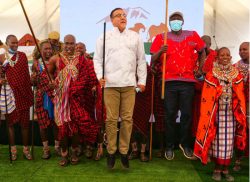


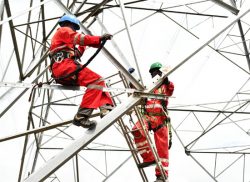


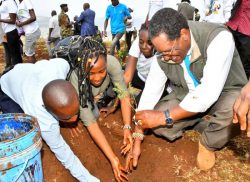


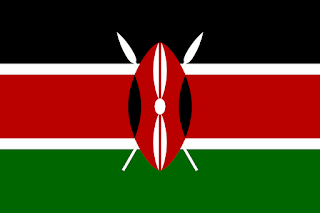
 Anthems and flags are symbols that hem in allegiance among communities that subscribe to a common cause or a set of shared goals. While an anthem is a musical composition that extols the values, heritage and the driving spirit of a society, a flag is an insignia meant to express commitment to mutual interests and pursuits. Simply put, anthems and flags are emblems that affirm a kindred affinity among a group of people in pursuit of a common set of aspirations.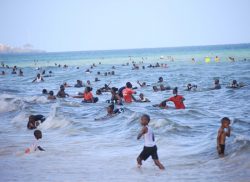


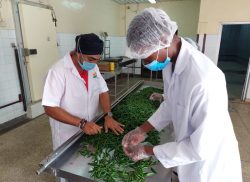

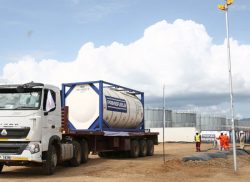


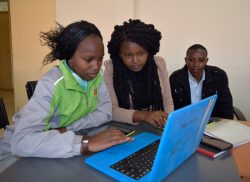
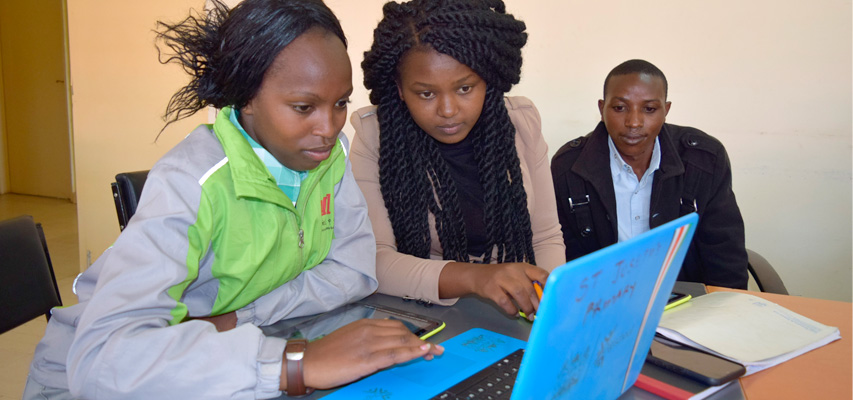


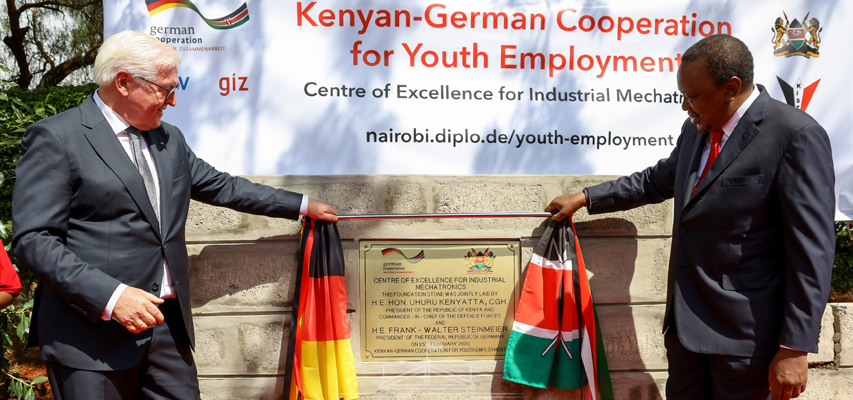
 Kenya, with a population of 47.56 million (2019 Census), covers 580,367 square kilometers of land. It borders the Indian Ocean and Somalia in the east, Ethiopia and South Sudan in the north, Uganda in the west and Tanzania in the south. It is the home of the picturesque Rift Valley geographical formation, but more importantly, Kenya is the cradle of humankind as evident in the fossils found in Turkana and surrounding areas.

