2022 Yearbook
Devolution
Yearbook 2020 Factbook
Yearbook 2020 Factbook

Education

ICT and Digital Economy
Value addition chain for leather
Key government interventions

Kenya Leather Development Council: This is the sector’s main support agency in the Government for public and private with the goal of transforming the leather value chain into a vibrant value-adding and export-oriented one.
Draft Kenya Leather Development Policy: The Ministry of Agriculture, Livestock, Fisheries and Cooperatives, Kenya Leather Development Council (KLDC) and Kenya Institute for Public Policy Research and Analysis (KIPPRA) developed a draft Kenya Leather Development Policy. Its main objective is to guide and drive the growth and development of the leather sector in order to realise its full potential and contribute significantly to the economic growth. Once adopted, the Policy will provide a structured framework for the coordinated execution of the roles and responsibilities of all the actors across the value-chain and throughout Kenya. To finalize the process, the Government organised a Stakeholders Validation Convention to be held at the Kenya Institute for Curriculum Development (KICD) on 2nd December 2021.
Construction of KSh17 billion Leather City (Industrial Park): Work resumed on construction of the park in April 2021. It is projected to create 50,000 direct jobs for Kenyans. Once in operation, the total value of finished leather products for export are also expected to increase 12 times. The park will improve the country’s global competitiveness in leather production and drive the economy in line with the 5-10 year industrial plan for the country’s manufacturing sector to accelerate critical industries that support the country’s development. Located in Kenanie, Athi River in Machakos County, the park will have 15 tanneries initially, a training centre, common manufacturing facilities and a common Effluent Treatment Plant (ETP). These will translate to a production capacity of about 10 tonnes of hides and skins, with an output of 10,000 pairs of shoes, handbags, leather garments and industrial gloves per day.
Partnership between Kenya Leather Development Council (KLDC), Ewaso Ngiro South Development Authority (ENSDA), Kenya Investment Authority and the Export Processing Zones Authority: The focus of the partnership is on capacity building framework for quality hides & skins that will encompass arid & semi-arid (Asal) areas. This follows the construction of a KSh1.4 billion Mega Tannery and Leather Factory at Ewaso Ngiro area in Narok South. The tannery will create 300 jobs directly and 10,000 indirectly and help create wealth for the local communities after the completion of the Tannery processing plant in Narok becomes fully operational. It will be able to process over two million tons of hides and skins yearly when fully operational. The factory is now training hides and skin producers at various abattoirs in the region on best practices on how to handle this raw material in order to produce the best quality.
Investment opportunities
- Modernised Slaughterhouses
- Production of finished leather
- Production of footwear
- Kariokor Market in Nairobi
- Ngozi Kenya Leather Park in Kenanie, Athi River
The leather value chain

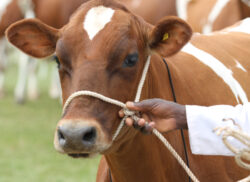
The Kenyan leather value chain includes livestock farmers, livestock traders, butcheries, slaughter facilities owners, hides and skins traders and exporters, tanners, artisanal footwear and leather footwear manufacturers, and goods manufacturers.
An abundant and diversified resource base includes cattle, goats, sheep, pigs, camels, rabbits, crocodiles, ostrich and fish. According to the Leather Value Chain Investment Profile published by the Kenya Investment Authority (KENINVEST), Kenya contributes to only 3.5 per cent of leather production on the African continent, despite having the third-biggest livestock resource in Africa.
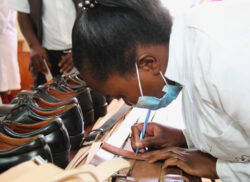
The profile states that the leather industry value chain comprises four broad stages. During the first stage, raw hides and skins (H&S) are obtained. In the second stage, raw H&S are converted to semi-processed (pickled and tanned) and the third stage produces fully processed (finished) leather. In the fourth stage, leather products are manufactured, e.g., footwear, garments, accessories such as watch straps, handbags, tabletops and notepad covers, and automotive or furniture upholstery.
The production of hides and skins can be considered mainly a by-product of the meat industry. The second and third stages are the most capital intensive, while the fourth stage can be viewed as the most labour intensive. Says the report, developing countries like Kenya benefit from cheap access to raw materials and lower labour costs and are thus able to produce leather at lower cost than developed countries.
Tanneries and leather products

The Government has prioritised the leather goods and footwear sector under the Kenya Industrial Transformation Programme (KITP), Kenya Vision 2030 and the Big 4 Agenda.
The sector is regarded as a prime driver for the country’s industrialization with focus on achieving the following by 2022:
- Increase exports from $140 million (2017) to $500 million
- Create an additional 50,000 jobs through value addition
- Manufacture 20 million new leather footwear
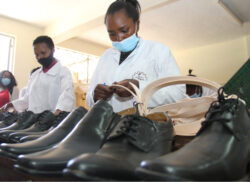
There are several leather facilities at national level, including: 25 formal footwear manufacturing units; 11 registered leather products micro, small and medium-sized enterprises (MSMEs); 15 registered tanneries; 4 packaging and logistics companies; a small and medium-sized enterprise (SME) park; a training centre for increased value addition; subsidised housing for workers and more.
A report prepared for the Ministry of Industrialisation Trade and Enterprise Development by the World Bank indicates that world trade in leather is massive at over US$100 billion a year. The report – Kenya Leather Industry: Diagnosis, Strategy and Action Plan – states that demand for leather and leather products is outstripping supply.
The leather sector in Kenya is estimated to be worth over Sh50 billion annually. Unfortunately, over 90 per cent of Kenya’s $94 million -Sh9.4 billion- leather exports are unfinished wet blue leather, whereas further processing to finished leather and manufacture of leather products could create at least 50,000 more jobs and an additional $150-250 million – KSh15-25 billion – to the Gross Domestic Product (GDP).
For Kenya to get out of the margins of the trade in leather and its products, it must increase its competitiveness in leather and leather products, grow exports and jobs, and create a viable and sustainable industry.
This means moving from being a primary exporter of raw hides and skins and wet blue leather to boosting production capacity for finished leather.
Kenya’s competitive position was eroded by global imports of new low-cost footwear into the Kenyan and East African markets and second-hand imported footwear. The focus is to move the sector from low-cost production of undifferentiated, low-end shoes and boots, estimated at 3.3 million pairs per year, mostly for the domestic market.
Before an 80 percent export tariff was imposed on raw hides and skins in 2009, they accounted for more than 25 per cent of Kenya’s total leather exports. For a long time, trade in raw and semi-processed leather has only generated a marginal trickle-down effect on the rest of the Kenyan population.
Leather products mix and opportunities
Footwear is the biggest leather goods subsector in Kenya, while the handbag subsector is the most competitive vis-à-vis global markets.
In the case of leather handbags, Kenya can build on its reputation for quality handbags, travel ware, and cases by improving the quality of its products, building the “made in Kenya” brand distinction, and creating a mass customisation delivery capacity.
Industry Competitiveness
- Kenya’s leather sector competitiveness is based on the nation’s comparative cost advantages, derived from:
- Abundant natural resources of cattle, goats, and sheep (Kenya is the third largest livestock holder in Africa). Kenya’s livestock mix is projected to reach 27 million cattle, 50 million goats and 29 million sheep by the end of 2022.
- Relatively low labour costs, and its comparative disregard for environmental and related social costs.
- Rapid economic growth has increased the aggregate demand for consumer goods, including footwear and leather goods, with a sizeable domestic market for leather products in the country
Kenya’s lack of cost competitiveness results from:
- The high cost of domestically sold leather and leather inputs including duty on imported inputs.
- The high cost of labour
- The high cost of electricity.
- In flow of cheap and new leather and non-leather footwear imports (mainly from China and India)
- Growth of the second-hand Mitumba market, which offers an enormous range of high and low quality leather and non-leather footwear at bargain prices.
In Kenya, the cost of producing a pair of low-cost men’s shoes is approximately US$9.44, compared to Ethiopia’s US$7.28 for a pair of men’s loafers.
Structure
There is a vibrant and competitive informal sector, concentrated in the Kariokor Market cluster in Nairobi that produces low cost leather footwear and goods for Kenya and the region.
Most of the leather goods producers are micro and small enterprises who remain in the informal sector in order to remain competitive. There is an intricate link between the formal and informal sector, but it is weak and unbalanced.
The finished leather market is tightly controlled and often resembles a seller’s market.
Kenya’s largest and most modern tannery, Alpharama has for long dominated the production and commands a great influence.
Special economic zones (SEZs)

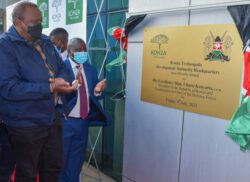
The International Finance Corporation (IFC) provided technical support through its Kenya Competitiveness Enhancement Programme (KCEP) to the Special Economic Zones (SEZ) Authority to launch a one-stop-shop web portal www.sezauthority.go.ke in August 2021,
IFC is a member of the World Bank Group. The new portal has boosted communication to potential investors on opportunities available in the SEZs. It is also helping efforts to raise the level of transparency and provision of services to current and potential investors.
The site is a big pillar of support to the Government efforts to ensure investors are fully informed on available infrastructure, customs services, regulations and fiscal incentives for the 10 SEzs. This has enhanced Kenya’s competitiveness in manufacturing and trade.
SEZs are a key pillar for Kenya’s industrialisation agenda, value addition, and platform to leverage and catalyse private sector investment. The Ministry of Industrialisation, Trade and Enterprise Development is working with the SEZ Authority to boost the private sector’s contribution to GDP and scale-up investment generation, especially in manufacturing.
The portal is a repository that allows visitors to learn and interact in real-time with the Authority on cross-cutting issues. It avails information on opportunities and incentives including investor road maps and facilities, investment schemes and sectors and administrative and tax incentives.
Via the portal, investors can apply to lease land inside SEZ parks, register for news updates, subscribe to the SEZ Authority bulletin, access the resource center, and make online applications.
The number of simplified tax incentives for investors in the SEZs were increased in 2021, providing clarity on the operations of various actors, including to guide the movement of people, goods and services within the special economic zones.
The incentives remove duties and other charges on the import of any goods or services to a special economic zone. Also removes are trade-related restrictions, including quantitative restrictions on the same.
Firms operating in the SEZs are freed from minimum export requirements and quotas when exporting products from the zones.
The Special Economic Zones Authority (SEZA) was established in 2015 by an Act of Parliament (Special Economic Zones Act No. 16 of 2015). The institution is responsible for attracting, facilitating and retaining domestic and foreign direct investments in Special Economic Zones (SEZs).
The Authority serves as the regulator of both public and private SEZs in Kenya and exists to create an enabling environment for investors through the development of integrated infrastructure facilities, as well as the creation of incentives that eliminate the barriers to doing business in Eastern Africa’s most vibrant economic hub.
Through a carefully set up and monitored system, businesses at the SEZs enjoy tax incentives including exemption from value added tax (VAT) exemption on supplies of goods and services to enterprises, recued corporate tax of 10 per cent from 30 per cent for the first 10 years of operation rising to a maximum of 15 per cent for the next 10 years.
The SEZ programme is initially being piloted in Mombasa, Naivasha, Lamu and Kisumu.
Micro & Small Enterprises Authority
The Ministry has facilitated the operationalisation of the Micro and Small Enterprises Authority that will help grow the SME sector and support Entrepreneurship that is a major sector in creating jobs.
Apparel manufacturing
Background
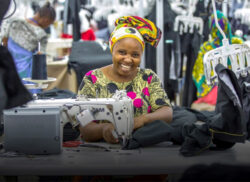
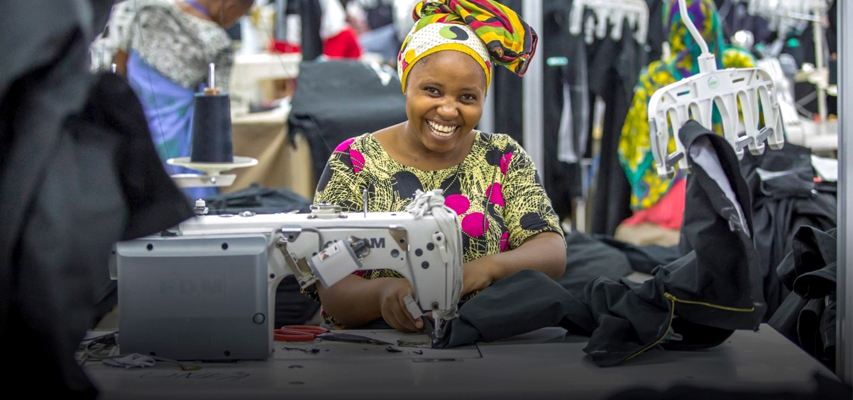
Kenya has the opportunity to establish a strong domestic and international footprint in textile and apparel manufacturing through the Africa Growth and Opportunity Act (AGOA) which opened up the US market for finished textile products.
This would be a firm foundation for propelling Kenya into middle income status and creating gainful employment for its fast growing, young population. Through value addition and streamlined trade logistics, it would be a potential gateway to other manufactured goods, offering opportunities for Kenya to capture an increasing share of global trade and to advance economic diversification.
However, almost 15 years after the launch of AGOA and shortly after its renewal, Sub-Saharan Africa’s trade with the US remains dominated by natural resources. While some manufactured goods feature in the top 10 exports from AGOA countries, these are almost wholly from South Africa. In fact, AGOA countries account for under 1 percent of total global apparel trade.
Competitive challenges facing sector
High cost of power at over 20 cents per kWh compared to competitors in countries that pay considerably less, such as Chinese firms that pay an average of seven cents per kWh, or Ethiopian firms that pay six cents per kWh. This results in power costs accounting for up to 25 percent of Kenyan textile firms’ operating costs.
Obsolete equipment in some firms that increases operation costs. Investment by textile firms in new technology will significantly reduce their operating costs even in a high power cost environment.
Low labour productivity compared to cost of wages. Sewing operators’ wages in Kenya average US$180 per month compared to US$60 in Ethiopia. Comparatively higher wages do not necessarily inhibit apparel firms from competing globally so long as productivity rises to match higher wage levels. This has not occurred in Kenya, where the value-added to minimum wage ratio is lower than most competitor textile-apparel countries. Skills concerns, both at the managerial and technical levels, are to blame.
Lack of fast and effective trade logistics that affects speed to market, with a container taking longer to get to the US than it does from countries such as, China, India, South Africa, and Vietnam. Costing over US$2,000, it is more expensive than almost all apparel exporting countries, bar Ethiopia.
Opportunities
Going green: There are environmentally conscious consumers willing to pay a premium for under the Lifestyles of Health and Sustainability (LOHAS) segment, which is almost 20 percent of US adults, and more in European markets. Producers willing to reconfigure their production processes, despite the cost can reap big. Such ‘green-focused’ investments have energy efficiency and conservation measures at the core of their operations- at each stage of the production – and emission levels are kept within the recommended levels of the Intergovernmental Panel on Climate Change (IPCC). It is easier for such producers to attract capital on concessional terms, thereby offsetting the business cost of ‘green production’.
Buyers of small order runs of premium products: This segment is best served well by small scale producers of a range of products, from new niches such as crowd-sourced designs, to the small, quick turnaround runs required by the pinnacle of fast fashion buyers. However, the price premium that such smaller batch buyers pay also requires quality to be of a higher standard than commodity products. It also requires very skilled labour, from management to the factory floor to secure quality.
Strategic Government interventions
Revival of textile firms, including Rivatex and Mountex, supported by the ‘Buy Kenya, Build Kenya’ initiative. This is promoting local production and helping to wean Kenyans away from second-hand clothes, known locally as Mitumba. The initiative gives Kenyans an opportunity to access quality, locally made affordable clothes with prices range from Sh100 to Sh600 for the same clothes that are sold at Sh6,000 in the US and UK markets. President Kenyatta said in a past event. One study by the Institute of Economic Affairs (IEA) estimated that Kenyans spent Sh197.5 billion in 2019 on clothes and footwear.
Development of the Athi River Textile Hub
Completion of 16 industrial sheds, and provision of basic infrastructure facilities (roads, electricity and water, sewerage and security fence) at Athi River EPZ
Revival of KIKOMI textile factory
Modernisation of RIVATEX machinery through completing modernization of spinning and weaving areas, construction of effluent treatment plant for zero discharge, perimeter wall and firefighting management systems
Renovation of leather factory in Kariokor, Nairobi
Support for biotechnology innovations like BT Cotton by the National Biosafety Authority. BT cotton is resistant to pests and diseases, matures faster and delivers higher yields per acre. This is a critical lifeline for cotton farmers and the supply of cotton as a raw material for the textile industry.
Negotiations with the US on a Free Trade Agreement (FTA). The United States and Kenya began free trade agreement (FTA) negotiations in 2020 under then-President Trump but they were put on hold as the Biden Administration reviewed its trade policy priorities. However, the July 1 expiration of U.S. Trade Promotion Authority (TPA), under which President Trump had notified Congress of his intent to enter into the bilateral FTA negotiations, poses a hurdle. A U.S.-Kenya FTA would be the first by the US with a country in sub-Saharan Africa (SSA). Overall, the pact would build on the objectives of the African Growth and Opportunity Act (AGOA). For the US, Kenya is the single largest source of apparels in sub-Saharan Africa. In fact, the US Fashion Industry Association (USFIA) recently noted that there is a tremendous opportunity to expand trade between the United States and Kenya by removing both tariff and non-tariff barriers under a US-Kenya FTA. There is also a push by the industry to conserve the liberal rules of origin for apparels that Kenya currently enjoys under AGOA, in an FTA with the US.
Ratification of AfCFTA (African Continental Free Trade Area) by Kenya: With (AfCFTA) coming into effect from January 1, 2021, intra-Africa trade will see a significant increase with Kenya among the member states of AU (African Union) who are in a position to benefit from the deal under the principle of reciprocity, once talks regarding the rules of origin are complete. The agreement will create the largest free trade area in the world measured by the number of countries participating. The brings together a market of 1.3 billion people in 55 countries with a combined gross domestic product (GDP) of USD3.4 trillion. However, its full potential is dependent on member countries implementing significant policy reforms and trade facilitation policies. According to the World Bank’s Chief Economist for Africa, Albert Zeufack, “the African Continental Free Trade Area has the potential to increase employment opportunities and incomes, helping to expand opportunities for all Africans.”